
#5 Prague
I postponed leaving Europe to fit in a weekend at Prague. It was worth it, despite a crowded eight hour train trip from Mstow across the seemless border.
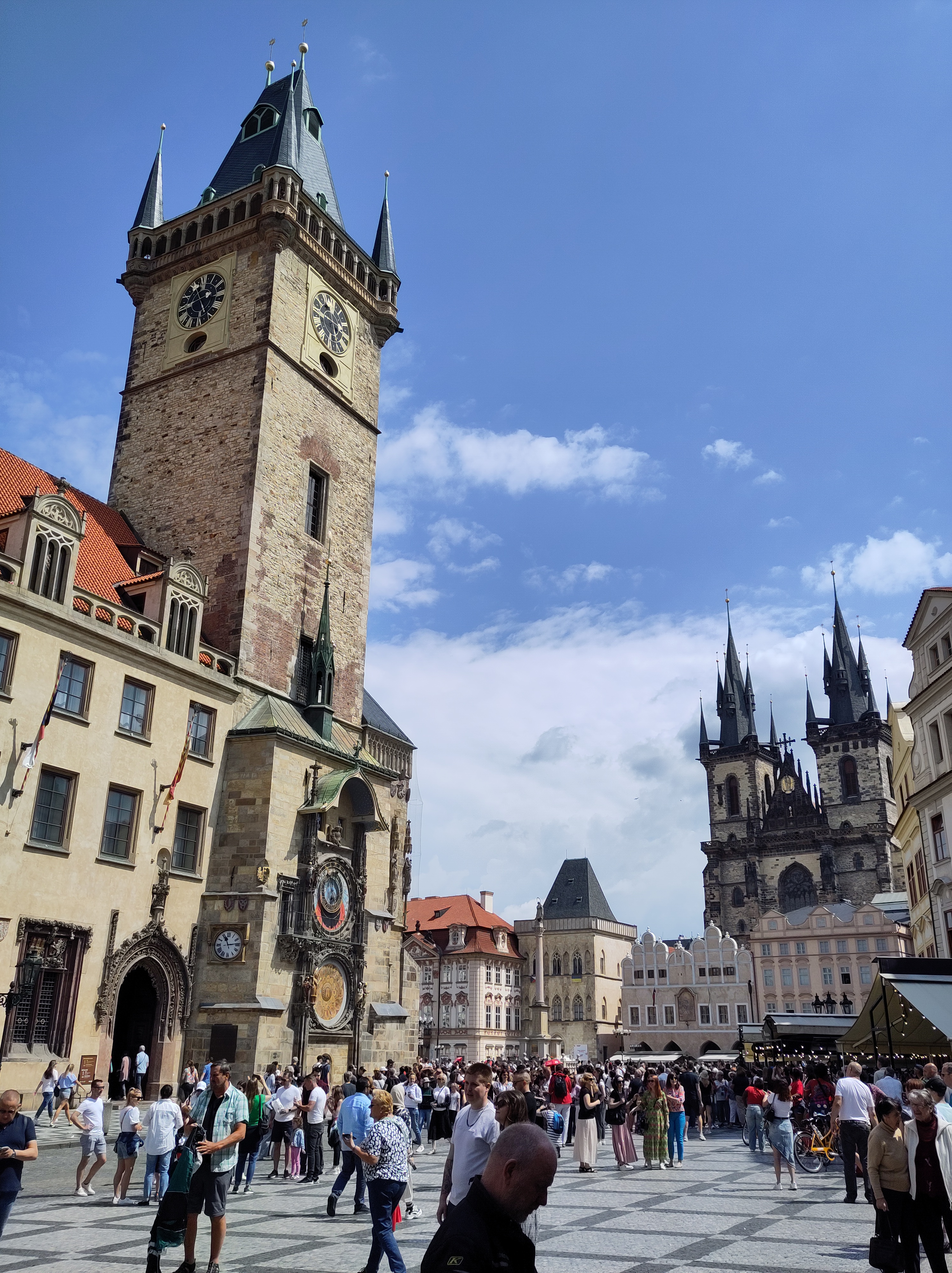
Prague is rather overrun with tourists at this time of year, but it’s no wonder they come. It’s an extraordinarily beautiful and well-preserved example of European history. I feel for the locals, though, whose city is taken over at the best time of the year.
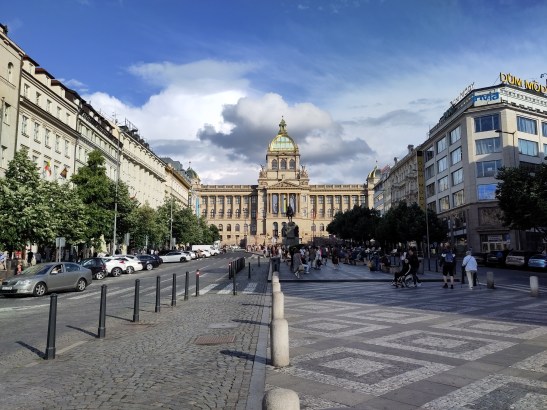


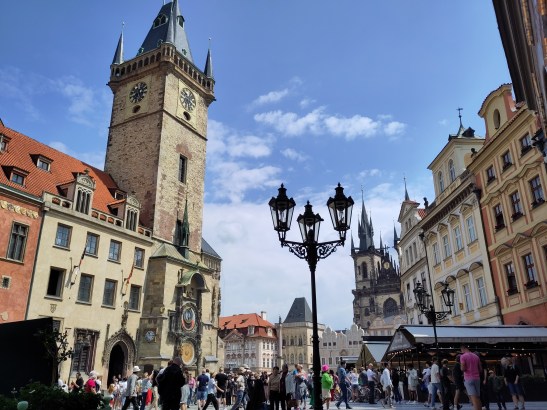

Prague is the historical capital of Bohemia, which is now the western “region” (kraje) of the Czech Republic, or Czechia. The word ‘Bohemia’ comes from ‘Boii home’ – the original tribes known to the Romans. The slavic Czechs settled in the area in the 7th Century. It was a kingdom in the Holy Roman Empire, and subsequently a part of the Habsburg monarchy and the Austrian Empire.[5] Bohemia’s borders are mostly marked by mountain ranges such as the Bohemian Forest, the Ore Mountains, and the Giant Mountains; the border with Moravia (the eastern half of the republic) roughly follows the Elbe–Danube watershed.

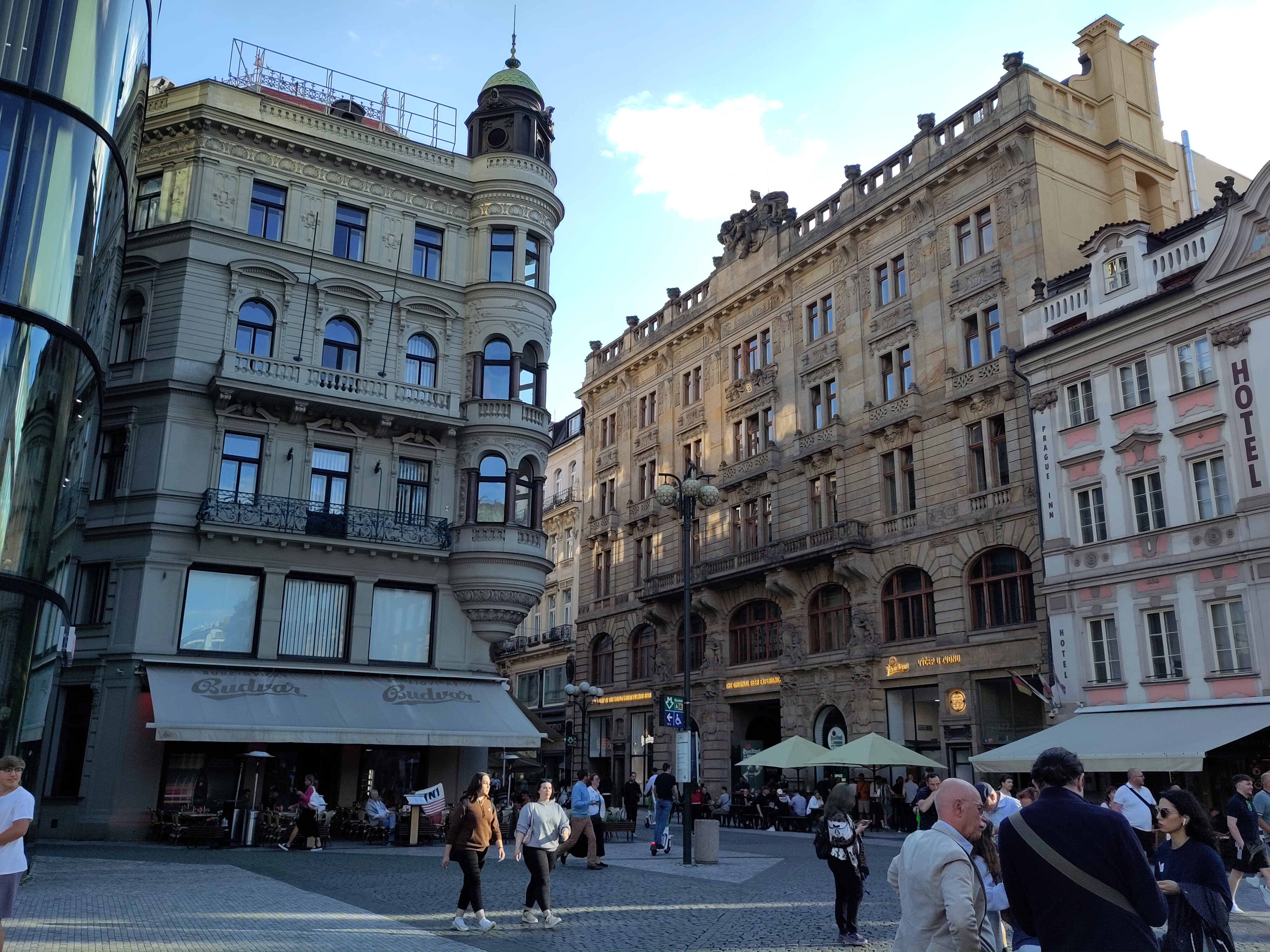
I got a hotel near the station and central to everything to limit walking with a heavy bag; being a senior solo back packer.

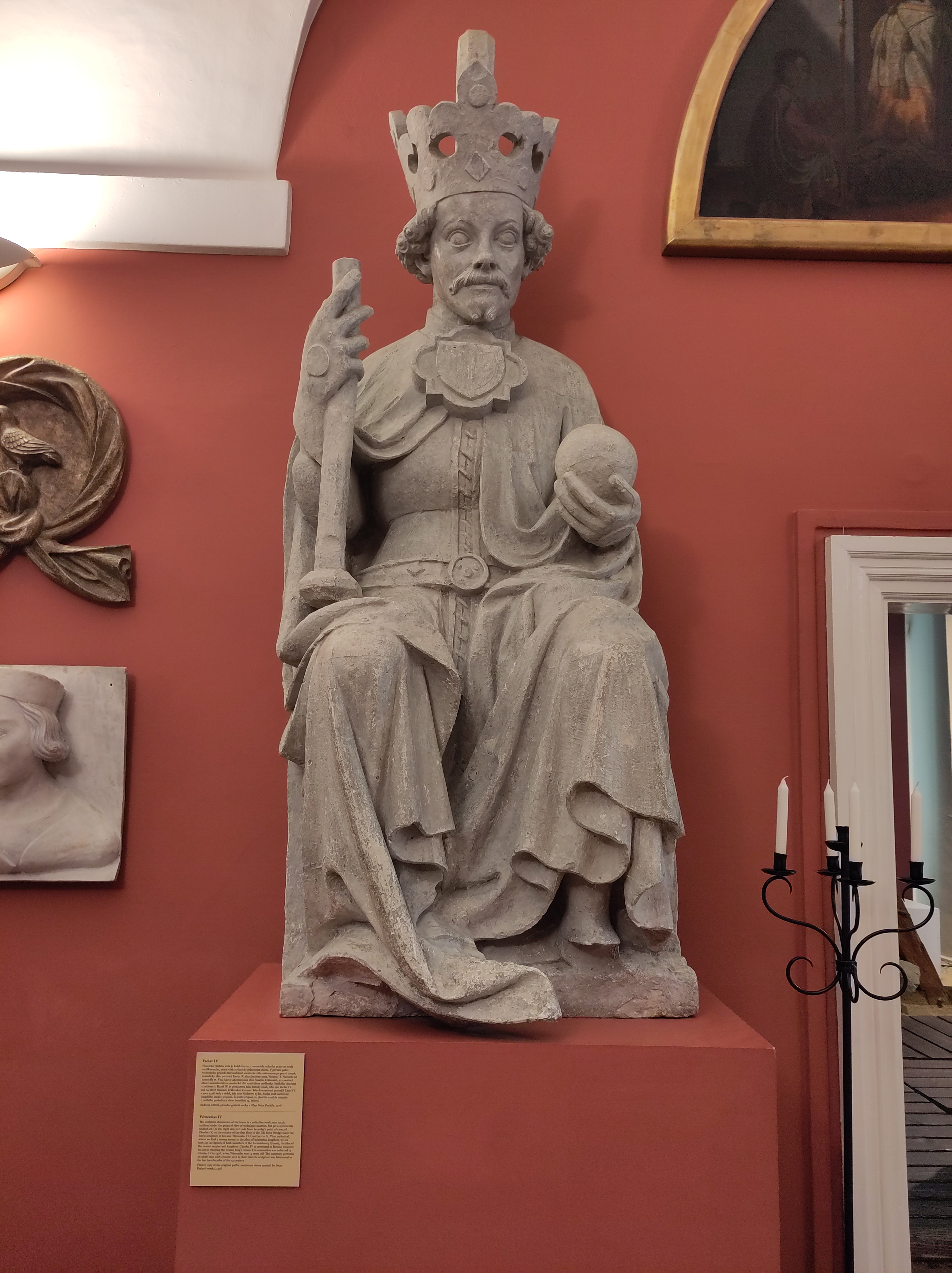
The dude you hear most about is Charles IV, who became King of Bohemia in 1346. Two years later, he founded Charles University in Prague, Central Europe’s first university. His reign brought Bohemia to its peak both politically and in total area, resulting in his being the first king of Bohemia to also be elected as Holy Roman Emperor. His son and successor, King Wenceslas IV was less consequential, but whose name is better known thanks to that nursery rhyme – Good King Wenceslas – which is in fact about one of the many other King Winceslas’.


One of Charles’ lasting legacies is the oldest bridge over the River Vitava. The boat tour starting from under the bridge provides a good vantage point of Pragues’ heritage on the river, starting with the bridge itself. The great wooden beams protecting its pillars from debri were originally installed to protect them from ice flows. However, the Vitava no longer ices over because of the number of dams that have been installed, somehow affecting the flow such that ice no longer has a chance to form. In 2002 the Vitava experienced its highest ever flood (note the blue line on the height gauge). I’m puzzled why climate change wasn’t mentioned.


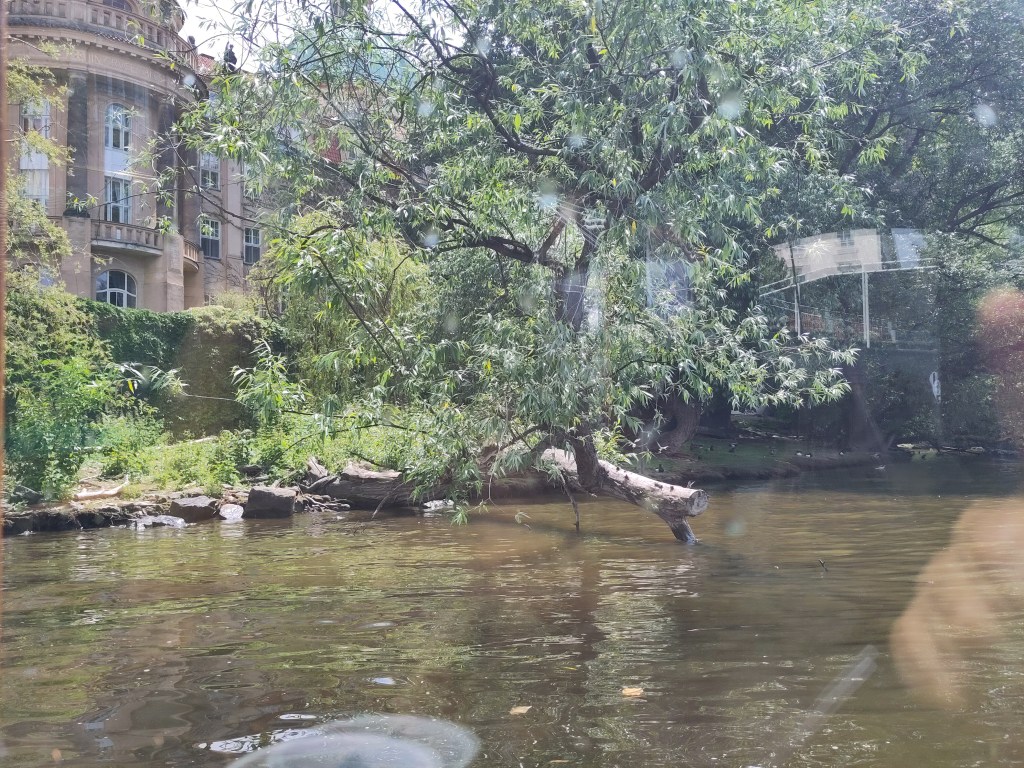

The Presidential Palace and Cathedral on the opposite bank is visible, as well as a spectacular 19th Century Renaissance style National Theatre with its gold rooftop. It is emblematic of Czech independence and where Czech composer Atonin Dvorak worked and performed. It burnt down soon after opening and everyone rallied round to quickly rebuild it. It was delightful to see otters, swans and ducks in the river and on its banks.

In the afternoon, I joined the Mysterious Medieval Underground tour because the forecast was for rain. It proved to be more mysterious than medieval… thanks to the eccentric guide whose strong accent made comprehension a challenge. However, I managed to glean some useful information… Medieval homes were several meters below present ground level, as urban construction developed. The Czech Protestant Hussites – followers of Jan Hus and for-runners of German Lutheranism formed a particularly effective army because they employed some innovative weaponry and battle tactics. Hence their incursions into southern Poland. The earliest Protestant rulers were Czech, apparently.

We ended the tour outside, in front of the Astronomical Clock – a truly amazing instrument tracking the phases of the moon, the seasons and the time. It started pouring, so I made an escape. By this time I was tired and limping in pain (traveling across time-zone really disrupts sleep) as I dodge puddles and tourists to get back to the hotel before 6pm. That was it – no more Prague for me, I thought… Sunday was going to be very low key.

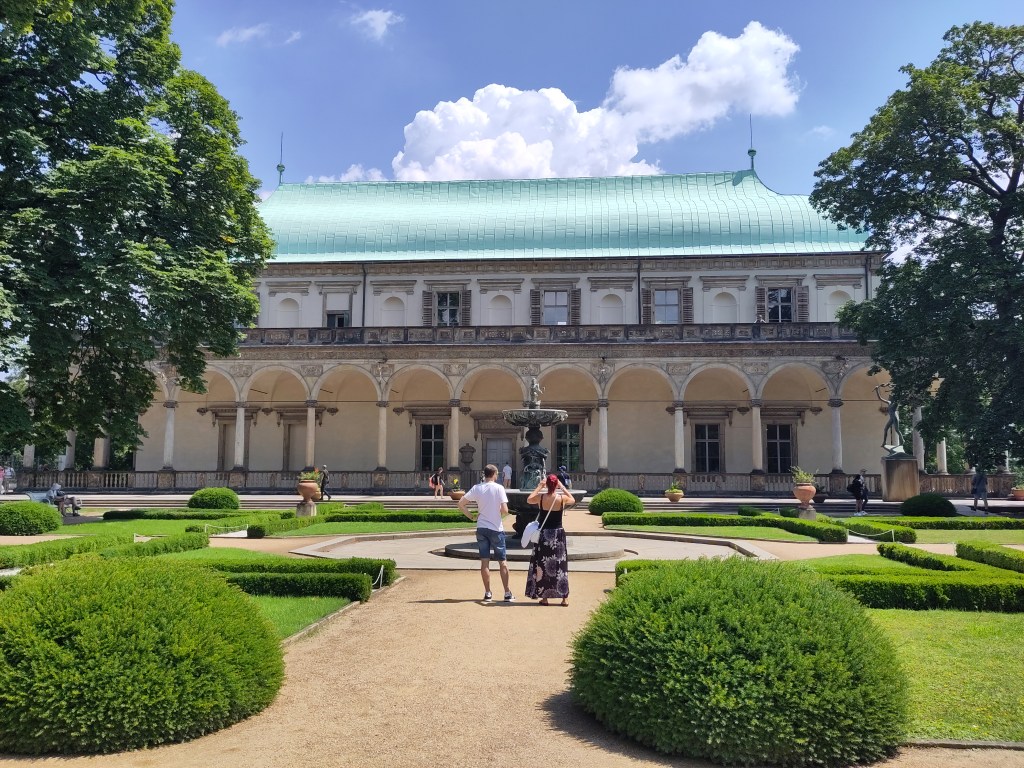
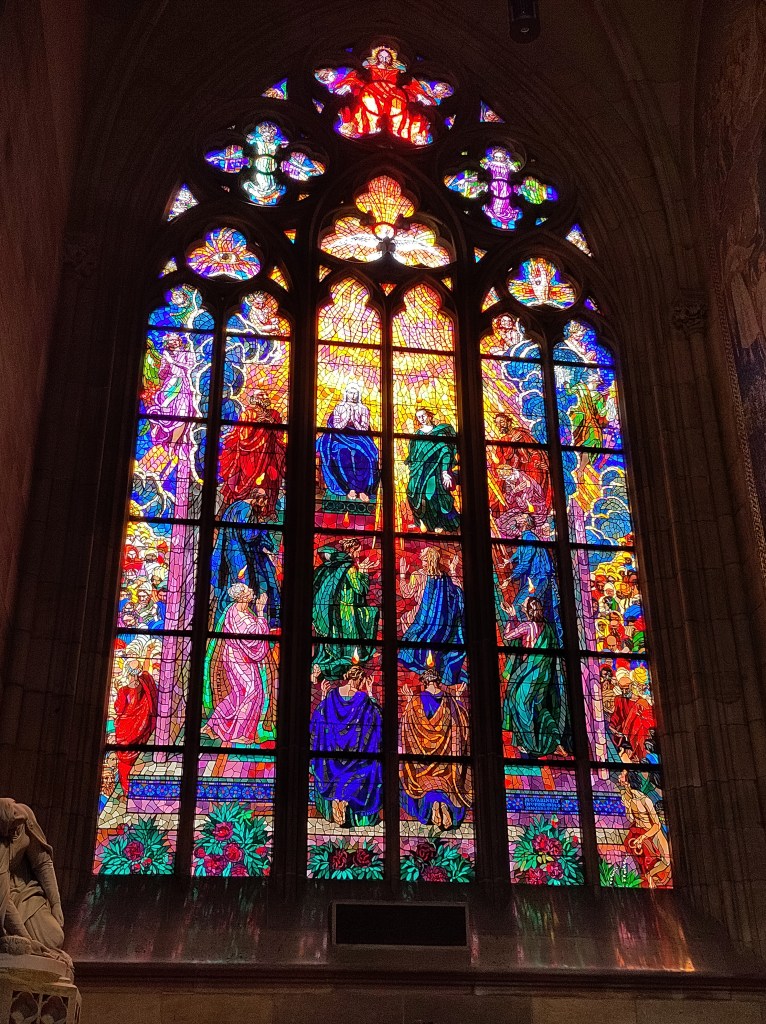
I was still feeling fatigued and unadventurous after a 10:30 am breakfast, so went back to my room, undressed, but thought, ‘I’ll just go out for a spot of sun and views of the pretty men.’ I ambled down the mall with only my phone and glasses, commando style and one thing led to another … Prague went from zero to hero. I spent half an hour painting a brick for €50 to support Czechs with mental illness (can you guess which one is mine?). The young attendant and I had an interesting conversation about the future and sustainability. The sun was shining and I had the tourist tram in mind and before I knew it, I was at the Royal Gardens with its Ball Game Hall and Royal Summer Palace. Note the well-kept lawns. Beside it sits the magnificent St Vitus Cathedral – a testament to what humans can achieve with collective faith in a story – and the Presidential Palace flying the Czech flag, indicating the President is in the country.
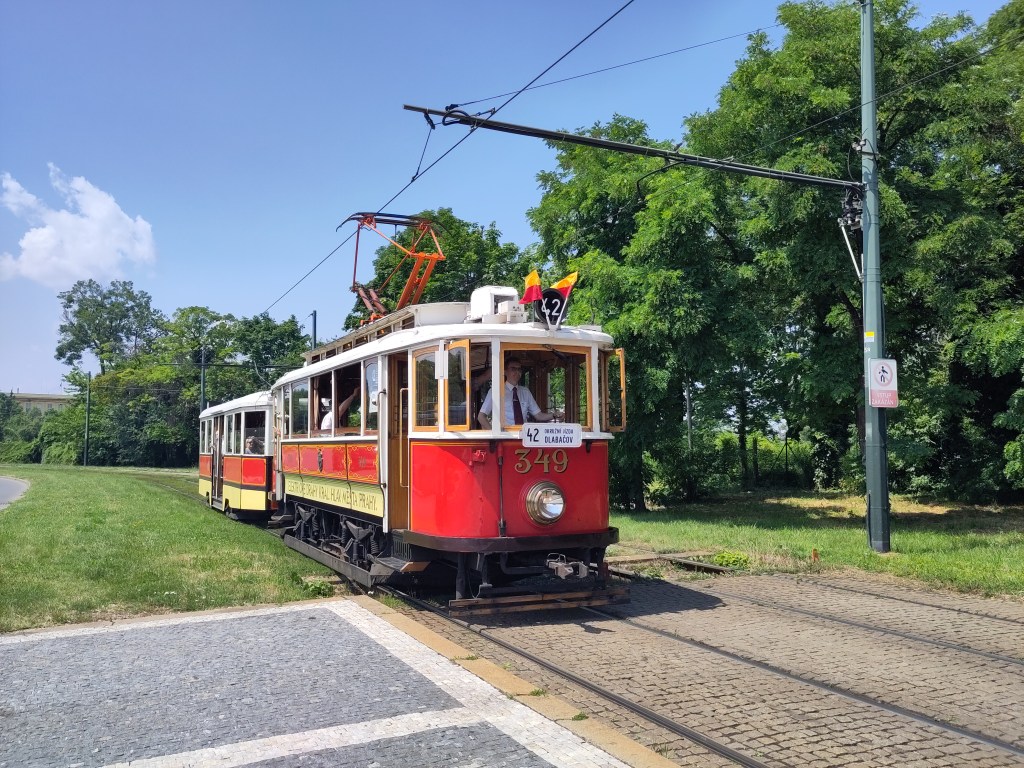


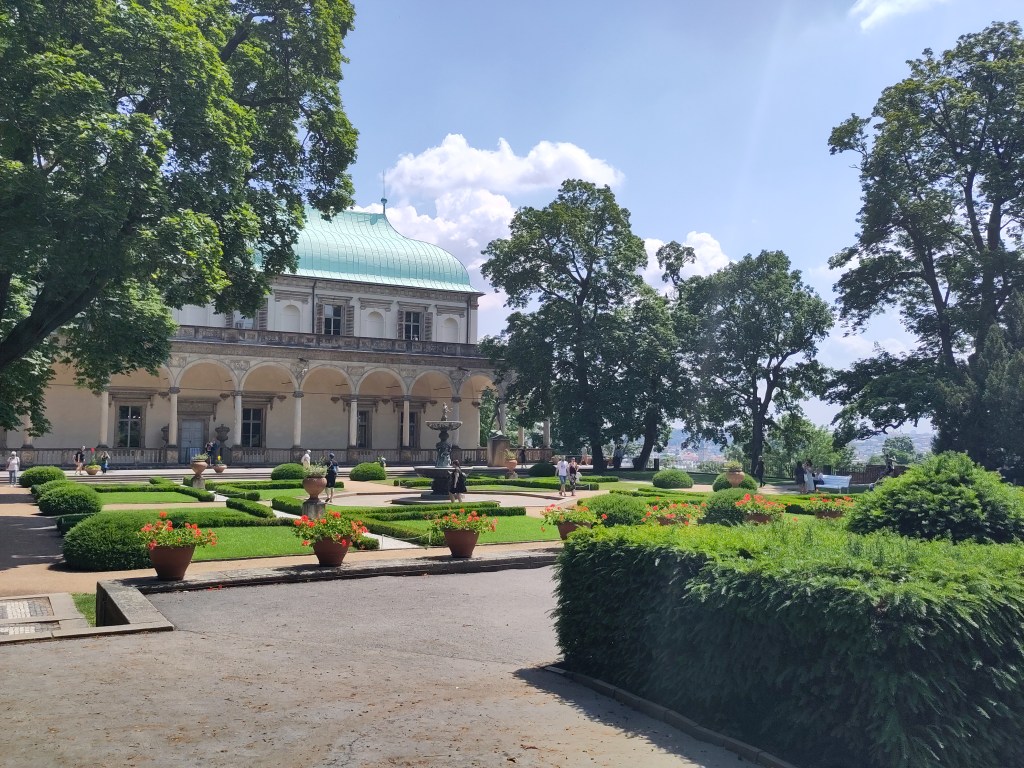



This building – I was told by the tram guide – honours the bombed out dome in Hiroshima, designed by Josef Franta, a prominent Czech architect. It houses the Ministry of Industry and Trade.

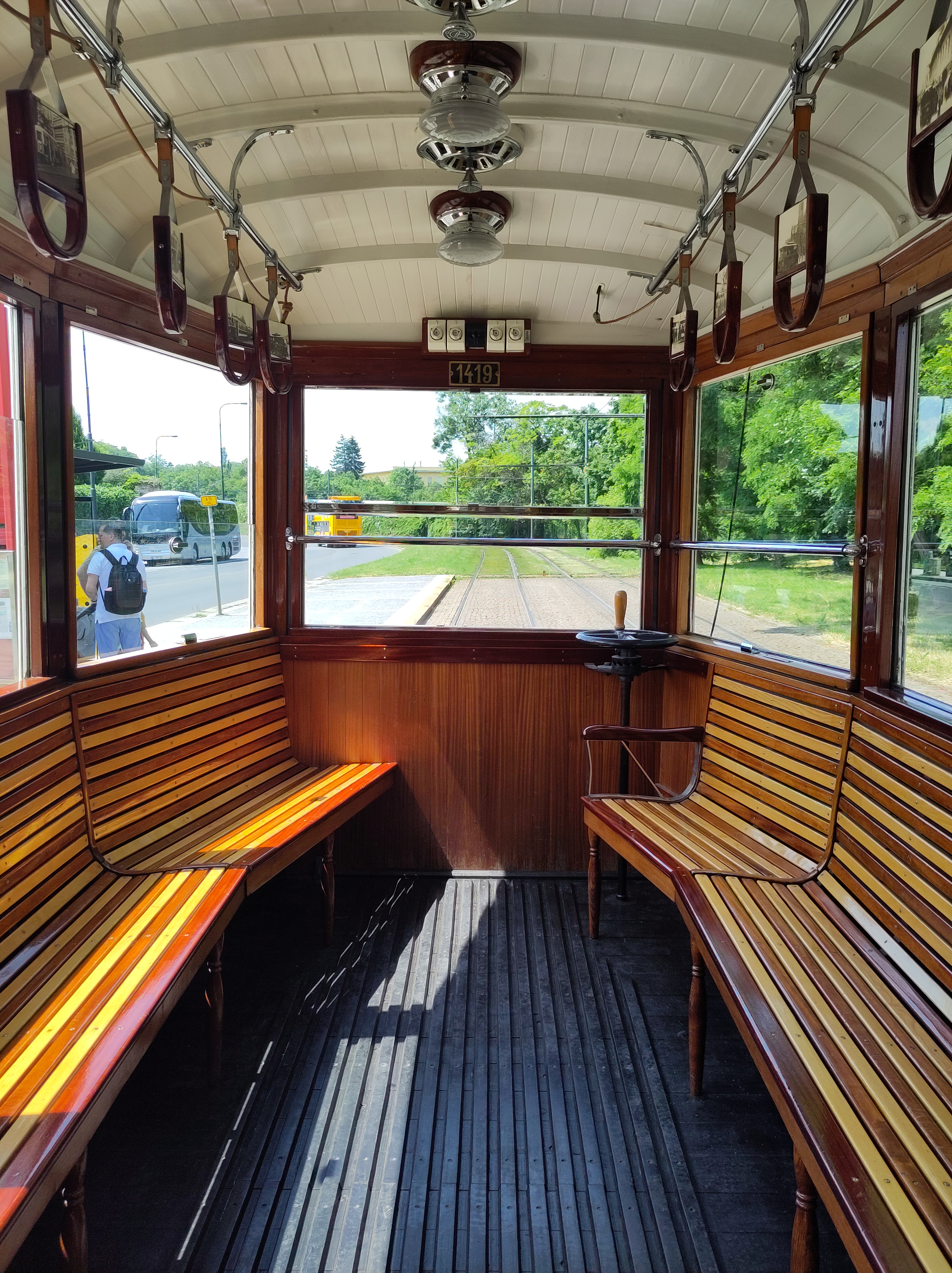


The tram dates from the early 20th Century during the Austro-Hunagrian Empire. The last picture is of the Rudolfinum which houses the Czech Philharmonic.
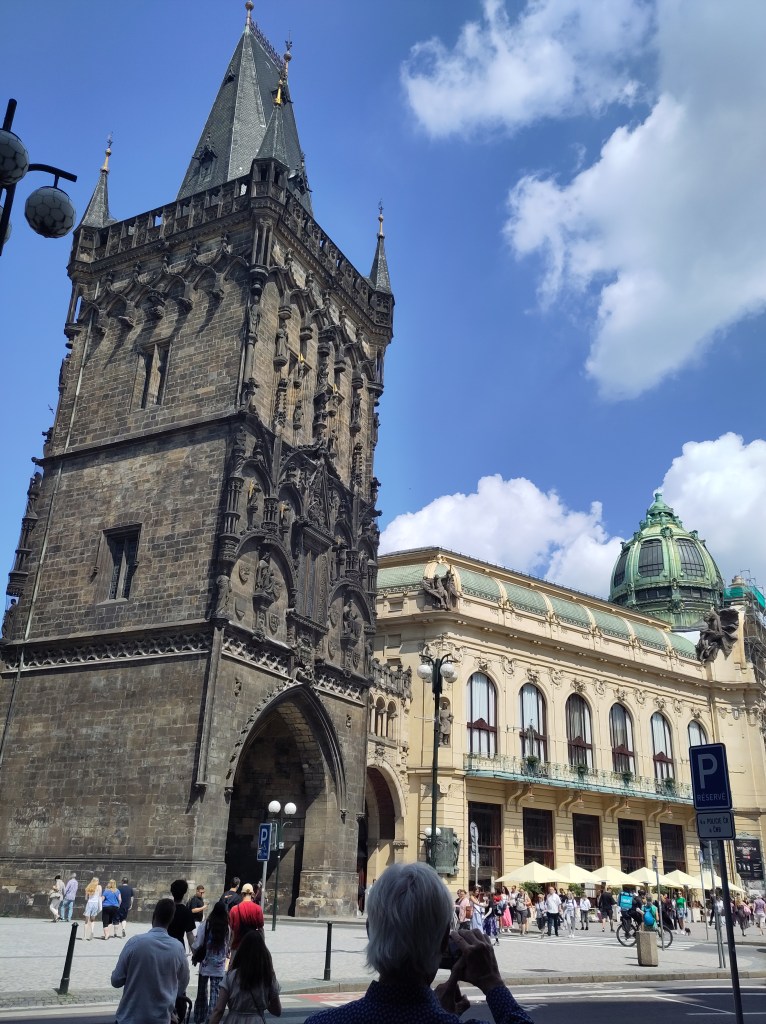

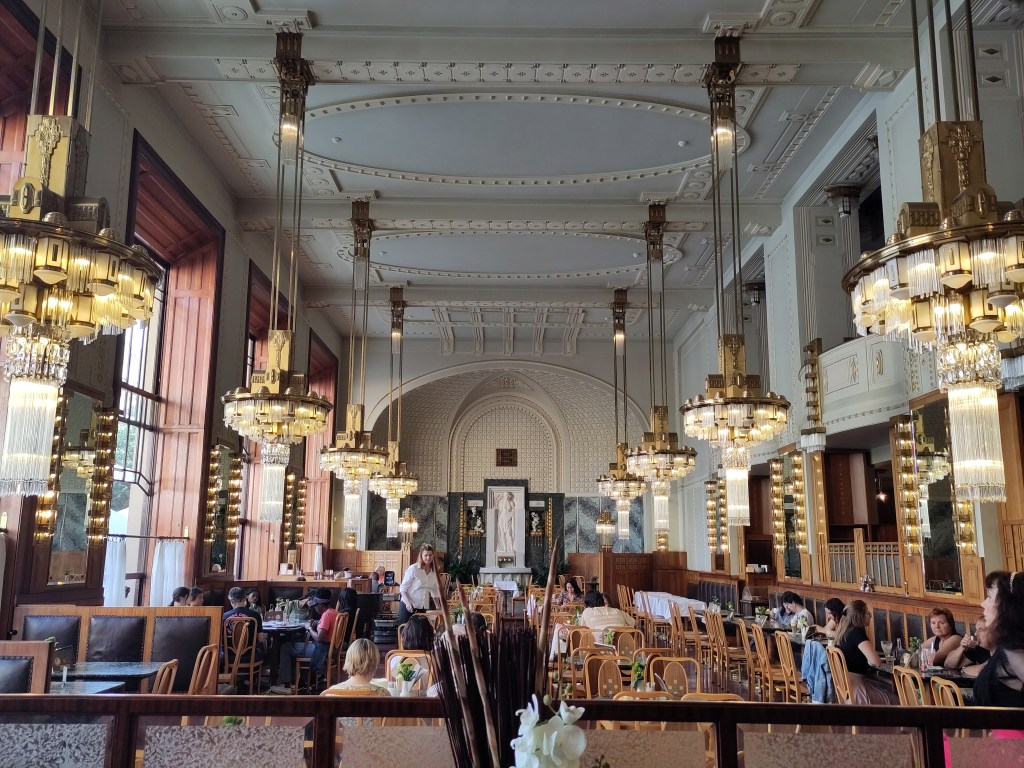
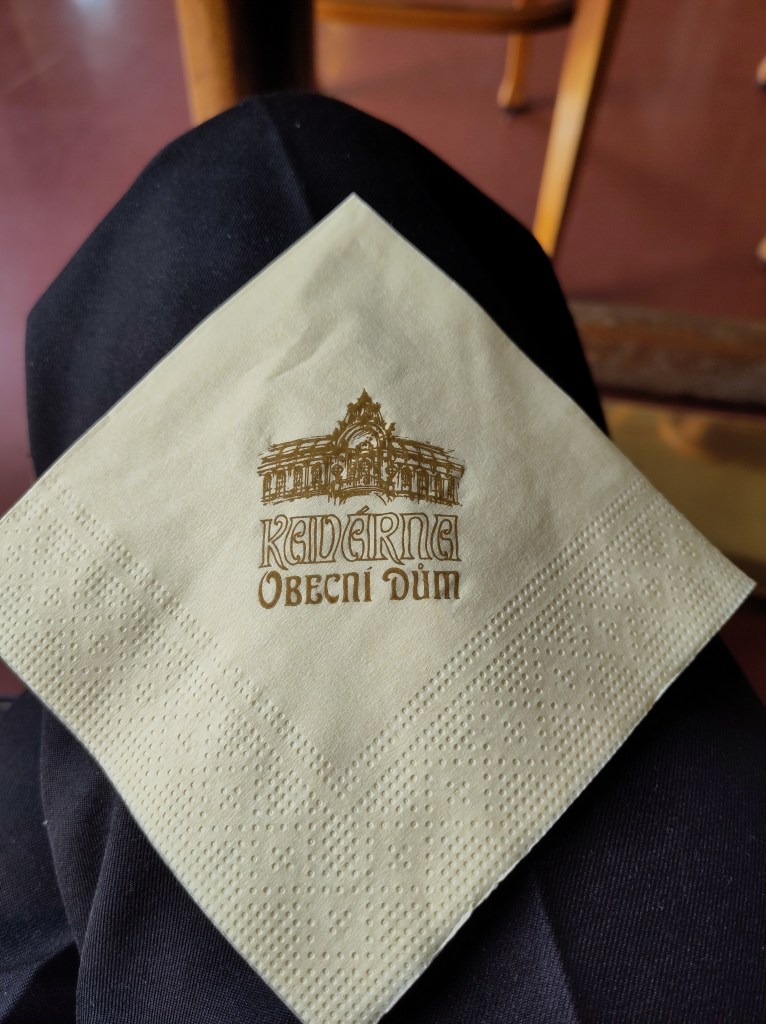

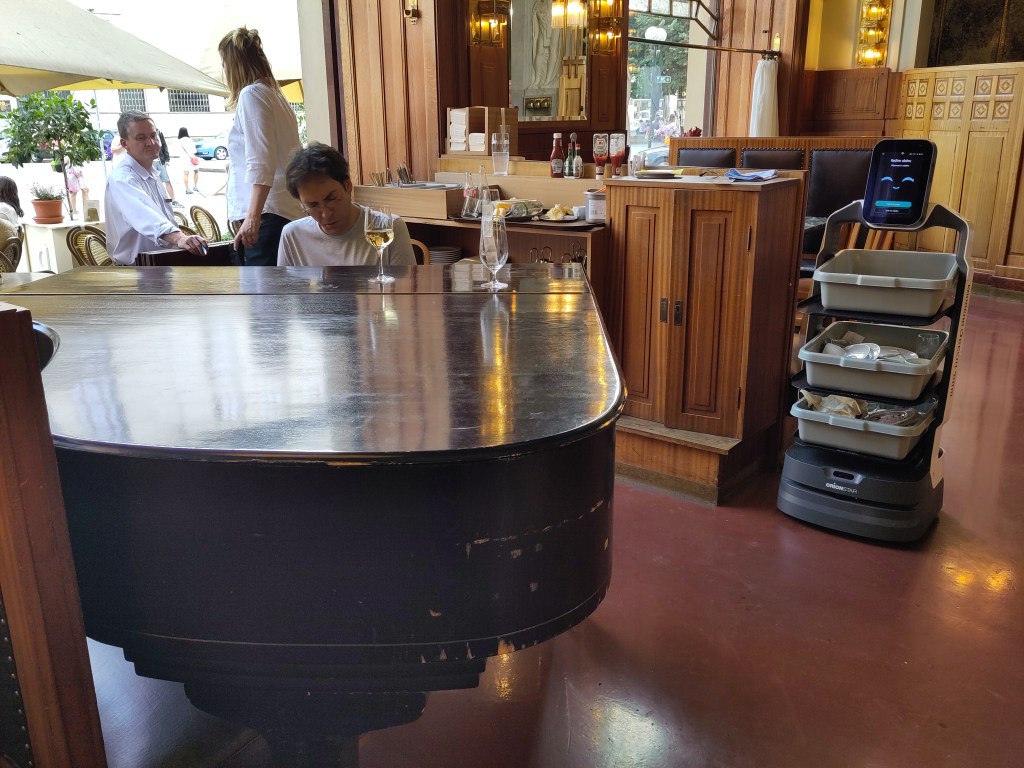
Powder Gate Tower is a Gothic structure that guards the former entrance to the Old Town. From here, coronation processions of Czech rulers set off toward Prague Castle. Beside it is the late 19th Century Art Nouveau Café Municipal House. There, they mix the old with the modern (robotic waiter).

I bought a ticket to Warsaw (via Vienna) to connect with the return leg to Jakarta (via Doha) … 24 hours of planes and airports. Have you ever wondered why flying has become so ludicrously uncomfortable that it’s bad for your health? I commented on this helpful video thusly: “There is … the vast increase in numbers of people who couldn’t afford to fly before, for whom cattle class is glamorous. The shrinking middle class in developed countries are unable to demand something in-between economy and business/1st class (where airlines make their profits). However, I’m still puzzled why space and price can’t be found for a more mid-class ticket, especially on long haul flights where a flat bed without the frills or at least some moving room is a health necessity (DVT). Lack of govt regulation? Am I alone in this? Doesn’t seem so judging from the comments here, so what gives?”
Stay tuned for the next post:


Leave a comment