
A Better Way Forward For Australia.
PEAK CULTURE 1967 – 1972
The countries that are in domestic social strife these days like South Africa (a failed state), Britain (a failing state), France and Sweden have all fallen for the folly of multiculturalism. Some countries have come back from the brink. Denmark and (slowly) Sweden, have proven that folly can be fixed. In the United States, deportations are putting an end to the global trend of ‘asking what the world can do for me, not what I can do for my country’ (paraphrased quote from JFK’s inaugural speech). Countries that never saw a need to meddle with their cultures like Poland are enjoying internal harmony and growing prosperity.
India is something of a multicultural civilizational country and it is famous for its never-ending sectarian strife, which has now been imported to Australia, with Sikhs fighting Muslims in Melbourne. I have some friends in my neighbourhood from Maharashtra state. They’re good people. They work and are not involved in promoting their culture or getting involved in sectarian conflicts here. They tell me they’re planning to return to India, too.
Some delusional fools still call Australia ‘the most successful multicultural society in the world’, even though the ABC – of all media outlets – admits we are now a land of ‘tribes’.
What those who advocate an internationalist culture in Australia are trying to achieve is to make Australia a microcosm of the world, like a mini United Nations. Why would we want to do that? We have the world for that. Communication technology is so advanced now someone in your city can seem as close as someone on another continent. Travel technology is so advanced that it has rendered the need for a foreign enclave next door unnecessary.
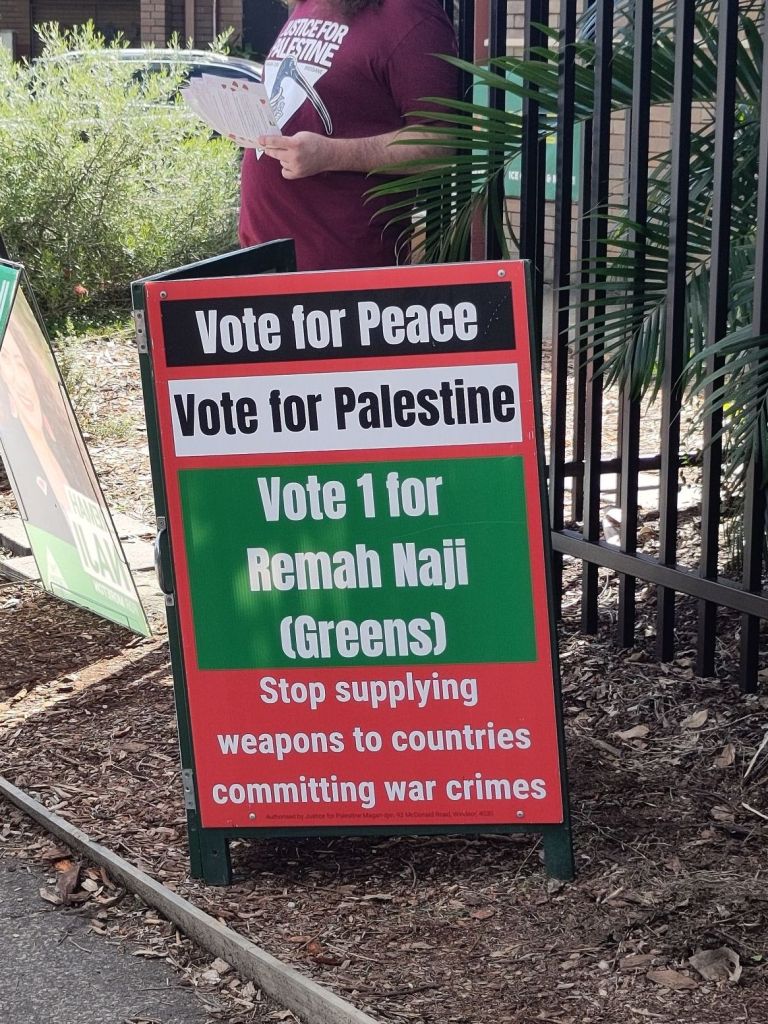
Also, why would we want to replicate the geopolitical tensions in the world here? It doesn’t make sense to try to practice multiculturalism within your own country when clearly it’s not working internationally. It doesn’t make sense for a ‘proud Palestinian’ to be standing for federal parliament in my electorate and calling on me to ‘Vote for a Free Palestine’. It’s not my war. She shouldn’t be trying to make it my war and draw me into it. If she was truly proud she would be in Palestine fighting for Palestine – and pointing out how ineffective the United Nations has become as the arbiter of international conflicts.
Multiculturalism is a failed experiment and it is time to end it.
Biculturalism
Australia is irrevocably multiracial now, and that’s not a bad thing.
But culture is a different matter. Before the multiculturalism era, we were successfully merging Aboriginal and Australian culture. Place names represented both cultures. True, some facts were being swept under the carpet, like the Frontier Wars and the Stolen Generations. It is good and well that those wrongs have come to light and it has served the process of reconciliation. They are now acknowledged and an official apology been given. Introducing every other culture under the sun into the mix has done nothing for the process of reconciliation. It has confused it and been used to denigrate Australian culture to the point that the very existence of an Australian culture is questioned. This has also prevented Australians from mounting a coordinated, effective rejection of mass immigration. Unlike the significant illegal immigration in Europe and the United States, immigration to Australia is almost entirely facilitated by our government. The levels of immigration are among the highest in the OECD and opposed by the majority of Australians. That we are doing this to ourselves is a sad sign of the fragility of our culture, social cohesiveness and an indictment of our national pride. Too few Australians are thinking deeply enough of what they are trading our ‘soft culture’ in for in the name of multiculturalism. Spicy restaurants are not enough.
Australian culture came into its own from about 1875 when the number of natives (born here) began to outnumber immigrants.. It is the unique brand of English we have, the music, the art and the particular style of politics we have. It is a Western European tradition of liberal democracy, free speech and an egalitarianism personified by the first federation formed through referenda. It is a never-before-seen combination of openness, love of our environmental diversity and the unity of a nation continent.
This culminated in a referendum to recognize Aborigines at the federal level in 1967 that was supported by more than 90% of voters. However, just 5 years later, the Whitlam Labor government was elected and it introduced multiculturalism. We had a mere half decade of Biculturalism.
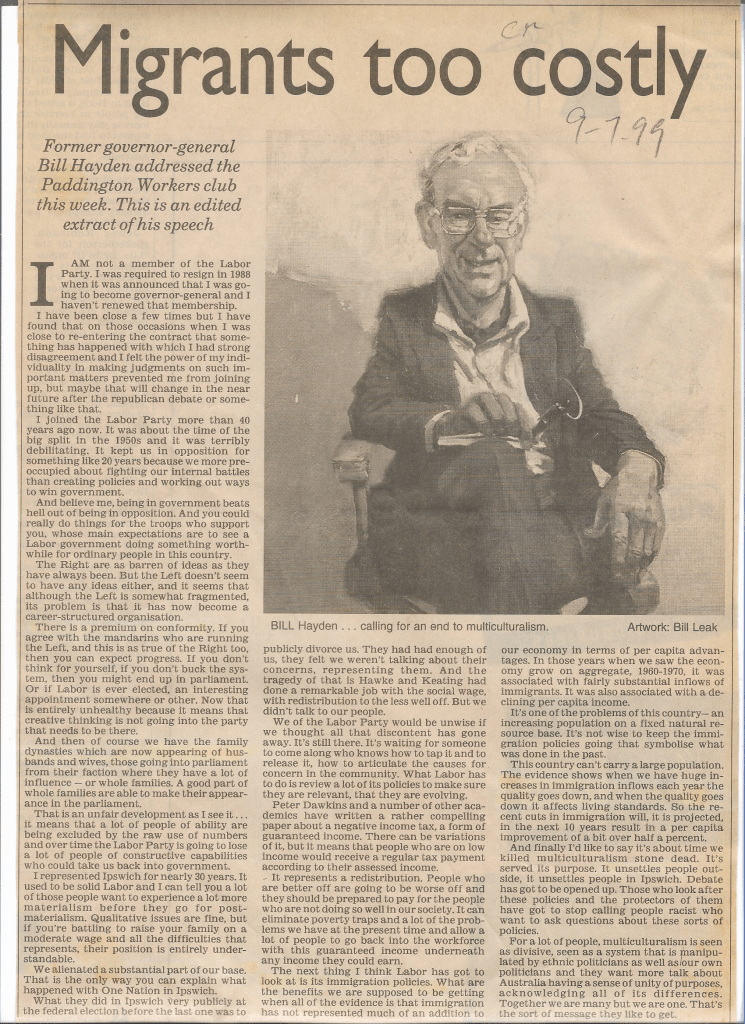
Biculturalism is about limiting diversity and managing differences. There is room for exceptions like my Indian friends, but only exceptions. The numbers have to be limited overall (for economic reasons as a bare minimum), but especially the numbers from culturally incompatible sources. The problem with many of them is their religiosity. Australia has moved from a predominantly Christian faith to a secular state more than ever, with vestiges of that faith still playing out in our politics. Original sin, consulting one’s conscience and taking responsibility are all still in evidence, most notably in the far left’s extreme social progressivism. That is why they fail to recognize the danger of extreme religious ideologies among immigrants they’re so keen to ‘accept’. It’s also why we Aussies are doing this to ourselves.
Over the course of several generations, populations can evolve peaceably if the cultural circumstances allow it. In a socially cohesive society (such as Australia was 50 years ago), the children of limited numbers of immigrants readily assimilate with the host. The exceptions are those with hard-core religious beliefs such as Jews who nonetheless keep their practice in private. My mother grew up in the 1930s in Geraldton, WA and one of her school friends, a Jew, was told by her parents not to befriend ‘gentiles’. My mother was disappointed. A generation later, I befriended her would-be-friend’s son in Queensland and introduced him to my mother. The recollection and regret around the dinner table is one I will always remember. There is a lesson in this about cultural compatibility that should inform our immigration policy.
Biculturalism sets a clear path forward. Multiculturalism has no clear vision. Multiculturalism is utopian, idealistic and although it seemed to have some merit at first, the fact is it is too much to expect of ordinary people on top of a host of other demands on their cognition and general capacity. We should limit ourselves to Aboriginal, British and European cultural merging. We are now irrevocably multi-racial, but we can save our culture if we put our minds to it.
Election 2025
In the final days of the federal election campaign, it appears Australia will not be changing direction.
So far, the only successful response to mass, indiscriminate immigration has been in Denmark. There, the left-wing government was losing ground to right-wing parties until it clamped down on immigration. It is perhaps no coincidence that it is a small country – small enough to garner a sensible, collective response. France’s Rassemblement national (National Rally) has similar features in that it is economically left but socially right. It is probably due to the size and complexity of France, as well as it’s antiquainted electoral system, that they are still not properly represented in government. Italy – a country steeped in culture and tradition – is making headway in stemming the tide. Germany, Spain and (lagging behind considerably) Britain, are, like Australia, so far unable to muster the self-preservation to elect a socially right, economically left government.

What we need are candidates who have the moral fortitude to tell their electorates that the era of division and tribal enclaves is over. That we (Australians) are back. We made a mistake. We gave new-comers mixed messages about our expectations: “You must accept Australian values.” … and … “You can celebrate your own culture.” These are not always compatible. We renounce multiculturalism and now we will all forge ahead together with a clear vision. That vision is the egalitarian spirit the Commonwealth was founded on. The first constitution formed by referenda, for the first ever continent-nation. A culture based on the merging of Aboriginal and British-Australian traditions, of a sustainable economy in which government and private enterprise complement each other. This is the culture so many came here – ostensibly – to enjoy. No more government-funded non-English language services, for example. If that is unacceptable, the only choice is to rely on relatives or their community to translate – or go to the country where your language is spoken.
Hopeful Signs For The Future
Senator Rennick has indicated he supports cutting funding to wasteful services that undermine Australian culture and his new party is called People First. Candidates like him, are garnering the respect of Australian and immigrant citizens who respect those who respect themselves. Another development to keep an eye on is Pauline Hanson’s daughter, Lee Gun in Tasmania. She is a candidate for the Senate and gives a very good impression in the media. Pauline herself has 3 more years to go as a Senator and at 70+ years old, may be handing the reins over to a younger, more agreeable generation. With Gerard Rennick’s People First back in the Senate and a One Nation under better management, the splintered minor parties coalescing around a genuinely proud Australian culture may make the 2028 election quite a bit more interesting than this one is turning out to be.


Leave a comment