
True Believers was a 1988 TV miniseries and a book published on the centenary of Federation in 2001 by John Falkner and Stuart Macintyre. It’s a phrase that evokes loyalty and dedication to the long, progressive tradition of the Australian Labor Party.
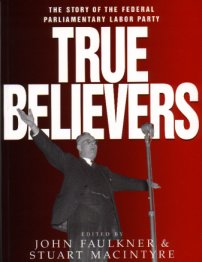
As a former member of the ALP for most of the 1980s, I know the peculiar appeal of this quintessentially Australian irony; that change is inevitable, that tradition and progress go hand in hand, like a crown over a commonwealth.
In many ways, labour has been at the centre of the Australian story from the beginning. Convicts laid the foundations, literally, and settlers were drawn or economically coerced to come and work hard to build their own little bit of the British empire.
The shearers’ strike of 1891 is one of Australia’s earliest and most important industrial disputes. It was primarily between unionised and non-unionised wool workers. It resulted in the formation of large camps of striking workers, headquartered in Barcaldine, central Queensland, and there were minor instances of sabotage and violence on both sides. The strike was poorly timed, and when the union workers ran out of food, they were forced to come to terms. The outcome is credited as being one of the factors for the formation of the Australian Labor Party. Some of the strikers were incarcerated at St Helena Island (Moreton Bay). It is said that the idea of a political party was first proposed in the exercise yards of that prison.
Back in Barcaldine in 1892, the reading of the Labour Party manifesto under the Tree of Knowledge led to the formation of the Australian Labor Party.
Workers’ rights were a feature of politics at the turn of the century.
With the formation of the Commonwealth came, among other aspirations, a strong desire to protect workers’ rights from cheap, foreign labour.
There was a concern ‘cheap’ non-white labour would compete with colonists for jobs, leading to lower wages and a lower standard of living. These anxieties stemmed partly from anti-Chinese sentiment dating back to the gold-fields of the 1850s. They also reflected resentment towards Pacific Islanders who worked in Queensland’s sugar industry.
At the time, racial conflict was seen as a consequence of a multicultural society. It was felt a national government would be in a better position than the colonies to control immigration.
Parliamentary Education Office – The Federation of Australia
One of the first acts of parliament was the Immigration Restriction Act, a pillar of the White Australia policy that sought to create a ‘working man’s paradise’.
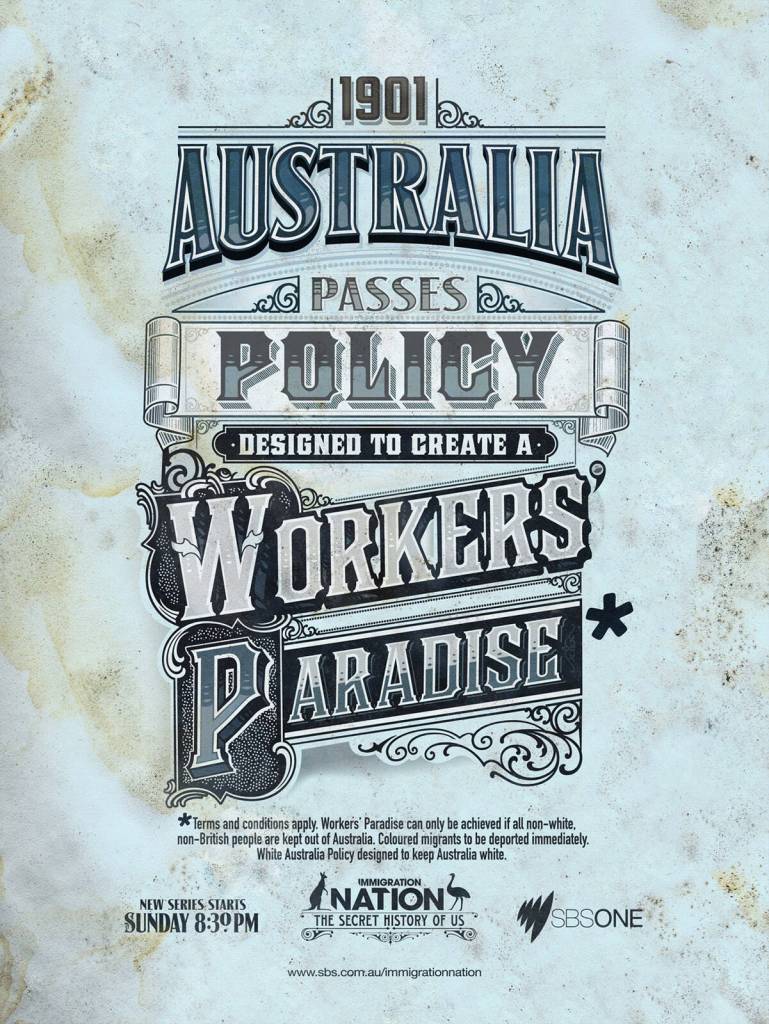
However, there was always a tension between this population-limiting policy and an urgent sense to ‘populate or perish’. Yet both conservative and progressive sides of politics placed great value on Australia’s cultural homogeneity for decades.
In an anonymous Open Letter to Australian Marxists and Leninists, someone (called ‘Graphite’) with a previous association with Australia’s Marxist-Leninist associations, describes the socialist point of view:
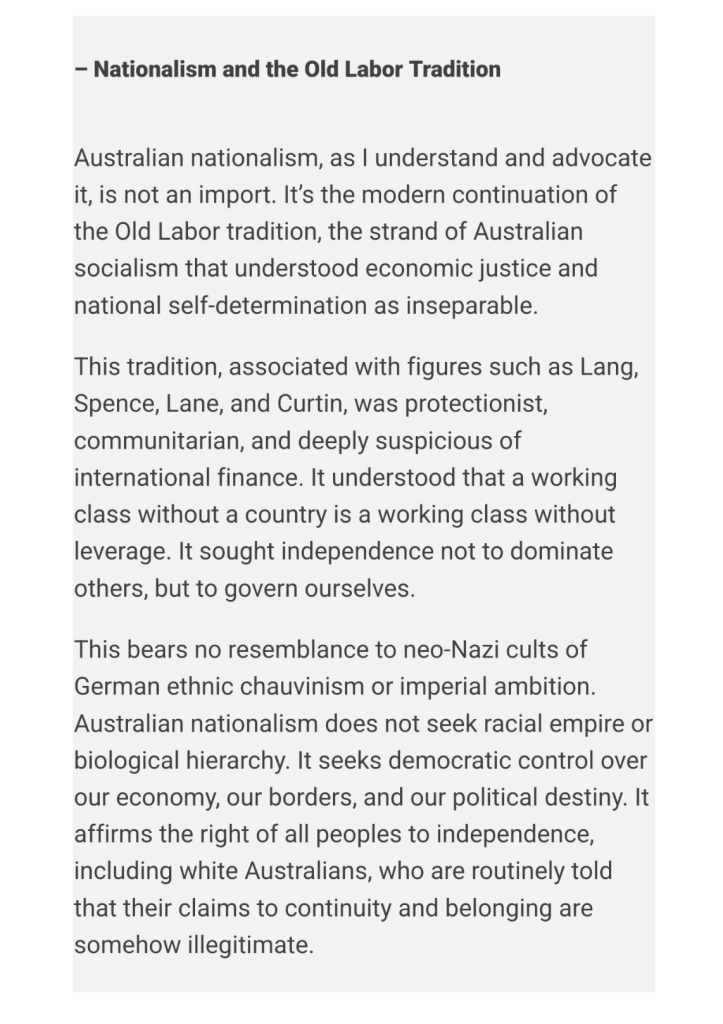
The neoliberal privatizations of the Thatcher/Reagan/Hawke/Keating era shifted power from collective government-sponsored enterprises in competition with private enterprises to business interests and the increasingly wealthy elites.
Then the Howard government’s Industrial Relations laws gutted the power of unions by making membership voluntary and introducing enterprise bargaining.
Work became increasingly casualized and uncertain. In order to keep up with technological change and innovation, the economy required a workforce that had to fend for itself, retrain on the hop and adapt to new professions.
Technology has transformed work, so is their still a labour movement to speak of? Where does this leave the Australian Labor Party?
Labour Day in Australia and in many other countries is an annual public holiday that celebrates the achievements of workers and the labor movement, particularly the push for an eight-hour workday.
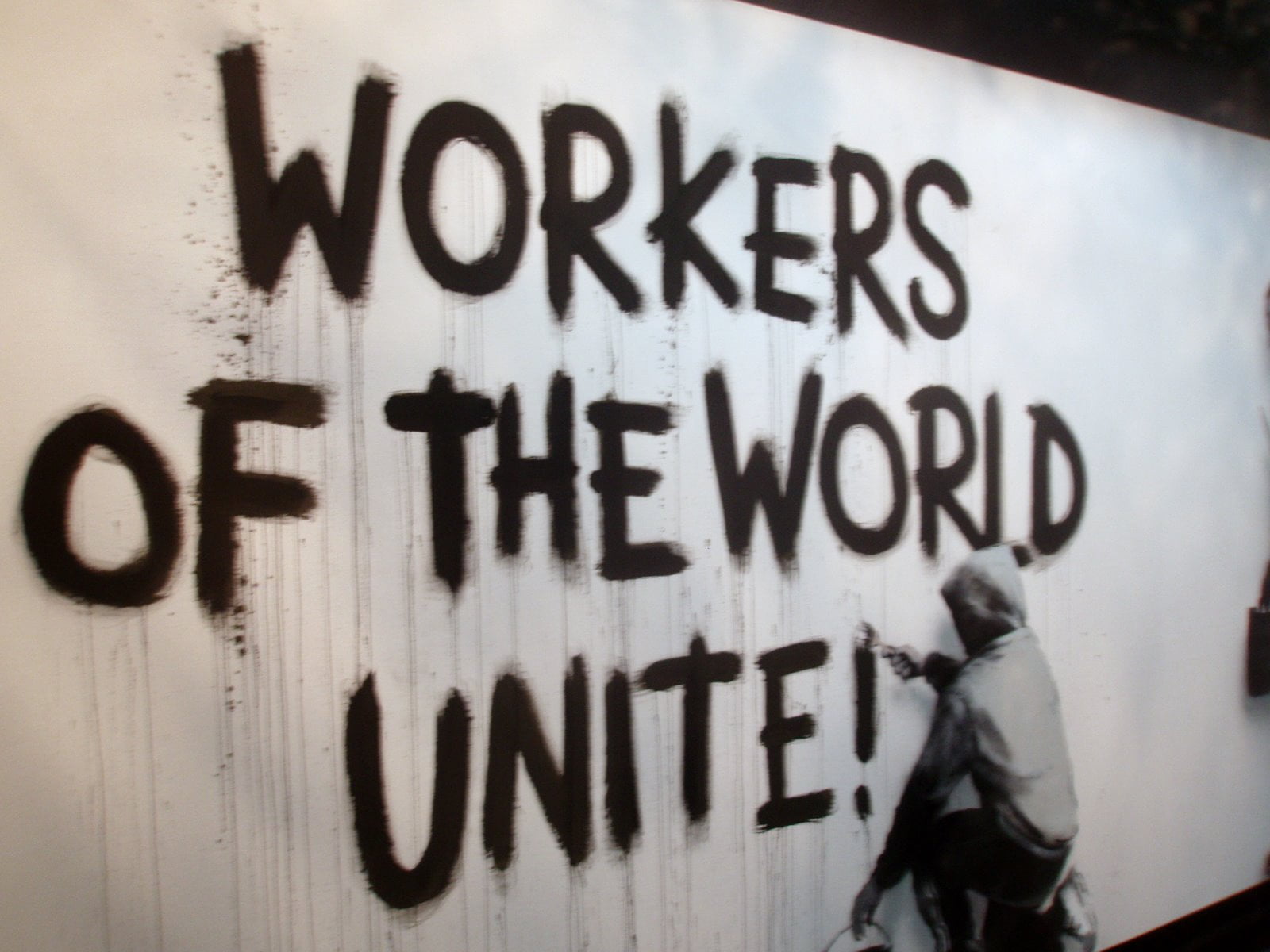
Images from redbubble.net and communist.red
The folly of dismantling Australian protectionism and social homogeneity are eloquently laid out in the next part of Graphite’s Open Letter:
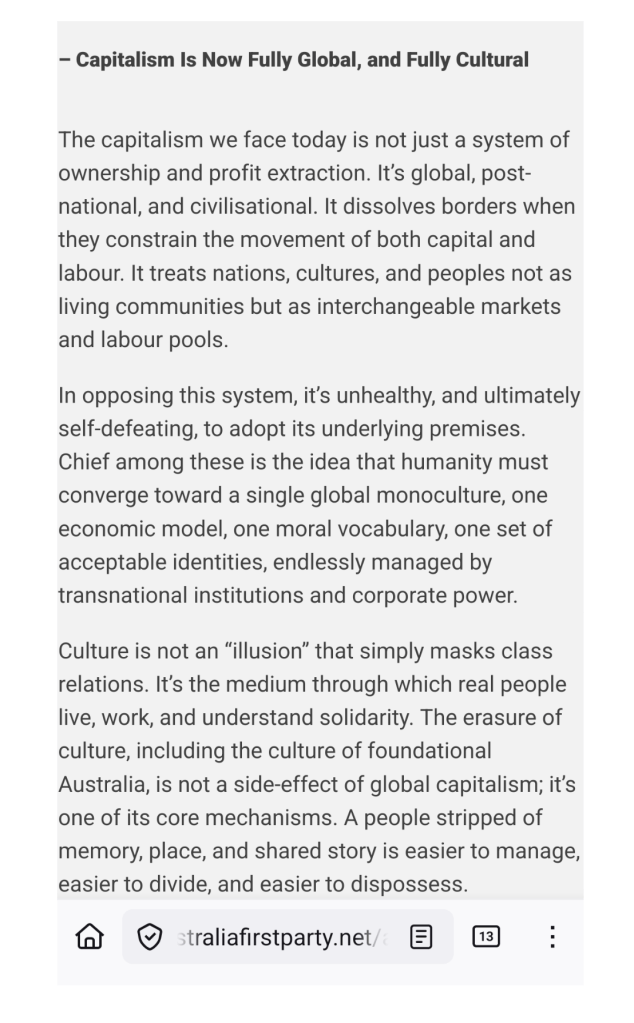
Once Australia abandoned its national culture and opened up to globalization, the race to the bottom was on (pun intended). Having been softened up on guilt and multiculturalism, the voting public were no longer able to marshall opposition to the silent compact between the major parties favoring high levels of immigration. From 2005, after ‘stopping the boats’, it was ramped up to levels deserving of the descriptor ‘mass’. It served the interests of business, political and bureaucratic elites and the lingering historical assumptions that we need more people.
The Australian people, however, have better instincts when it comes to our continent’s carrying capacity. For decades survey after survey have shown little support for mass immigration. 70% of respondents say Australia doesn’t need more people:

So now what do we say to recent immigrants who expect to be included without assimilating, like Mr Rav Singh here?

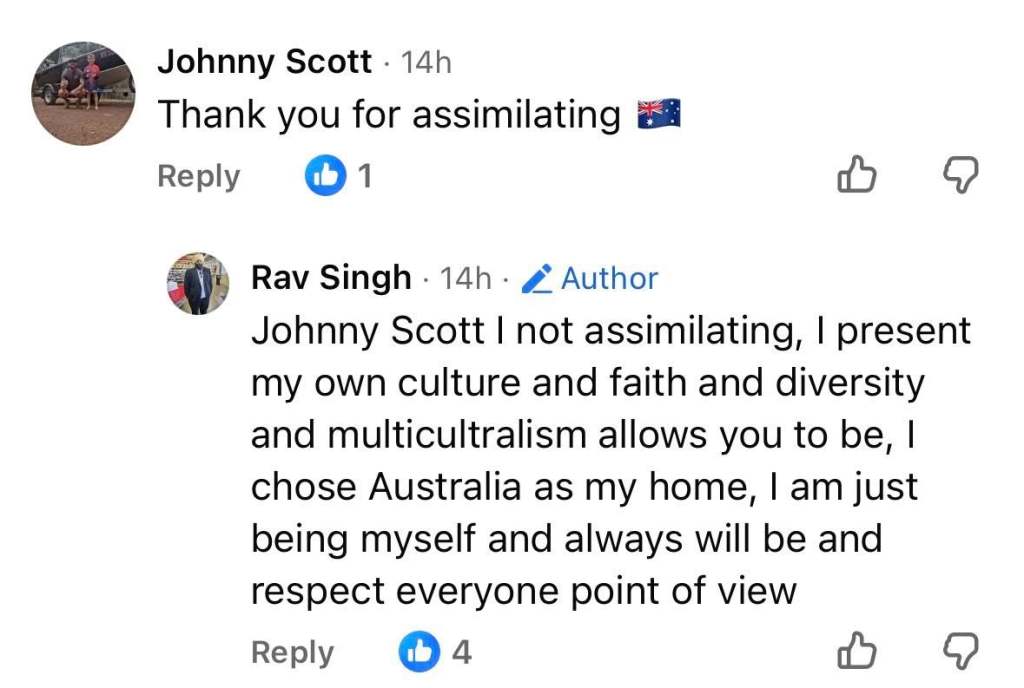
“Respect everyone’s point of view” … except, Mr Singh, that you don’t know the recent history of this country and multiculturalism. For 50 years, those who opposed it were vilified. You’ve walked into a deception. The people of Australia were subverted and continue to be with indiscriminate, mass immigration, of which you are a culpable part. The blame is not all on you. Primarily it lies with the political, business and bureaucratic elites. You know how it is, in most countries. The Australian people are only responsible in as much as our liberal, Christian culture of compassion led us to experiment with social diversity. It hasn’t worked out.
The Australian Labor Party and the labour movement in general has become an empty shell of its former self. The underlying premise of the Labor Party’s existence -to protect the worker – has not kept pace with change.
Those who cling to the ALP as loyal voters are clinging to an illusion of progress with the trappings of tradition. By doing so, they are gutting the living standards and cultural heart out of middle Australia.
More than ever before, Australia needs a renaissance. This is the subject of my upcoming book.

Leave a comment