

A Day of Unity?
SETTLEMENT DAY Or Foundation Day?
On January 26th, 1788 the First Fleet arrived at Port Jackson after a nine month voyage at sea from Portsmouth, U.K.. On the 7th of February, Governor Arthur Phillip raised the British flag and proclaimed the (penal) colony of New South Wales. They had arrived at Botany Bay 8 days earlier, but found it unsuitable and so the whole fleet relocated to Sydney Cove, known as Warrane to the local Gadigal Aborigines. This marked the beginning of British settlement on the continent, then known as both New South Wales and New Holland. After tens of thousands of years of occupation, the Aborigines had subtly altered the land to more readily supply their needs, such as fields and hilltops cleared of trees to provide for kangaroos and lookout points. In many places, the newly arrived British saw beautiful lands resembling their Big Estates.

As the settlers got to work establishing themselves, initial relations with the local Aborigines were quite amicable thanks mostly to Governor Phillips’ enlightened views. There was curiosity on both sides. Aborigines enjoyed having their hair cut because it helped remove irritating insects. However, soon the effects of small pox took hold among them and illness and death was widespread. Leaders on both sides became known to each other and attempted to co-exist amicably. However, disputes arose and violence ensued. Apparently there was insufficient patience between a people on the cusp of Industrial Revolution and a people still in the Stone Age. No two peoples were more distant on the development scale.
Sydney Town struggled to survive and came very close to starvation; saved only by supplies from overseas. In time, however, as more ships and immigrants from Britain arrived, it became more self-sufficient and productive, even exporting to other countries.
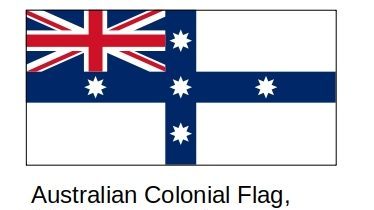
Early celebrations of the 26th of January as Australia Day began in Sydney in the early 19th century, also referred to as Foundation Day. By 1838, it was declared a public holiday to mark the 50th anniversary of the colony (ANTAR).
From about that time, a flag known as the Australian Colonial Flag and later the Federation Flag became well known and widely flown.
The name Australia was popularised by the explorer Matthew Flinders (the first to circumnavigate the continent) from 1804, and it has been in official use since 1817 (Wikipedia). New South Wales didn’t become ‘Australia’ until at least 1829 when New Holland became the Swan River Colony, later Western Australia.
AGE OF SAIL AND MIGRATION
The 1850s to 1900 saw a huge influx of immigrants arriving by sailing ships, mostly from Britain and Ireland, but also from other European countries as well as other parts of the world. This period saw the Frontier Wars emerge as settlement spread and Aborigines were increasingly dispossessed and dislocated from their traditional lands. The British strategically located major settlements on every side of the continent, essentially to encircle it to claim the whole continent. There were concerns the French or other European countries may try to gain a foothold. 40% of Aborigines were in what is today Queensland and that is where many if not most of the conflicts took place. However, from 1770, upon Captain Cook’s claim to the eastern part of the continent on behalf of the U.K. government, all natives became British subjects. The official policy was to protect them by convicting those committing crimes against them and by providing reservations. However, economics came first and their protection was little better than lip service. Many were rewarded as they adapted and integrated. Nevertheless, their numbers dwindled dramatically from an estimated 600,000+ in 1788 to around 117,000 in 1900 (CreativeSpirits).
The voyage from Britain to Australia became faster and increasingly safe throughout this period. Despite its greater distance, it became safer than crossing the Atlantic to North America, which was an unregulated, commercial route. Scientific knowledge of the curvature of the Earth and wind and oceanic currents improved, as well as the design and build of sailing ships. Government oversight of transportation (of both convicts and free settlers) increased to minimize health hazards. The Admiralty took over regulation of the recommended route, advizing a passage that skipped Cape Town in favour of catching the Antarctic westerly currents and winds further south. These developments instilled confidence in government intervention that contrasts with the experience of the North American colonies and which still characterizes Australian’s faith in institutions. This capacity for collective cooperation goes some way to explaining the colonies ability to unite as a federated commonwealth (The Long Farewell, Don Charlewood, 1981).
A DAY OF NATIONAL UNITY?
Clearly we have much to celebrate. Is it far fetched to have a day of national unity on the 26th of January? Is it more realistic to call it Settlement Day or Foundation Day? Australia today is ethnically divided in more ways than just the first and second Australians. Maybe we should forego ‘Australia Day’ until such time as there is genuine, widespread agreement and the process of reconciliation leads us there. In the meantime, let us do more to rejoice the many reasons we have to celebrate being Australians. As the Wattle Day Association says, “By underwriting properly resourced National Wattle Day celebrations, the government could leave it to the people to find ‘a way through’ on this matter. It could be left to Australians to determine, over time, how and when our shared aspirations as a nation are best celebrated.”
FEDERATION DAY
January 1st marks the day all six colonies on the Australian continent and the island of Tasmania became a federated Commonwealth in 1901, the first day of the 20th Century. It was the first time in human history that a continent united into one country. Our Constitution dates from that day. It was the first Constitution ever drafted and approved by referenda. Since then, Australia has evolved into a modern nation as a result of a number of well-informed changes (including a series of Imperial Conferences 1923 – 1937), guided by more than a thousand years of political experience on the British Isles. Our constitution continues to guide us well.
Other Significant Dates
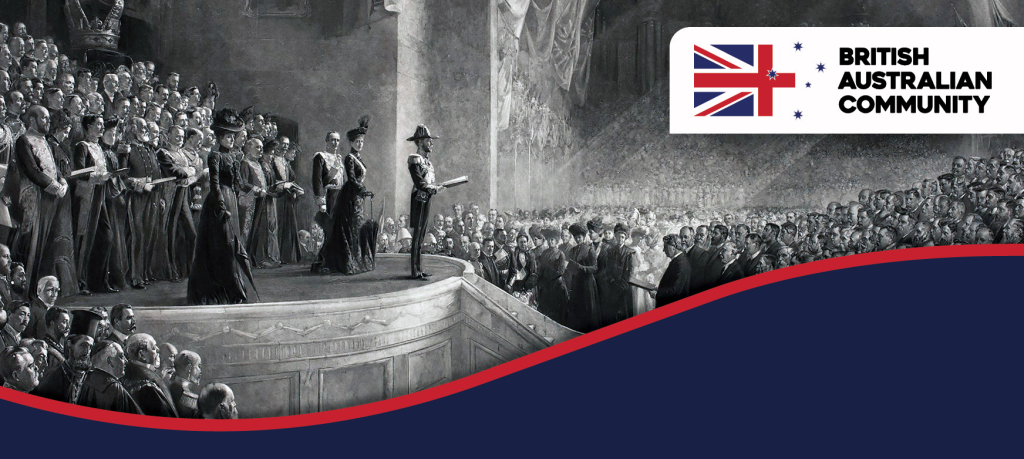
First Commonwealth Parliament
9 May marks the day of the Opening of the First Parliament of the Commonwealth of Australia by His Royal Highness the Duke of Cornwall and York, 1901. Parliament is the supreme authority of the land, guided by the constitution and convention. This hand-painted official portrait is by Tom Roberts and perhaps one of the most famous paintings on public display in Parliament House.
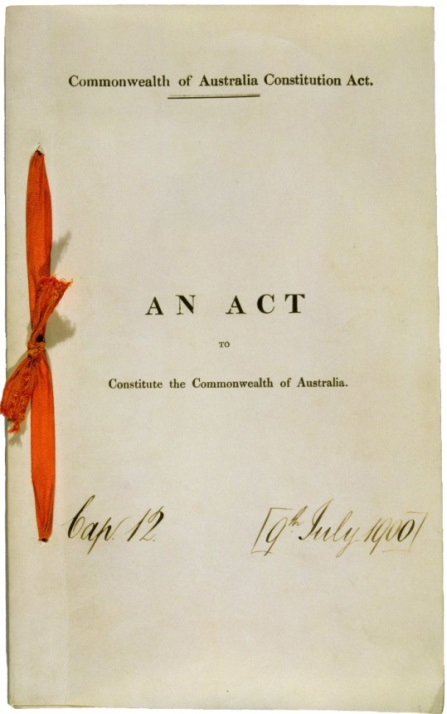
Constitution Day
9th of July, 1900, is the day Her Majesty Queen Victoria signed the Royal Commission of Assent and brought into existence the Commonwealth of Australia Constitution Act. Constitution Day is celebrated each year to mark the day. The National Archives of Australia often hosts a Constitution Open Day on July 9th, which includes special viewings of the original Constitution, talks, tours, and children’s activities.
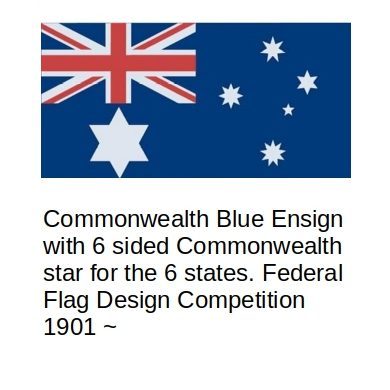
3rd September, Flag Day, is an opportunity to celebrate with pride the anniversary of the first time the Australian National Flag was flown. On that day Prime Minister Edmund Barton announced the winners of a competition to design a flag for Australia. Since then the stars have changed a bit, as you can see in the image here. The Flag will no doubt continue to evolve.
September 1st is National Wattle Day which celebrates our national floral emblem, Acacia pycnantha; a species more than 30,000 years old and one of the first to recover from fires. In terms of cultural baggage and social division, National Wattle Day is a safe haven with deep social, environmental and cultural roots, uniting all Australians. Recently successive Governors General have been giving recognition to its observance.
March 3rd is when the Australia Act (1986) came into effect. CQU Historian Dr Jones suggests this is our true Independence Day because it’s when the last legal links to the U.K Parliament were severed. There was no referendum.
November 3rd is when King Charles III was born. The Sovereign is our Head of State and as a non-partisan symbol of statehood, is – or should be – a unifying figurehead. The King’s Birthday is a public holiday across the country, but on various dates. Most states and territories celebrate it in June, while WA does it in September and Queensland chooses October. State Governors are appointed not by our Governor General, but by King Charles on the advice of their respective Premier. Unfortunately for Australia, for now, our Head of State arrangements are somewhat contentious. Britain doesn’t have a ‘Britain Day’. The King’s Birthday is their national (and bank) holiday.
Aboriginal Milestones
3rd of May is Mabo Day, the day the High Court, in 1992, overturned NSW Governor Richard Bourke’s 1835 Proclamation of Terra Nullius which declared the land belonged to no one before the British laid claim to it (because the Aborigines were deemed not to be utilizing it adequately). Note terra nullius does not mean ‘land empty of people’.
27th of May, marks the day in 1967, the Australian Government held a referendum in which more than 90 per
cent of Australian voters chose ‘Yes’ to giving Aboriginal and Torres Strait Islander people the same recognition as the rest the Australian population. This dramatically improved the rights they had which – for the most part – had previously been in the hands of state governments.

Military Milestones
April 25th is ANZAC Day and well commemorated as a day of remembrance for momentous bravery in a defeat.
2nd of November marks the day Kokoda village was retaken by Australian and Papuan land forces. The Kokoda Trail Campaign was our most significant military victory since Federation. The campaign continued through November. We would do well to acknowledge this triumph on Remembrance Day, November 11th.
My pick for a properly resourced public holiday is definitely Federation Day. Celebrations do not conflict with New Year’s Day. New Year’s is celebrated on December the 31st. I have held Federation Day celebrations for several years on the 1st, late in the afternoon when the heat of the summer day has receded and everyone has recovered from the previous night’s revelry. It works.
New South Wales Day & The Other States
January 26th is the day New South Wales was founded. The other five states mark their beginnings later when they separated from NSW (or in WA’s case was established as the Swan River Colony, replacing ‘New Holland’). It is the beginning of settlement, of agriculture and of civilization (civic = city) in Australia. It displaced and absorbed the local population. It is different things to the different states, so it is up to them to decide how to mark it. Some likely outcomes are; NSW Day, or Foundation Day in NSW; Settlement Day/NSW Settlement Day in the other states.

Leave a comment