
The Future?
- The Future?
- Is a Republic Inevitable?
- ARM (Australian Republican Movement) and Real Republic
- AML (Australian Monarchist League) and ACM (Australians for Constitutional Monarchy)
- Choices
- An Apolitical Head of State
- Australian Sovereignty
- Abolition In The U.K.
- A Coordinated Federal System
- To Change, or Not to Change
- An Australian Monarch – Beyond a Royal Representative
There is a view in some quarters that monarchies are destined to end up as republics. This seems to me to be a recipe for sleep-walking into mediocrity, because not enough of us are considering all the possibilities. Some people are indifferent to who our Head of State is and a few people are really fired up about it. It seems we can agree that our Head of State should be apolitical and unifying. We all need to have more considered conversations about the form of this largely symbolic and ceremonial role in our government.

Is a Republic Inevitable?
Australia’s political system is based on British institutions, with some borrowings from other parliamentary democracies. English political history demonstrates an acceptance of (and adaptations to accommodate) change.
In centuries past, who sat on the (English) throne was decided on the battlefield. In time, parliament developed a greater role, beginning (arguably) with the Magna Carta. That document challenged the power of King John. Parliament further curtailed the authority of the Crown in the English Civil War that culminated in regicide. In 1688, Parliament determined the line of Succession in the Glorious Revolution that replaced the Catholic Stuarts with Protestant King William and Queen Mary.
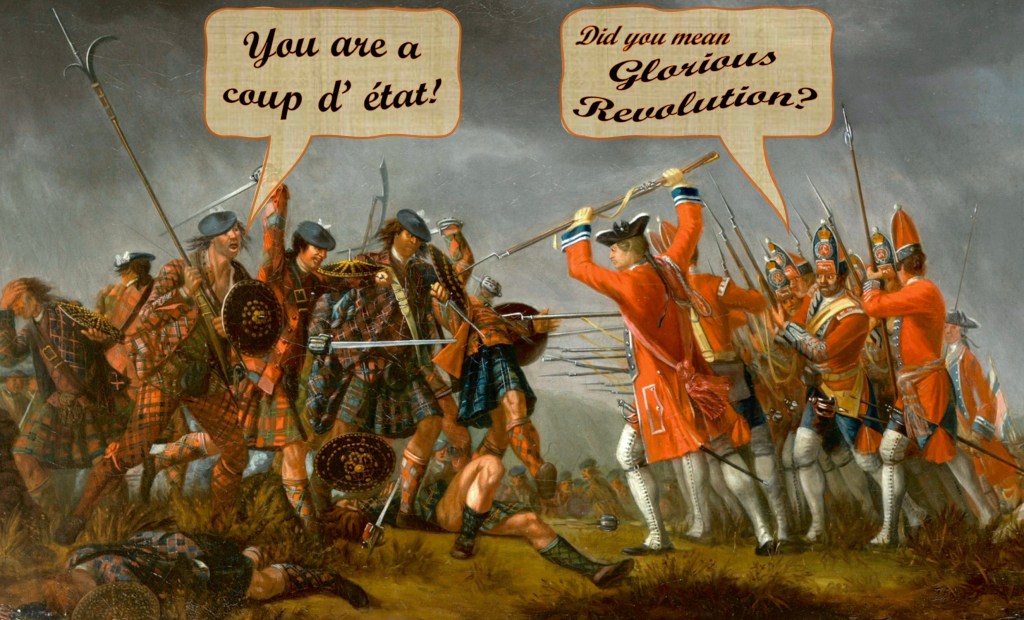
The bloody 17th century English Civil War that resulted in a brief republic known as the Commonwealth of England was horrifying enough to instill a desire never to repeat it. Out of that came a talent for compromise which led to constitutional monarchy, which is the historical culmination of thousands of years of political history and experience. Britain’s political system reached peak performance during Queen Victoria’s reign when ‘everything fell into place, everyone knew their place and everything went like clockwork’, as my Professor Robert Manne said in a lecture at La Trobe University back in about 1980.
Since then, the prevailing wisdom has been that change ought not be for the sake of change, but be well advized [sic] and based on sound arguments. Australia has, fortunately, inherited this good, commonsense. Dennis Altman has written about the ‘peculiar’ persistence of constitutional monarchies. But it is not so peculiar when one remembers that Australia is already a republic, other than our ceremonial Head of State arrangements; we just call it a ‘Commonwealth’. The word was chosen to accommodate Australian’s aspiration and gradual transition to nationhood. “It was preferred to have a name that would be appropriate for such a[n independent] nation.” (Constitutional Clarion 09:50). In Australia the prevailing assumption is that the choice before us is between a British Monarch and an elected Australian President or Governor General.
There are two groupings in Australia claiming to represent the opposing camps;
ARM (Australian Republican Movement) and Real Republic
ARM has done considerable work since the failed 1999 referendum to come up with a model it claims has widespread support. They call it “Australian Choice” and it requires state and federal parliaments to nominate candidates for a presidency, who then go to a popular vote.


Real Republic is “supported by the Clem Jones Group in line with the wishes of the late Clem Jones‘ ” preference for a head of state through a direct election. They, too, were involved in the 1999 referendum.
Republicans emphasize multiculturalism as a reason for change.
AML (Australian Monarchist League) and ACM (Australians for Constitutional Monarchy)

AML defends the current arrangement and works to explains its merits. Its stabilizing and non-partisan qualities will, they say, serve us well into the future, as it has in the past.
ACM Australians for Constitutional Monarchy led the campaign that defeated the 1999 referendum for a republic.

Australia’s constitutional monarch is British. As we know, Britain has become multicultural.
Choices
The difference between a monarchy and a republic can be characterized as letting nature take its course and choosing: (click on the images to watch the videos)
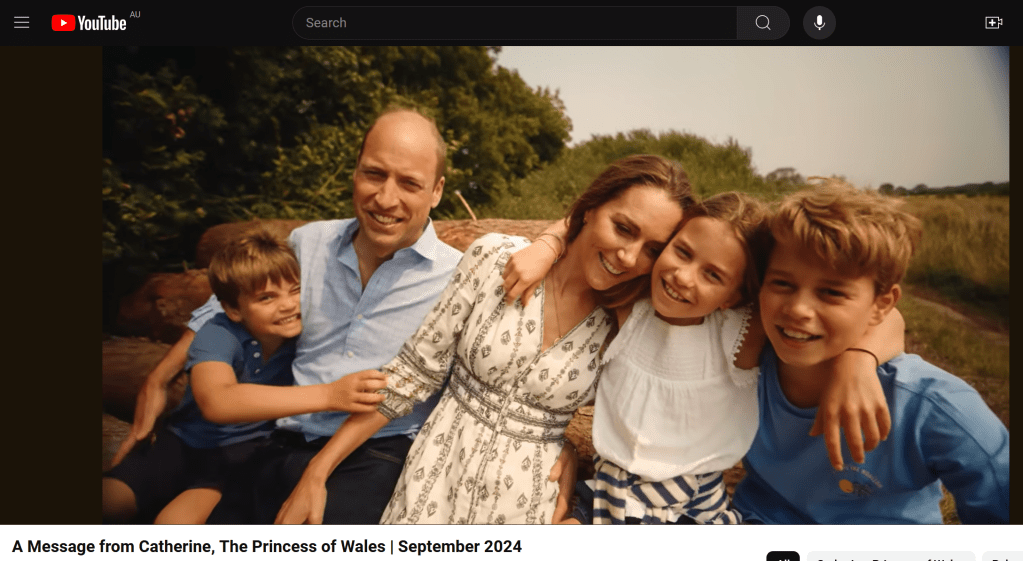
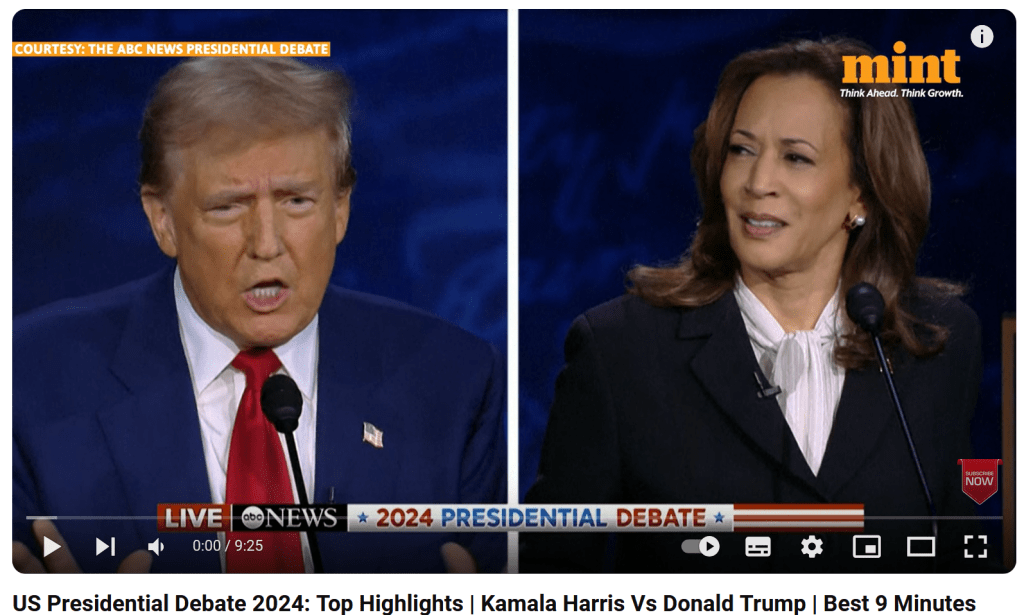
Choosing a Head of State is a modern act of self-determination; a quintessentially democratic process of representation.
An inherited Head of State is a family affair; an experience shared by all.
An Apolitical Head of State
There is wide-spread agreement (in most countries) that the Head of State should be a unifying figure.
ARM’s Australian Choice model attempts to ensure a non-partisan Head of State is elected as is the case in Ireland, Israel, India and other republics. However, in practice these models have been shown to fail in their goals as some of these elected heads of state have become exceedingly political, claiming they have a mandate.
Our constitutional monarch acts as a unifying symbol and his viceroy follows the advise [sic] of the elected government. In the U.K. the King should restrict political opinions to a private audience with the Prime Minister. In Australia, the Governor General does not regularly meet with our Prime Minister for this purpose. In this sense, our Governor General has less influence, but does retain some independence. It can take advice and act on it, ask questions and make decisions within the limits of its role.
The Governor-General is appointed by the King on the advice of the government of the day. Unfortunately a pattern of partisan appointments has developed (such as ALP Prime Ministers appointing former Labor politicians – Bill Hayden, Sam Mostyn and, ironically, Sir John Kerr, who dismissed the Labor Prime Minister who nominated him, Gough Whitlam). However, most have acted with decorum so far and met the expectation of non-partisan conduct. Nonetheless, there have been calls for both the PM and Opposition Leader to jointly nominate a candidate. This would prevent a race-to-dismiss that occurred during the constitutional crisis of the Whitlam Dismissal. Public support could for this protocol could be tested at a plebiscite during a federal election. Plebiscites are not binding, but they were included in our constitution to test a government’s policy at the ballot box. Personally, I think the policy is a no-brainer and a plebiscite would be a waste of money.
Australian Sovereignty
Australia’s sovereignty and independence has evolved through many steps. It’s a long story, but with respect to our Head of State’s representative, Sir Isaac Isaacs was our first Australian Governor General and since 1965, all Governors General have been Australian.
The King is our Head of State because and that is who allegiance is sworn to. The Governor General is the Viceroy, the King’s representative and a de facto Head of State who in fact exercises almost all the powers of the Head of State. I describe these powers in my post about abolition of monarchy in the U.K. HERE.
The Australia Act 1986 formally ‘severed all legal ties between Australia and the United Kingdom’.
Electing the Governor General
A proposal to keep the monarchy and introduce an element of democracy is to elect the Governor General- so that we can have our cake and eat it too.
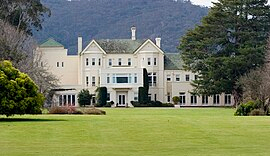

Dr David Solomon, former Queensland Integrity Commissioner, wrote on the possibility of directly electing the Governor-General without any need for constitutional change. Prof. Anne Twomey on her YouTube channel Constitutional Clarion, confirms this and goes further, saying in a video called Electing the Governor-General, that it might be advisable to do so for a decade or two to trial a system that could serve as a model for a possible republic. Her suggestion (at 17:00) is that existing (and former) state Governors (who are willing to) be the candidates and that at election time a brief booklet providing biographical details of each of them be provided to electors and no ‘unedifying campaigning’ be allowed.


By drawing on the pool of state Governors, we are assured of people with a track record and public confidence in their discretion and abilities. In another video on Sortition, she suggests that instead of an election, the Governor General could be chosen from this pool by a lottery (picking a name out of a hat of some sort).
However, there is a simpler option to this, as I explain below.
Abolition In The U.K.
The possibility that the U.K. could abolish the monarchy should prompt us to to formulate a backup plan. I wrote a post about having a backup plan HERE. I only suggest that it is prudent for us to be prepared for an unlikely possibility. It would undermine confidence in the monarchy to take this out of proportion. The remote possibility of abolition in the U.K. should make us appreciate what we have while we still have it. That it could be taken away from us ought give us reason to be all the more cautious about changing it.
A Coordinated Federal System
What few, including the Republican movement, fail to notice is that if our Head of State were replaced with an elected official, the state Governors would all still be appointed by the King. It’s a remarkable oversight. The appointment of state Governors is not addressed in the Commonwealth constitution. In fact, at Federation, the Colonies chose not to be subordinate to the Governor General, as is the case in Canada. Since the Australia Act (1986), state Premiers by-pass the British government and directly advise the monarch on who to appoint as Governor. What a ridiculous situation to have under a Commonwealth Head of State that is independent of the Crown. Surely the states should decide where their loyalty lies as part of the process? Abolition of the monarchy in Britain would of course equally affect the states, so the need for a backup plan concerns them just as much.
A Preamble For A New Australian Identity
Federal/State integration presents an opportunity for greater national unity and establishment of an independent Australian identity. This includes the creation of a Preamble to the constitution. The Australian Constitution doesn’t have a Preamble. What we think of as the Preamble is in fact a preamble to the U.K. Parliament’s Commonwealth of Australia Constitution Act (UK) 1900 (Parliamentary Education Office). To create a Preamble, a coordinated request from all the States is required under Section 51 (xxxviii) (Dr Renato Costa).
This could be part of the integrated federal system I describe below that allows us to explore the monarchy versus electoral systems for our Head of State arrangements. An outcome of this is a Preamble that recites our history and the what we see as the modern purpose of the constitution; a Preamble that brings together the issues of Aboriginal sovereignty, reconciliation, the Head of State and our national holiday (Australia Day). Should this happy day ever dawn, it would be the new Australia Day; the culmination of an Australian Renaissance.
All of this depends on developing conventions. One weak link in the chain – an uncooperative Premier – and the chain breaks.
To Change, or Not to Change
Whilst some see no need for any change, others do, and some of their reasons are:
- The King of England symbolizes wealth inequality and illegitimate power privilege.
- Monarchy is an outdated tradition.
- The Sovereign isn’t Australian and is in absentee.
In some constitutional monarchies, the sovereign’s elaborate circumstances are not personal property, but state-owned. Undue or unseemly personal wealth, especially if the position in any way enabled it, would quite rightly bring the monarchy into disrepute, should a member of the royal family attempt to accumulate a fortune. Public opinion has influenced the line of succession in Britain, such as King Edward VIII‘s abdication in 1936 and the same can be expected here. An Australian monarchy would be supplied with regalia befitting the nation’s symbolic Head of State and that regalia would be limited and expected to endure. The monarch’s power would be legitimized by a referendum and as we all know, the privilege is a duty to serve, not be served. Many do not envy the royal family their lot in life.

Family isn’t outdated, and of course it isn’t a ‘tradition’. It’s where we all come from; the loins of a man and woman. Family is the most fundamental unit in society. Today we accept that it can take many forms. A royal family is better known than a viceroy – we more readily identify and empathize with them as they, like we, go through the ups and downs of life. Also, it relieves us of the burden of voting.
Canadian Historian Jacques Monet once noted “A king is a king, not because he is rich and powerful, not because he is a successful politician, not because he belongs to a particular creed or to a national group. He is King because he is born. And in choosing to leave the selection of their head of state to this most common denominator in the world – the accident of birth – [people] implicitly proclaim their faith in human equality; their hope for the triumph of nature over political maneuver, over social and financial interest; for the victory of the human person.”
Monarchy New Zealand
The role of a symbolic head of state is to be a unifying representative. It’s power is very limited and proscribed to arbitration in special circumstances. By including an element of fate in determining who arrives at the position, the contentiousness of elections is removed. A managed monarchy is not entirely without choice; it provides a pool of candidates in the line of succession. Electing a symbolic head of state is taking choice too far.
An Australian Monarch – Beyond a Royal Representative
Australia has the constitutional ability to replace both the King and the Governor-General with an elected Head of State or its own Monarch. Prof Twomey states in the comments to her video that a referendum would be required.
We have a prudent process for changing the constitution, so only after overwhelming evidence and experience does a change gain the broad support needed to amend it. Sometimes it has happened swiftly, such as the changes to Senate appointment rules after The Dismissal. Sometimes it has been slow but overwhelming, such as the 1967 recognition of Aborigines’ rights as full citizens. Bi-partisan support is essential.
At first the idea of a home-grown monarchy strikes us as ludicrous because we regard monarchy as synonymous with Britain, tradition and history. It is how the British see themselves, which is why there is no “Britain Day” and the King’s Birthday is their national holiday. Some might think it would make Australia the laughing stock of the world. But if we are to ‘grow up’ and become a ‘mature, independent nation’ as republicans call for, we should consider all the options and what is best for us, regardless of what others think.
Several countries have emulated Britain’s constitutional monarchy; Russia in 1905 and Spain in 1978. It makes even better sense for a realm of the Commonwealth of Nations to do so.
People in Australia argue that we should have our own Head of State, but they seem unable to imagine anything other than an elected Head. In September, 2022, a Roy Morgan survey showed a “resounding majority of Australians want to retain the monarchy rather than become a republic”. It is high time we asked them if they want an Australian monarch, so that they are not deprived of the continuance of our system of constitutional monarchy.
Were Australia to found its own dynasty, it would be the first of the former colonies among the Anglo-zone realms to do so. An Australian Monarchy may seem like a quirky idea now, but it is one that, done properly, would strengthen national cohesion and the direct human connection a monarchy offers at a time these are needed to help us face the challenges of the modern world. Let me explain.
Harmony & Acceptance
Neo-liberalism has unleashed materialism and selfish opportunism world-wide. Australia is not alone in the Western world to be severely compromised by the delusional ponzi economics of never-ending GDP growth. Indiscriminate mass immigration has been presented as unequivocally meritorious. However, all signs point to the diminishing returns of this social and economic model as it reaches extreme levels of inequality, social division and environmental breakdown (see Richard Heinberg’s Polycrisis).
An antidote to the troubles of the Polycrisis suggested by commentators such as Nate Hagen (The Great Simplification) is to value our natural environment and social connection. A richer cultural life and more harmonious national community that has a deep appreciation of its roots is one that can live in contentment with less ‘stuff’ and less control. Less materializm and closer relationships to both nature and each other, strengthens our capacity to live in harmony. This requires that we accept that there are some things we all share that are beyond our control, such a birth, death and family.
A Thoroughly modern Monarchy
There are a number of advantages to an Australian Monarchy that are exceedingly practical. It removes the need for a viceregal representative – the Governor-General. Yet another advantage is that we would gain control of all affairs relating to our Head of State. As Professor Anne Twomey points out, “One of the problems of having a foreign Head of State is we have no control over many of the historical records concerning the Head of State and their [sic] relationship with Australia.” (Why is Australia a “Commonwealth” and did Whitlam abolish it? at 08:23).
A new, modern Australian monarchy could take a style that reflects our founding British and Aboriginal cultures. The trappings for ceremony and ritual as well as the facilities and assets to support it should be state-owned (most of which are already in place for the Governor General). There should be no racial barriers to marrying into or outside the royal family. Absolute primogeniture would apply for those in the line of succession. (Incidentally, male primogeniture, under which a younger son can displace an elder daughter in the line of succession was ended in the U.K. in 2013, and rules about marrying a Catholic were changed).
It is said that every third monarch is a dud. The British have proven that a successful constitutional monarchy is one that is well managed. The Thais are proving the same thing with a bad example. King Rama X (Vajiralongkorn) is extremely wealthy but never really wanted the throne. He’s into the perks, but not the duties and consequently is bringing the crown into great disrepute and the people there are now calling for abolition. There should be no hard and fast rule that the line of succession passes to someone who is clearly not genuinely interested in the job. Heirs should be free to decline the duty and pass it on if they so wish. This is best determined by all those in and around the royal family who have an official, informed role related to this aspect of the government. Additionally, with citizen-initiated plebiscites in place, any widespread disquiet about an heir can be formally raised and put to a vote. Because ultimately powers is with the people, like in Britain, Australia’s monarchy would be a hereditary elected monarchy.
In a modern monarchy, the crown is as impartial as possible and yet is part of the political system. Parliament would attend coronations and the monarch would open parliaments. The monarch’s religion would be a private matter, personal wealth would be limited by parliament and it [sic] would be free to pursue an apolitical profession.

Photo by Marcus Fillinger AWM.gov.au

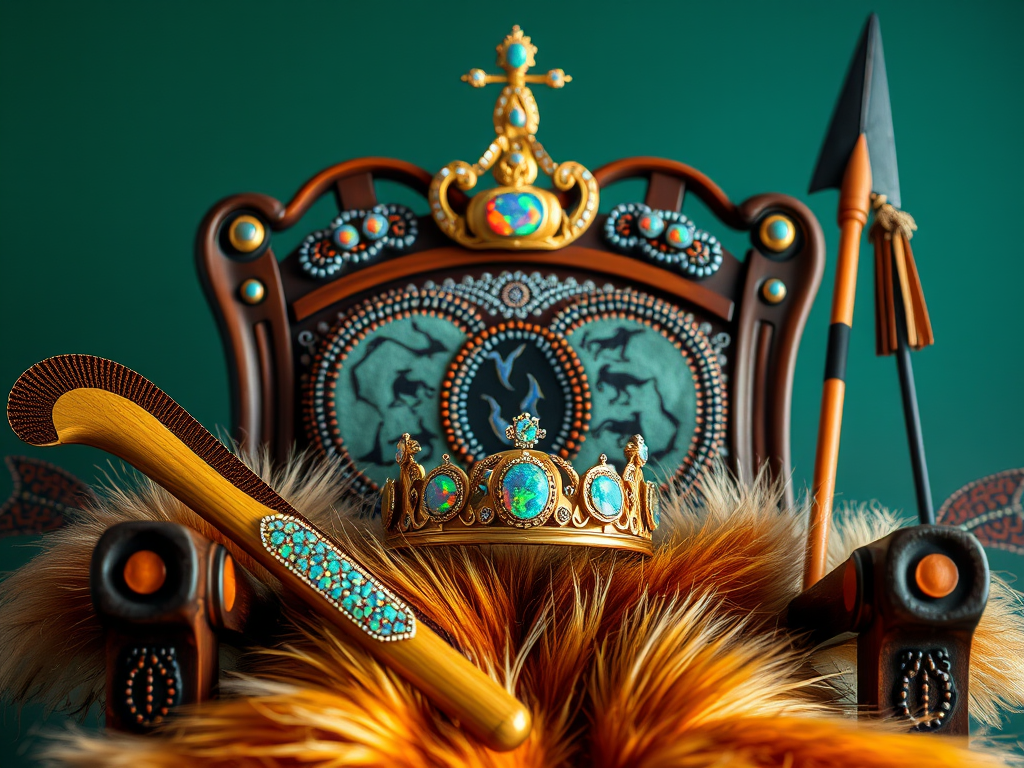
But Who Would Be King Or Queen?
By what process could we arrive at this Head of State arrangement? I have considered this question in some depth and propose that it take a long-form approach spanning decades.

Leave a comment