
“In Australia, a referendum is a vote used to approve a change to the Australian Constitution… A plebiscite (also known as an advisory referendum) is used to decide a national question that does not affect the Constitution. … It can be used to test whether the government has enough public [support] [sic] to go ahead with a proposed action. Unlike a referendum, the decision reached in a plebiscite does not have any legal force.”
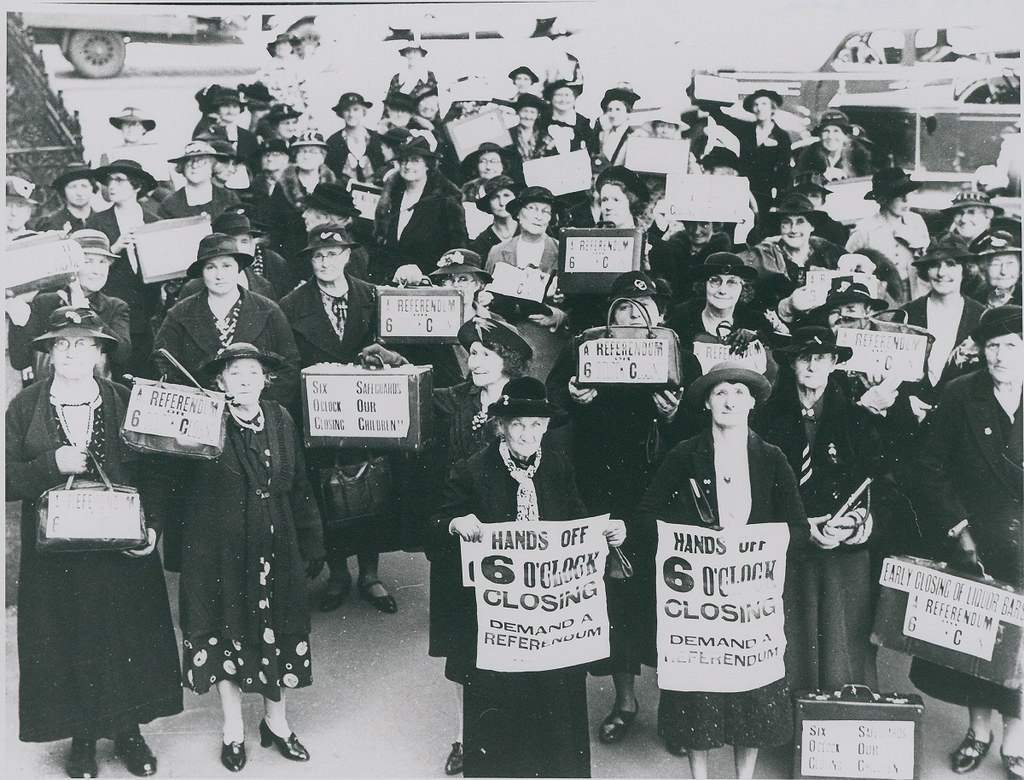
There have been a number of attempts to introduce Citizen Initiated Referendums in Australia. The latest was in 2013. All have failed.
There have only been three national plebiscites in Australia:
- 1916: military service conscription (defeated)
- 1917: reinforcement of the Australian Imperial Force overseas (defeated)
- 1977: choice of Australia’s national song (‘Advance Australia Fair’ preferred.)
“Only the Australian parliament can authorize the holding of a plebiscite… an enabling bill proposing the plebiscite and setting out its purpose must be passed… Therefore only the government of the day or a vote by a majority of MPs can initiate a plebiscite. The bill thereby becomes an Act enabling a vote to be conducted by the Australian Electoral Commission. The enabling legislation may or may not specify any actions expected of the government as a result of the plebiscite.”
The unique polling power of a plebiscite is that the question is put to every registered voter and remember, voting is compulsory.

Postal Surveys – Same Sex Marriage
A Postal Survey such as was used for the same sex marriage decision must be initiated by the Treasurer who requests that the ABS conduct it. A survey paper is sent out to the addresses of everyone registered on the Electoral Roll. It is not compulsory and there is no way to check who responds to the survey – it could be anyone at the address.
Surveys and polls conducted by non-government organizations are typically limited to randomized samples of groups in the hundreds or thousands. They can include information that ‘prepare’ the respondent and the form of the questions often influence the outcome.
Plebiscites
In some countries, plebiscites can be initiated by the public via a petition of a required number of signatories of citizens. In New Zealand, for example, “at least ten percent of eligible voters must sign a petition” (NZ Parliament), which would amount to about 350,000 signatures. Signatures should gathered within a time frame of 1 year.
Parliaments are generally responsive to public opinion. However, politicians can be captured by ideology and money. Over a period of decades, wealth distribution can expand or contract in ways that can sway members of parliament away from or toward public opinion. During a period of increasing disconnect, political and economic theories (such as GDP growth or multiculturalism) that are used to justify policies initiated by the political and business class can gain momentum and be implemented while the general public are still trying to figure out their response. Under these circumstances, the policies are in effect imposed on the public. Sometimes the public identify the policies very early on as being against their interests. Multiculturalism is a good example – where skeptics warned against it early on (Prof Geoffrey Blainey and Bill Hayden), but were cancelled as racists by moral crusaders. It can take some time for the public as a whole to bear witness to the results of these policies before they can formulate a coherent reaction. Even then, general elections conflate all issues into one poll. Some elections are identified as turning on a hot potato issue, but this is only the case when the public have a choice because the major parties’ policies diverge on it. On several defining issues, where there is bi-partisan agreement, the public has no means to express its profound opposition.
We live in such a time now. It’s called State Capture. It has exacerbated since the 1980s.
State Capture is proving to be exceedingly difficult to reverse. One way we can help stop or prevent it is by giving the public the means to make its opinion on a particular issue explicit. We can Stop State Capture by legislating for citizen-initiated plebiscites.
Citizen-Initiated Plebiscites

There is no mention of plebiscites in the constitution. In fact, “A plebiscite is not defined in the Australian Constitution, the Electoral Act or the Referendum Act.” (AEC) Therefore, no referendum to change the constitution is required, unless enshrining it in the constitution is the goal. Referendums are, as Robert Menzies said, ‘a herculean task’.
Legislation could be introduced in parliament that beefs up the role of a plebiscite. Naturally this requires parliament to give up some of its power. While this is a tall order, it is not quite as herculean as enshrining it in the constitution.
The legislation should enact a law to enable a certain (significant) number of citizen signatories on a petition to initiate the introduction of a Bill to parliament requiring it to instruct the Electoral Commission to hold a plebiscite on a particular policy issue. Parliament’s power to influence the Bill is a matter for constitutional lawyers, but may include the power to alter the wording (not the substance) of the question, the power to vote the Bill down and whether or not it needs to be approved by both Houses. In the latter case MPs would be accountable for their actions when the next general election was held. If the plebiscite is held, a simple majority (or more) of the national electorate would be required for the question to succeed. (The action could be specified in the plebiscite, such as introducing a particular Bill to parliament to legislate on the policy in question.)
The result should be binding on the government of the day. Remember, plebiscites cannot change the constitution, they are designed for individual policy issues such as conscription, the national anthem, the national flag, population policy and involvement in a foreign war. They can test support for a list of options, as was the case in the 1977 choice of a national anthem. Referendums are a vote on changing the status quo in one particular way.
In practice, plebiscites of this kind would take little power from parliament, but it would enable the voting public to highlight an issue it feels is being ignored.

Leave a comment