
A Neighbourhood in Coopers Plains

Of Squares On A Mound
In the middle of Hammersmith Street is a high point where 360o views are possible – if you climb to the top of the poinciana tree and stick your head above the branches! This is Lewis Hill.
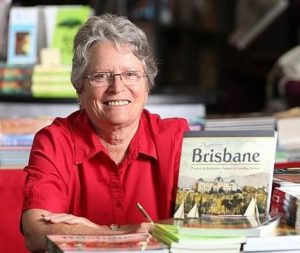
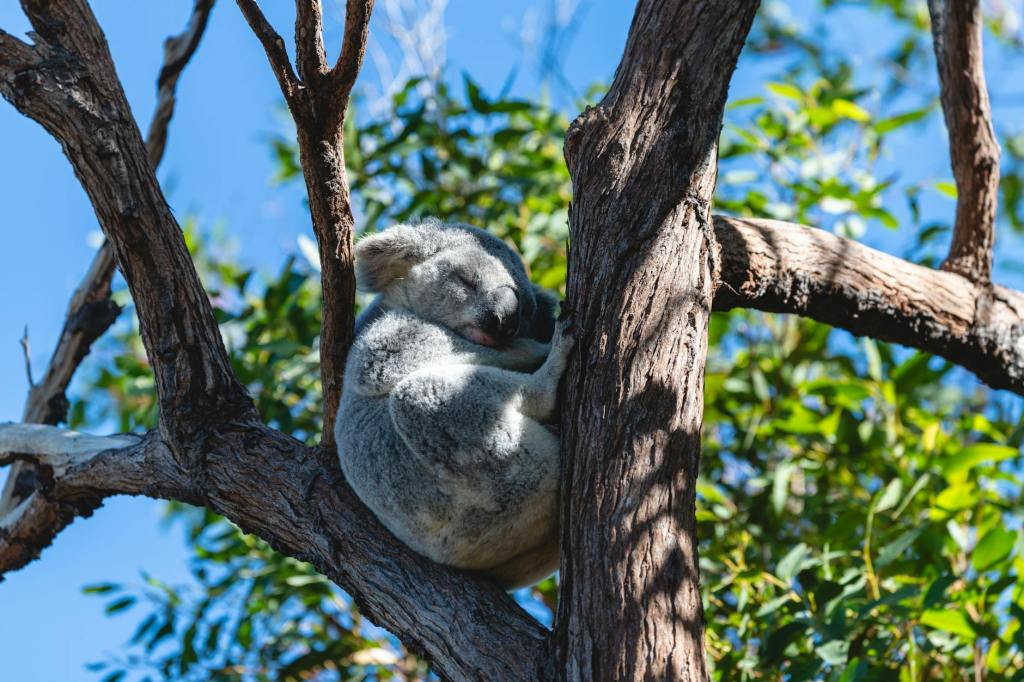
The streets are laid out in an unimaginative grid pattern to form a neighbourhood bounded by Troughton, Musgrave and Orange Grove Roads and Middle Street. A Queensland Health precinct lies to the north between Middle Street and Kessels Road which has some koala-protected bushland. To the south are a couple of residential blocks that run along Beryl Roberts Park. Beryl Roberts was a school teacher who did much for local history until her recent retirement to nearby Robertson.

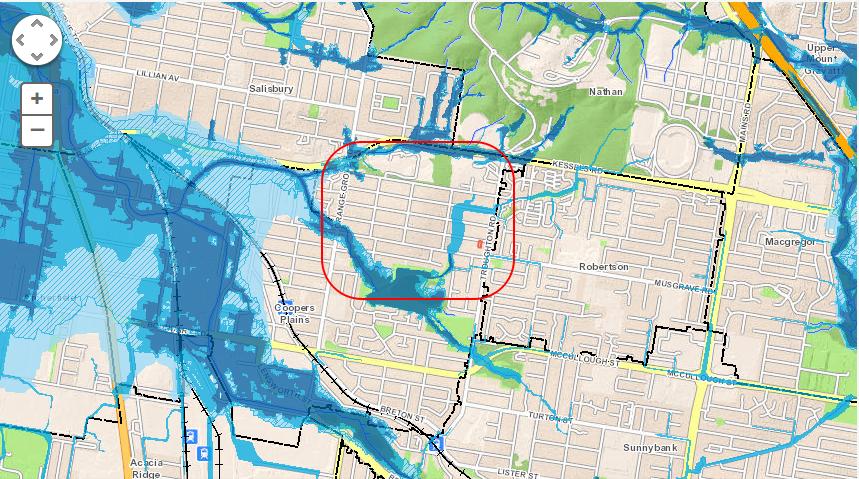
Lewis Hill is a fortunate little pocket of green suburbia that dodges flooding, road, rail and flight path noise pollution. Not too long ago, you could wander down the middle of the street and watch the proverbial chicken cross the road.
History
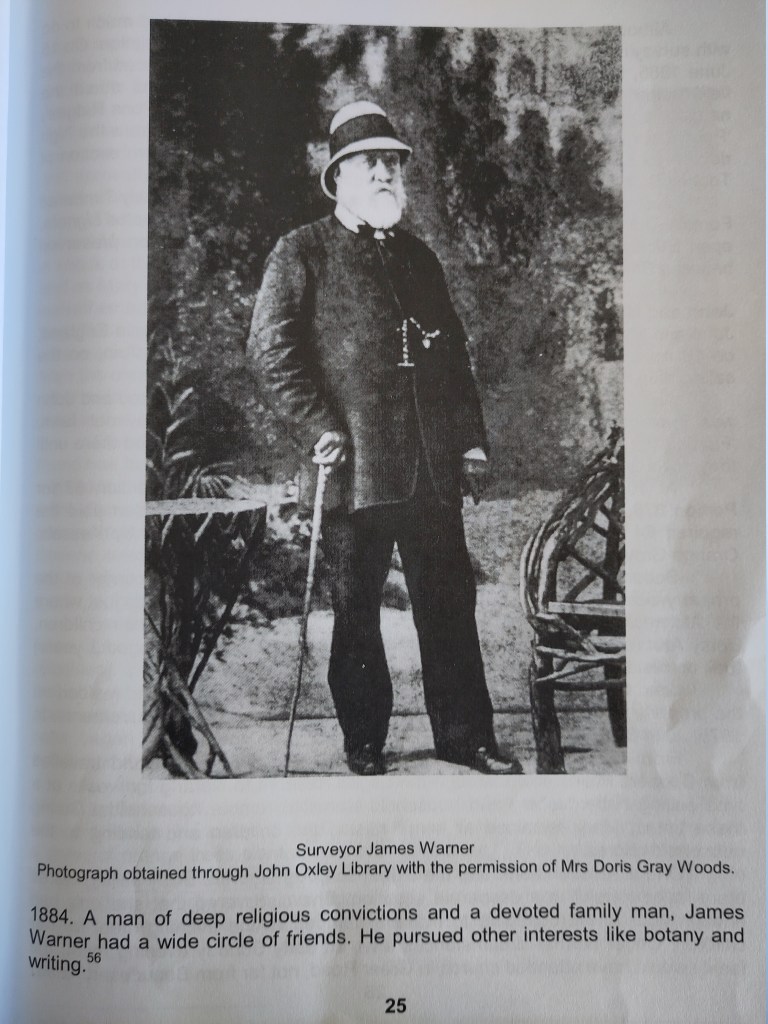
Lewis Hill was predestined to become a grid pattern of streets because of the way the early surveyors Robert Dixon and James Warner set out the surrounding main roads in the 19th century. These include Kessels, Troughton and Orange Grove Roads which, extending to Musgrave Road, formed one block of 160 acres designated as Portion 378.
Eleven years after the Moreton Bay Penal Colony was established in 1824, the practice of entering, laying claim to and developing land that Aborigines had lived on for tens of millennia was formalized by NSW Governor Richard Bourke. Terra nullius was the declaration that no one owned the land before the British laid claim to it, dating back to Captain Cook’s arrival at Botany Bay in 1770. Governor Bourke made this proclamation explicitly to void John Batman’s 1835 contract with the Port Phillip Bay Aborigines to purchase land where Melbourne now stands. Bourke’s proclamation declared that only the Crown could sell the land. This effort to assert government control was in part justified by the use of funds raised from land sales to provide reservations for Aborigines who would otherwise be at the mercy of sometimes unscrupulous and unmonitored free settlers. From 1770, all Aborigines were British subjects alongside convicts, free settlers and aristocrats. The hope and somewhat unreasonable expectation was that the Aborigines would integrate and benefit from civilization. A few did, but most didn’t.
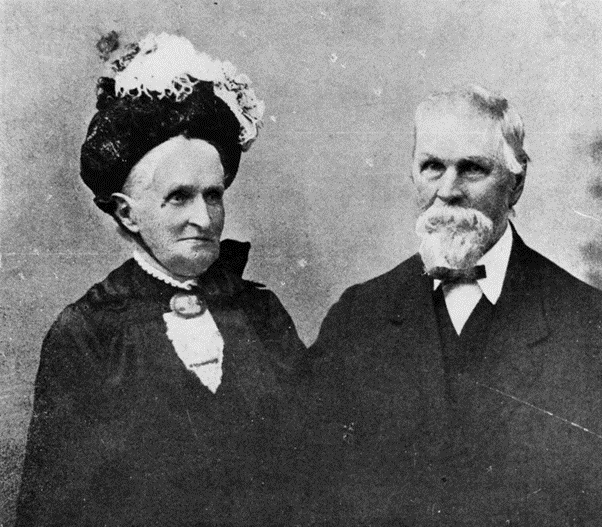
Portion 378 was purchased from the government by John and Mary Soden after they had leased it for the prerequisite period of time during which they had to utilize and improve it in some form. They cultivated an orchard (where the name Orange Grove is said to have come from) and ran cattle on it and in 1869 built a homestead where Hungry Jack’s now stands. When the railway line from South Brisbane (Stanley Street Station) was put through to Loganlea in 1885 and Coopers Plains station was established, big changes were afoot. Mathew Adam and William Rickett purchased the Soden block on 8 February 1886 and the two partners planned a subdivision of the south west part of the site for the purposes of a land sale.
They created “Orange Grove Estate” where they offered 160 allotments for sale, that were spread across an area bounded by a Government Road (now Orange Grove Rd) and Boundary Streets. It was proposed to cris-cross the estate with Cricket, Middle, Highgate, Hammersmith and Hill (now Nyleta) Streets.
Local Heritage Places; Wall’s Farmhouse BCC

This forms the western half of Lewis Hill. Adam and Rickett, assuming they proposed the grid, could not have imagined the limitations their cris-cross layout would impose on homes in the future as their blocks are subdivided down to less than 400m2. But this was always the plan, as evidenced by the street numbering.
The Lewis Family
Orange Grove Estate blocks sold slowly, but in about 1886, John and Alice Lewis purchased land on Hammersmith Street next to Orange Grove Road. Henry and Selina Lewis bought the adjoining block and they both built cabins of local timber slabs and used a mix of local clay and animal manure as mortar. John and Alice had 11 children and built the first house in the street to accommodate them. Arthur Bennett Lewis was the youngest, born 13th April, 1920. The one and only little park in the grid on the corner of Musgrave and Orange Grove Road is named after him. He passed in 2013.
As a young teenager, he learnt to play the piano and he became a great pianist entertaining in many of the suburban halls of Brisbane. His name was immediately chosen when the locals needed a pianist; and he was ever present to create his music for Sunday-Nights; around the piano at his mother’s home. He later played in a band known as the “Jackpots”
Wikitree

Bob Hodby on left and Arthur Lewis on the right. Photo courtesy of Ted Hodby.
The children attended Coopers Plains State School when it was at 1277 Beaudesert Road, Acacia Ridge (now the Murri School). They walked the long journey through the bush.
The Lewis families’ water supply and washing space was the small creek near Musgrave Road [Stable Swamp Creek]. In those days there was a greater water flow than today. The family knew of the Aborigines who camped near this creek.
A Closer Look at Coopers Plains, p. 56, CPHG
Today
Now there are about 640 residences on Lewis Hill. A creek that used to run from Troughton Road to Musgrave Road has been built over – relegated to three large storm water drains. Nearby QEII Hospital was built in 1980. Regular bus routes connect to the CBD and out-lying suburbs. The Internet links everyone up – except many of the elderly.
The changes Arthur Lewis saw in his lifetime are extraordinary. Quality of life has risen astronomically. Services of all kinds – essential and non-essential – are readily available within easy reach. Coopers Plains, the first crossroad of Brisbane, has become another obscure suburb in a sprawling metropolis.
Change has brought increasing complexity that poses an altogether new and unfamiliar challenge. Subdivisions have doubled the number of residences on less than 1/3rd of existing blocks. If these subdivisions continue unabated, the number of residences will increase by 425. That means another 1,000 or more vehicles. Even when the hospital’s 5 story car park is completed, the street crowding will become much worse than it is now. People are losing garden space and connection to the outdoors. Will we losing sight of a good balance of density, environment and freedom?

One resident recently complained that new houses are so close together they can’t use their windows to ventilate and have to rely on air conditioning. As temperatures rise, passively designed, energy efficient homes that take advantage of our wonderful sub-tropical climate are an important way forward. However, because of the grid system of streets and the layout of residential blocks, subdivision results in a narrow north/south block measuring 10 m x 40 m at most. The cool, prevailing winds that usually come from the south east, turn these narrow-block homes into wind-tunnels. Also, they capture much less of the warm winter sun from the north. Most older homes on undivided blocks were built on an east/west axis and although they could take advantage of their aspect to the sun and wind, they don’t. Most of them were built when oil was cheap and so passive design wasn’t a thing. Most modern homes continue to be energy-hungry… for solar power! Even the benefits of the simplest zero-additional cost decisions such as light-coloured rooftops are often disregarded.
Residents are never asked if they want the population to increase. It is taken as a given by governments at all three levels. Any attempt at discussing an alternative is vexed beyond measure. Complicated by questions of ethnicity, the upsizing of everything catering to humans goes unchecked, even when it means less for each of us – including the wildlife. Navigating the city becomes an increasingly involved exercise that particularly marginalizes the older generation, not to mention an increasing reliance on IT to do just about everything – even things that we’d be better off doing ourselves to avoid atrophy. Cramming in more people is touted as an unmitigated good. It’s easy to see that from the point of view of a developer, a property investor, a realtor and any business putting cheap labour and more consumers first. It sits well with those who have an over-exercised sense of global social justice, too. Those of us who are content with the modest comforts we have and want to enjoy it, lose out.
Lewis Hill could be improved with some long-term planning by, among other things, keeping waterways clear of debris, putting power lines underground, replacing street trees with dwarf poinciana and jacarandas, even some fruit and nut trees. Curb maintenance should see a gradual upgrade to modern soft-edged curbs that don’t damage car tires and hubcaps. Gentle roundabouts at some of the more accident-prone intersections would improve safety. The Village estate just south of Lewis Hill was created in the 1980s from what was the Damour Barracks and incorporates many of these features. The infrastructure cost-savings from cancelled urban sprawl would pay for these improvements.

Reducing the number of properties would allow busy intersections to be cornered with parkland where large trees can grow safely. The hilltop could be ear-marked as a future park with a look-out. Sadly, most of the existing homes there don’t take advantage of the view. Waterways could be restored to the open air and connect isolated green corridors. These things are only possible when one considers that sometimes less is more. Property price declines that would follow a population contraction would enable all this and more people would be housed debt-free.
A lovely small patch of suburbia like Lewis Hill – an oasis of sorts – is part of a much larger picture. It is and will be impacted by federal, state and local policy decisions that continue to prioritize ‘development’ and people who want to come here over the intuitively well-informed wishes of the people who already live here.
We cannot face these challenges alone. Together, we can curtail the excesses of traditional development and ensure a better future for those who come after us. Let’s not repeat the mistakes of the past. If you live in Lewis Hill, join the Lewis Hill Neighbours group.
