
Major Party Support Dwindling
The disconnect between voters and parties is growing
The 2022 Federal election was won by the ALP with only 32.6% of the popular vote. Only 10% of seats were decided on primary (first preference) votes. There are hardly any safe seats left across the country (APH). We live in a time when democracy in Australia has been hijacked by vested interests and voters’ interests are being side-lined.

The Laberal duopoly have become increasingly indistinguishable on issues that are critical to most Australians like inequality, as exemplified by housing unaffordability. The ideologically cultish Greens promise more of the Hong-Kong style grayness of sprawling Melbourne. Outside politics there is a growing feeling of being unrepresented. And yet by law we have to vote, if registered. The enrolment rate has not decreased, as one would expect, but is in fact at an all-time high as of January 2025. According to the AEC, this is due to their tireless efforts to get eligible people on the roll. With so many disenchanted voters ready to cast a ballot, the outcome may be a larger cross bench than ever.
Most voters who aren’t married to a political party would agree that no party is going to be a perfect match. But there has never been so little enthusiasm for what’s on offer – not since the 1930s.
preferential voting
In Australia, you can take some heart in the knowledge that we have preferential voting. It allows you to number the candidate in order of your preference in the knowledge that your vote will be counted even if it’s not for the front-runner. Used properly, this gives you the power to send a message to parliament: none of you represent me.
Preferential voting is a hallmark of Australian democracy – it was adopted federally in 1918 and it began in Queensland in 1892. It’s something we should be proud of… countries like the U.K., France and the U.S.A. still don’t use it.
Preferential voting allows us to show the parties how little we approve of them. For example, if you’re in a safe seat held by the sitting government as I do, even if the incumbent and government are members of the party you sympathize with, put the incumbent last. If the incumbent is returned, it will more likely be on preferences and a reduced margin. If the incumbent isn’t returned, you have helped reduce the majority of the government. How you vote will depend on the circumstances of the electorate you’re in and the make up of the parliament you’re voting on. Whatever way you look at it, given the duopoly of the majors and the commonality of their ruinous policies, it’s essential to put the majors last. As Greg Bean explains, placing them above last position, robs the crossbench of a winnable seat. Use your vote this way to increase the likelihood of bringing about hung parliaments and marginal seats because this makes our representatives more accountable to us, the constituents, than to their parties.
the majoritarian system
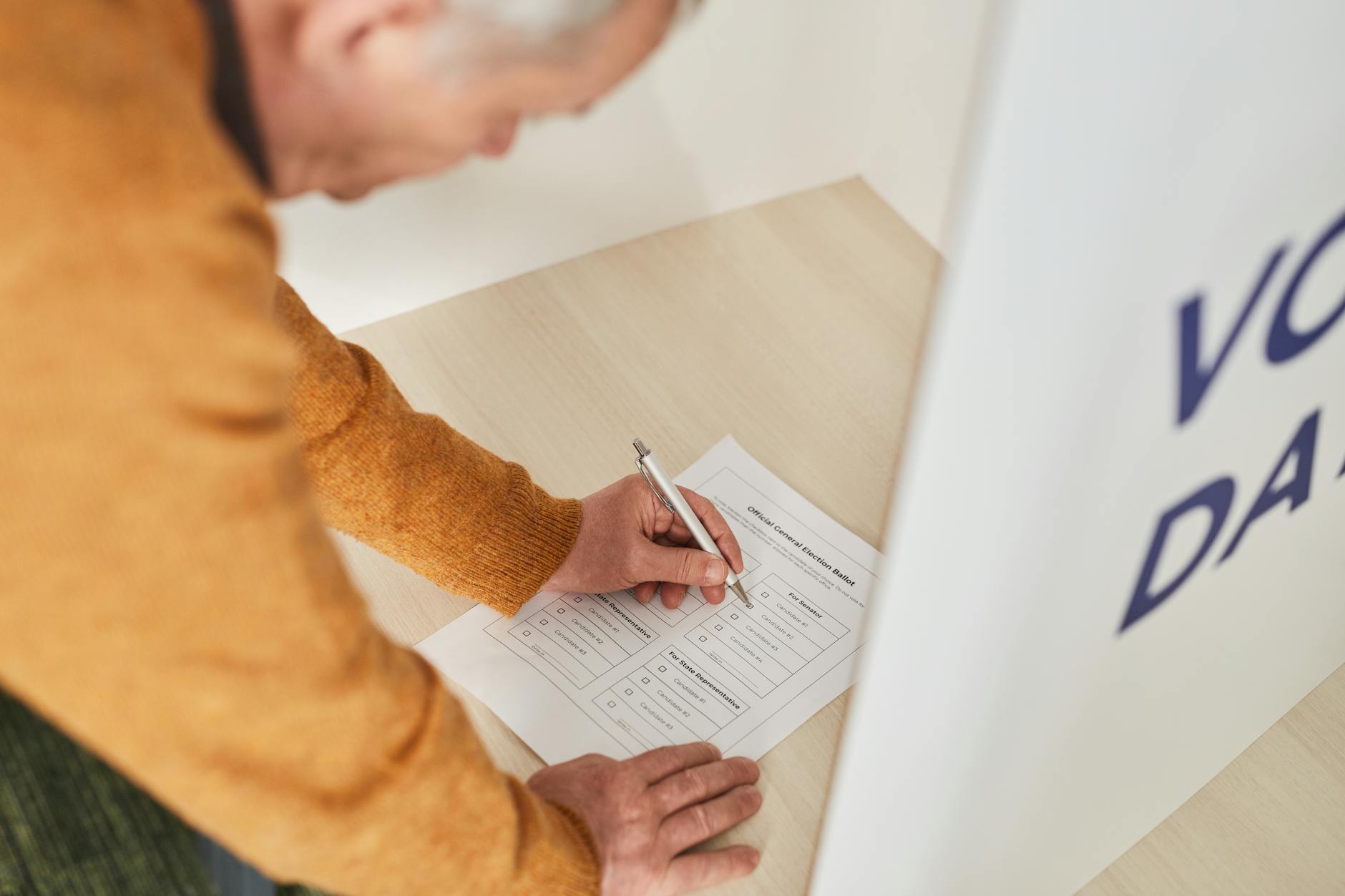
Preferential voting goes some way toward mitigating the problems of our majoritarian system of voting in the Federal House of Representatives. This is what gives us the two-party system. The argument for the majoritarian system is that it provides one group with a clear mandate versus the need for several groups to negotiate their sometimes conflicting policies to form a government. This is usually framed as stability versus instability. Majoritarian means that in each electorate, the first candidate to get more than 50% of the ballots, wins. This is sometimes called ‘first-past-the-post’. When a candidate wins 50% of first preference votes, the rest of the votes are discarded. As mentioned, that is getting rarer (only 10% of contests were won that way in 2022).
preferential voting in a majoritarian system
This is how preferential voting in a majoritarian system works: After the first round of ballot counting, if no candidate gets a clear majority, the ballots of the candidate with the fewest votes are collected and distributed according to second preferences. If there is still no candidate with 50% of the votes, the ballots of the next candidate with the second fewest votes are collected and distributed according to second preferences. The process repeats until a candidate receves more than 50% of the votes. So you see, the more people who vote for candidates other than the front-runners, the narrower the winners’ margin of support is. If there are only two or three candidates, vote for the one the punters are NOT betting on (usually the third candidate). Your vote is more likely to end up being among the ballots discarded, but you have achieved more than than an informal vote. You have sent a message indicating where your sympathies lie.
PROPORTIONAL REPRESENTATION
Most state lower houses use the majority system to elect a single candidate.1 In the House of Representatives at the Federal level, if we had proportional representation (as we do in the Senate) AND preferential voting (like Tasmania and the ACT do as well as many European countries), there would be more parties in parliament and more coalition governments. Politicians hate it of course, because they are obliged to negotiate and cooperate with people who have different perspectives. It is truly a test of their ability to cooperate.
Politicians like unfettered power, so they’ll carry on about unstable governments and chaos. Campbell Newman said as much in 2015 when he called on voters to not use their preferential voting power. They don’t like to work with people who have different ideas and have to figure out compromises and this is all the more challenging when there is little good will.
optional versus compulsory preferential voting
Preferential voting can be optional or compulsory. Optional means you only need to number or otherwise mark ONE box on the ballot. Compulsory means you must number (and you must use numbers) EVERY box on the ballot.
In Queensland, the ludicrousness of the duopoly (two party) system is illustrated by the politicization of preferential voting. In fact it has been used as a political football ever since it was first introduced. The Campbell Newman LNP government changed it from compulsory to optional. The Palaszczuk government changed it back. Now the LNP is promising to change it back again. At the second debate of the 2024 campaign, this earned Crisafulli the only audience reaction of the debate; a round of applause (Qld Media Club). You would think something more profound would inspire a response, but I suppose only people who think there’s a real choice attended.

A review by the Electoral and Administrative Review Commission (EARC) recommended optional preferential voting from the 1992 election onwards, because it reduces the informal vote count and discourages parties from handing out ‘how to vote’ cards directing their preferences. Many voters aren’t aware these cards are purely advisory. Optional preferential voting also minimizes the skewing of results such as the 94 seat majority won by Labor in the 2025 election. With just 34.7% of first preference votes, Labor got 63% of the 150 seats in federal parliament (AEC). The result would not have been so skewed if preferential voting was optional.
Like me, you have your own priorities that will determine how you vote. I’ll be voting strategically because there are no parties representing my chief concerns; untrammelled [sic] growth – both population and economic – and inequality. I’m also concerned about the imprudent and hasty uptake of technological and the pace of cultural change, too. No party is talking about more prudence in how our species behaves on mother Earth.
The idea of strategic voting is catching on. Topher Field explains how to do it in a video here:
Strategic voting is a baby step toward STOPPING STATE CAPTURE

Leave a comment