

The European Union has announced an agreement whereby English will be the official language of the EU, rather than German, which was the other contender. His Majesty’s Government conceded that English spelling had room for improvement and has therefore accepted a phasing in of “Euro-English”. EE will be adopted in all official documentation over a number of years to exemplify it to the public, who are free to adopt it as they please.

Initially, the easiest alterations will be implemented, being the few consonants that pose few problems.
In the first year, the troublesome “ph” will be replaced with “f”, making words like “fotograf” 20% shorter.
In the second year, Americans will feel vindicated when voiced “s” is spelt as it soundz – “z”.
During discussions with His Majesty prior to the first year this spelling system was launched, he was at pains to stress that it should solve problems and not create new ones. Therefore, everyone is free to adopt whatever of these recommendations works for it. For example, the spelling of high frequency words such as ‘enough’, ‘was’, ‘English’, ‘American’, need not change unless the writer so chooses. The expectation is that these recommendations will have the most utility for writers with words they have difficulty spelling.
In the third year, “x” will be completely replaced with “ks” or “gz” and “z”, affecting, for egzample, the Taksation Department more than zylofonez.
Sooner or later, the main impediment to simpler English spelling has to be tackled; the limited number of vowel letterz to reprezent its 16 vowel soundz. The replacement of “x” freez it up for use az a vowel sound, but it iz the letter “c” that haz more potential, given its orthografic similarity to the five vowelz “a, e, i, o and u”.
One of the reazonz English uzez so many combinationz of vowel letterz to reprezent its 16 vowel soundz, iz that when English writing waz evolving its authorz aspired to avoid diacritics (thoze marks above letterz you often see in, for egzample, French, to guide pronunciation). If fonetic redundancy in any of the consonants can be found to free them up for use as vowelz, it will help us avoid diacritics and maintain the vizually simplistic beauty of English.
Remember this is prescribed spelling only for official EU documentation. The previous five paragrafs adhere to some of the aforementioned changez. They may seem weird even after 3 years of practice. Ordinary people are likely to continue to spell in familiar wayz, and only adopt the changez that make spelling eazier for them.
In the fourth year, the hard “c” can be dropped in favour of “k”, which should klear up some konfusion.
Later on “s” will replase the soft “c”. Sertainly, sivil servants will appreciate this.
Following soon after, “sh” will replase “c” in wordz such as ‘appreshiate’.
However, “c” also combines with “h” to form “ch” sounds such as “church”. Therefore in say, the seventh year, “ch” will be replased with “tsh” (similar to the International Fonetic Alphabet symbol). This will finally free up the letter “c” for use az a vowel.
The most kommon vowel sound in English that iz not fonetikally reprezented by a single letter iz known az “schwa” [uh] or in fonetic symbols, short /Ə/. All vowelz in unstressed syllablez are pronounced this way, such az the second syllable in “separate”, which iz often misspelt “seperate”. This iz the reazon people forget which vowel to uze when spelling these mid-frequency words. They are less kommon than “sight wordz”, such az “enough”, which we remember eazily despite their odd spelling. But they are frequent enough to kauze us frustration.
Now that ‘c’ is available az a vowel, it can be uzed in plase of /Ə/.
Again, this is not a ‘rule’. Offishial EU dokument authorz need only uze ‘c’ when they forget the unstressed vowel letter. So, you might see “definitely” written as “definctely”.
The long schwa sound /Ə:/ is also very kommon in English and iz reprezented by a variety of different vowel letterz followed by “r” as in “flower”, “turn”, “word” and “learn” (see the fonic tshart below).
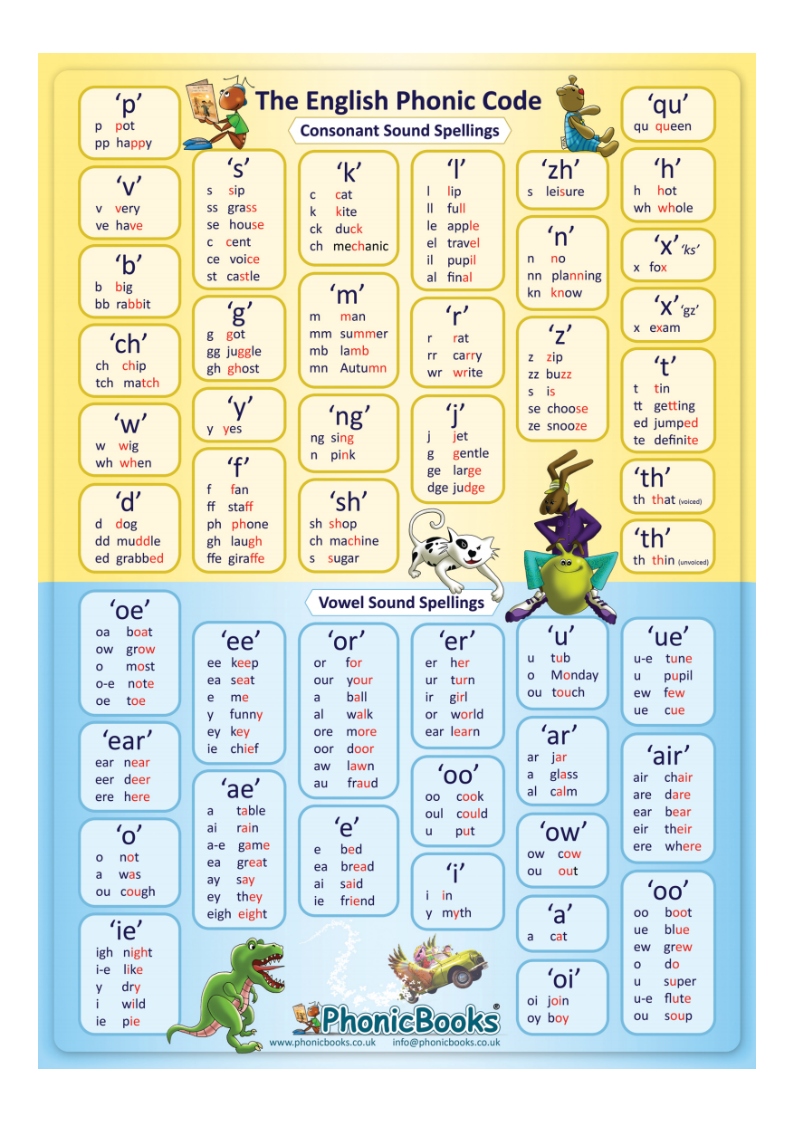
All theze kan be simplified and spelt “cr”…. “flowcr”, “tcrn”, “wcrd” and “lcrn” whenever the writcr forgets the traditional spelling.
Alternatively “x” could reprezent the short schwa; “sepxrate”, “definxtely” and the long schwa; “flowxr”, “txrn”, “wxrd” and “lxrn”.
One important spelling rule to remember is v + c + e (vowel + consonant + e); the ‘e‘ after the consonant sometimez determinez how the vowel before it is pronounced [ey] not [a] in “sale”.
The EU will enkourage the removal of double letterz, which have been such a detercnt to eazy speling, as wel as the horible mes of the silent “e”, except when folowed by the “vowel + konscnant + e” pronusiashcn rule, az in “better males”.
Theze redukshcnz wil not aply if it rezults in a lexikal, or non-gramar word of les than thre letterz, in order to prezerv the litle-known English speling rule that al ‘meaning’ wordz hav thre or mor letterz, and only funkshcn wordz hav les than thre letterz. The problematik “axe/ax” (UK/US) and “oxe/ox” (UK/US) should be spelt “aks” and “oks”.
In the fifth year, SR1 (Speling Reform 1), whitsh had som sukses in Australia in the 1970z and 80z, will gradualy render the teatshing of foniks obsolete. First of al, the short /e/ sound is alwayz to be spelt with “e”, for ekzampl
- /e/ represented by a: any→eny
- /e/ represented by ai: said→sed
- /e/ represented by ea: ready→redy
- /e/ represented by ei: heifer→hefer→heffer
- /e/ represented by eo: jeopardy→jepardy
- /e/ represented by ie: friend→frend
- /e/ represented by u: bury→bery
- /e/ represented by ue: guess→gess
The following short poem is an example of SR1:
Draw a breth for progres,
Tred abrest ahed.
Fight agenst old speling,
Better “red” than “read”.
Spred the words at brekfast,
Mesure them in bed,
Dream of welth and tresure,
Better “ded” than “dead”.[3]
The various “ion” noun endingz will appear as “shcn”. Kristshcnz will tshime their tshurtsh bellz in selebraschcn of this modifckashcn and poor-spellerz, espeshially Australianz and New Zealanderz, will be able to write akademik vokabulcry with more konfcdcnse.
Insidentally, written language should yield to spoken language. Spoken language kame long before writing, and of kourse komez from our brainz, not the written page. The pen might be mightier than the sword, but the mind iz mightier than the pen. Therefore, we should not be tied down to pekuliar spellingz and get kaught up in the inershia of antshient hairoglyfiks, as appearz to be the kase in the Orient.
Saimon Kole
The above was inspired by a joke circulating the Internet – especially around Europe – whose source is unknown (to me, at least) despite some efforts to find out. Some jokes contain the kernel of a seriously good idea, such as when the phrase “His Majesty’s Opposition” was first used in jest in the English parliament to much amusement. The above is such an idea, and therefore I have modified it based on my 30 year career in English linguistics (Aston University, Master of Science in Education).
Coming up with spelling reforms is all very well; many have done it before. But the uptake has been unimpressive, as the modified joke above implies; radical change is unacceptable. Webster has probably had the most significant success with his dictionary in the U.S.A. Perhaps the mistake spelling reformers have been making is to try to impose order, rather than ‘going with the flow’ of change, which is the nature of a living language, such as English. All languages change, ultimately, but the process is slow and evolutionary. See SPELLING CHANGE under Sponsored Activities.


Leave a comment