

The King’s birthday is a rare opportunity for ordinary Australians to officially celebrate British culture and everything it has done to create our country. In Queensland, the first Monday of October is a public holiday and I’m hosting a BBQ with Aussie food, some great music and a fun game.
The game is a never-before-tried educational competition to see who knows more about Aussie constitutional monarchy and republicanism! It doesn’t matter if you’re a loyalist, a rebel or sitting on the fence! It’s inspired by this skit from the TV sitcom Friends.

To help you get ahead of the game, here are some useful points:
Australia’s stable history has been pock-marked by republican sentiment – the earliest best known event being the Eureka Stockade rebellion. However, support for the Monarchy has long been strong, even after the dismantling of the White Australia policy, as evidenced by the election of the Coalition under Malcolm Fraser in 1975 – a vindication of Gough Whitlam’s dismissal by the Governor-General Sir John Kerr – and the failed 1999 Referendum. Nonetheless, polling suggests sentiment for a republic is growing.
Australian Constitutional Monarchy – the future?
Many people are indifferent to this issue (which is not altogether bad) and some people are really fired up about it. This seems to me to be a recipe for sleep-walking into mediocrity, because not enough of us are considering all the possibilities. We need to have fun, creative conversations.
Is a republic inevitable?
English political history demonstrates an acceptance of (and adaptations to accommodate) change. The 17th century English Civil War was horrifying enough to instill a desire never to repeat it. Out of that came a talent for compromise which led to constitutional monarchy. Britain’s political system reached peak performance during Queen Victoria’s reign when ‘everything fell into place, everyone knew their place and everything went like clockwork’, as my Professor Robert Manne said in a lecture at La Trobe University back in about 1980.
Since then, the prevailing wisdom has been that change ought not be for the sake of change, but well advized [sic] and based on sound arguments.
There are two groups in Australia claiming to represent the opposing camps;
ARM (Australian Republican Movement)
ARM has done considerable work since the failed 1999 referendum to come up with a model it claims has widespread support. They call it “Australian Choice” and it requires state and federal parliaments to nominate candidates for a presidency, who then go to a popular vote.
Republicans emphasize multiculturalism as a reason for change.
AML (Australian Monarchist League).
AML defends the current arrangement and works to explains its merits. Its stabilizing and non-partisan qualities will, they say, serve us well into the future, as it has in the past.
Australia’s constitutional monarch is British. As we know, Britain is now multicultural.
Choices?
The difference between a monarchy and a republic can be characterized as letting nature take its course and choosing: (click on the images to watch the videos)
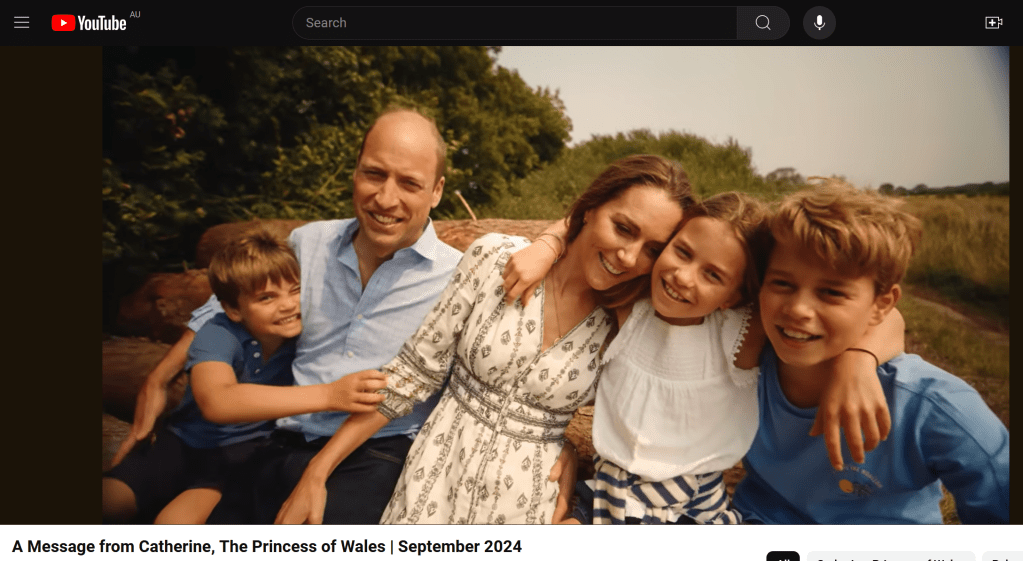

Choosing a Head of State is a modern act of self-determination; a quintessentially democratic process of representation.
An inherited Head of State is a family affair; an experience shared by all.
An apolitical Head of State
There is wide-spread agreement (in most countries) that the Head of State should be a unifying figure.
ARM’s Australian Choice model attempts to ensure a non-partisan Head of State is elected as is the case in Ireland, Israel, India and other republics.
Our constitutional monarch is expected to act as a unifying symbol and follow the advise [sic] of the elected government. It [sic] should restrict political opinions to a private audience with the Prime Minister. In Australia, the Governor General (the King’s representative) does not regularly meet with our Prime Minister for this purpose.
Australian Sovereignty
Australia’s sovereignty and independence has evolved through many steps. It’s a long story, but with respect to our Head of State, since 1965, all Governors General have been Australian. The Australia Act 1986 formally ‘severed all legal ties between Australia and the United Kingdom’.
Whilst some see no need for any change, others do. Some reasons that are put forward are:
- The King of England symbolizes wealth inequality and undue privilege.
- It is undemocratic.
- Monarchy is an outdated tradition.
- The Sovereign isn’t Australian and is in absentee.
In some constitutional monarchies, the sovereign’s elaborate circumstances are not personal property, but state-owned.
David Solomon wrote extensively on the possibility of directly electing the Governor-General.
Family isn’t outdated, and of course it isn’t a ‘tradition’. It’s where we all come from; the loins of a man and woman. Therefore it is ubiquitously human and we don’t have to vote for them. In an enduring royal family, we more readily identify and empathize with them as they, like we, go through the ups and downs of life.
An Australian Monarch
A little known fact is that we have an Australian-born claimant to the throne of England; Simon Abney-Hastings. Simon is officially the 15th Earl of Loudoun and was born in Wangaratta, NSW, in humble circumstances.

In 2004, the documentary Britain’s Real Monarch repeated the claim that Michael Abney-Hastings [Simon’s father], as the senior descendant of George Plantagenet, 1st Duke of Clarence, was the rightful King of England. This argument hinges on the claim that Edward IV of England was illegitimate.[7] Simon Abney-Hastings, following his father’s death, would have become the rightful monarch of England under this alternative path of succession, rather than Elizabeth II, and would be the current monarch rather than Charles III. Abney-Hastings has recognized his right to inherit the throne of England. However, he has stated he is a loyal supporter of the late Queen and her eldest son.[8] He was invited to the coronation of King Charles III, notwithstanding the competing claim being occasionally discussed by some media sources.[5] (Wikipedia)
Simon’s competing claim could be resolved through a regal secession in which he renounces his claim to the English throne in favour of an Australian throne, which would replace the office of Governor General. Once approved by referendum, the Australian parliament could switch allegiance from the House of Windsor to the House of Abney-Hastings. He is a Patron of the Victorian Branch of the Australian Monarchist League, and has a long list of other Patronages and Honours.
An Australian monarchy, being a fresh start, could take a modern style that reflects our founding British and Aboriginal cultures. The trappings for ceremony and ritual as well as the facilities and assets to support it should be state-owned (most of which are already in place for the Governor General). There would be no ethnic barriers to marrying into or outside the royal family. Absolute primogeniture would apply for those in the line of succession. (Incidentally, male primogeniture, under which a younger son can displace an elder daughter in the line of succession was ended in the U.K. in 2013). Heirs should be free to decline the duty and pass it on if they so wish.
Long live King Simon!


Leave a comment