
It’s unlikely, but Australia should consider the possibilities.


Australia’s Head of State is King Charles III.
That means he’s the King of Australia. He’s also the King the United Kingdom of Great Britain and Northern Ireland.
Some think Australia should change this arrangement to ‘reflect modern circumstances’. However, there is really only one imperative for Australia to consider an alternative.
Abolition
The United Kingdom has a republican movement. In the unlikely event that monarchy is abolished there, what becomes of Australia’s Head of State arrangements?
The answer to this question is for constitutional lawyers, but some obvious problems are apparent even to the lay person.
Our Head of State is not the Governor-General, as some believe. The G-G is the King’s representative in Australia, namely, his Viceroy – a sort of de facto Head of State. Our constitution enshrines the monarch as the Head of State. Should that entity disappear, the Governor General’s authority might disappear, too, despite all the legal changes that have nullified the U.K. parliament’s authority, culminating in the final one, the Australia Act (1986). This is a serious matter because the Governor General exercises almost all the powers of the Sovereign in Australia.
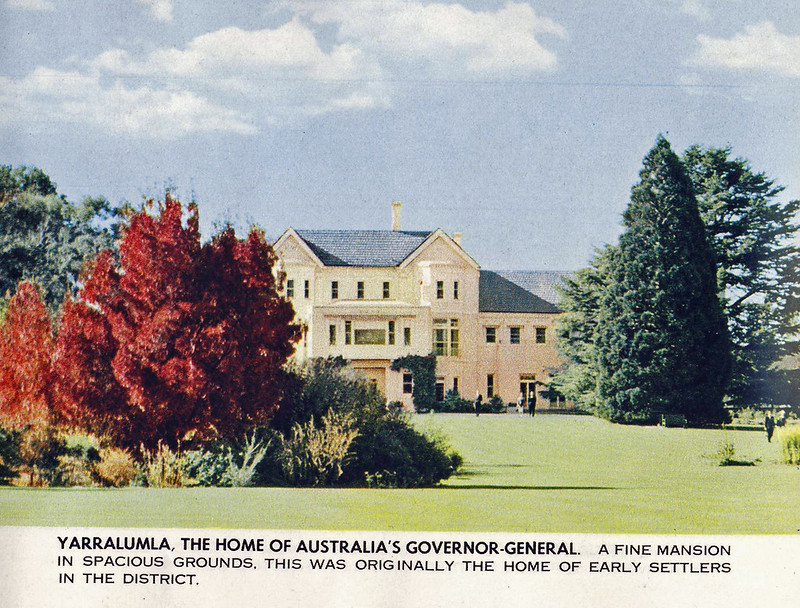
Australia’s system of government has developed conventions that are based on an interpretation of the constitution. For example, what we know as Federal Cabinet, is described as the Federal Executive Council in the constitution. There is no mention of a Prime Minister. The Queen (Queen Victoria) in the constitution is taken to mean the U.K. Monarch of the day. However, without a monarch in the United Kingdom, would the Governor General have the authority to fulfill its role? Fortunately, given the very symbolic nature of the monarch’s role, government would continue to function.
constitutional crisis
But not for long. The Governor General’s role includes summoning, proroguing and dissolving Parliament; recommending appropriations; assenting to Bills; issuing writs for general elections; appointing and dismissing Ministers; submitting proposals for referendums; making Proclamations and Regulations; and establishing Departments. (Australia Government Directory) Assenting to Bills is a regular requirement for the government to pass legislation.
Without the Head of State and his representative’s legal ability to act, Australia would find itself in a constitutional crisis.
If the republican movement in the United Kingdom succeeds in getting a referendum, the clock will start clicking for Australia. It would trigger a vigorous debate. We would have to address our Head of State arrangements quick smart. A hasty process would, I believe, yield poor results, despite the dress-rehearsal republic referendum of 1999. Therefore, it is useful to run some thought experiments in advance. For the sake of convenience, I will refer to King Charles III in this hypothetical, even though I think it’s highly unlikely to happen during his reign.
WHAT IF
If the U.K. abolishes its monarchy, would King Charles III still be the King of Australia? What is often referred to as our Constitution’s Preamble states,
The provisions of this Act referring to the Queen shall extend to Her Majesty’s heirs and successors in the sovereignty of the United Kingdom.
Clause 2, Covering Clauses, Australian Constitution
However, that preamble is not a preamble to the Australian Constitution, but a preamble to the Australian Constitution Act 1900, an act of the British Parliament. The Australia Act 1986 severed all remaining legal ties to the British Parliament. Also keep in mind that since 1901, the United Kingdom has changed from The United Kingdom of Great Britain and Ireland to The United Kingdom of Great Britain and Northern Ireland, with no affect on Australia. If Scotland left the Union, it may change the situation in the British Isles again, but still have no effect on Australia’s arrangement with the Crown. Since the Imperial Conferences (1927 and 1932) the Crown became divisible among the King’s numerous Realms. The personal union of the British and Australian Crown means that although there is no separate physical Australian throne and crown, there is a legal one.
Concevably, therefore, ordinary Mr Charles Windsor, citizen of the Republic (or Commonwealth) of England (or Britain), residing in Britain, he would still be King (Charles I?) of Australia. An interpretation of the constitution, would, I believe, indicate that he retains his authority here and so our Governor General could continue its duties.
However, it is unlikely that would be the end of it. Abolition of the monarchy in Britain would trigger a wave of consternation and controversy in Australia. Would the King (and his family) remain in England indefinitely? Much would depend on public opinion at the time and we would most likely go to a referendum. But what would the choices be?
Were the King to permanently relocate to Australia, the Governor General would no longer be required. The King could act directly for himself. Therefore, a constitutional amendment would be required.
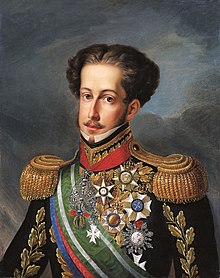
Something like this happened in the early 19th century when Portugal was invaded by Napoleon and the King evacuated to his principal colony, Brazil. Eventually he returned to Portugal, but left his eldest son and heir, Pedro as Regent in Brazil. Pedro led an independence movement and became the first Emperor of Brazil.
Note, in case you’re wondering, most of the English Crown Jewels belong to the monarch, but they are held in trust for the nation (England). Therefore, how much of them would accompany an emigrating monarch would be a negotiated matter.

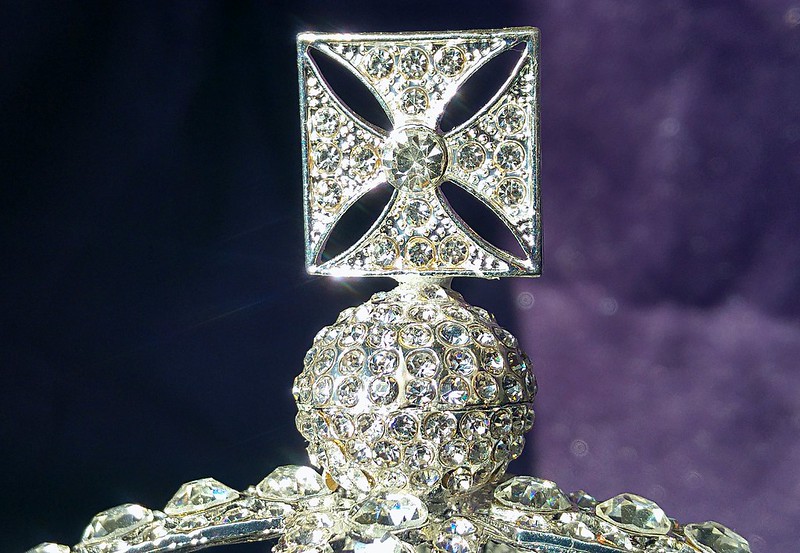
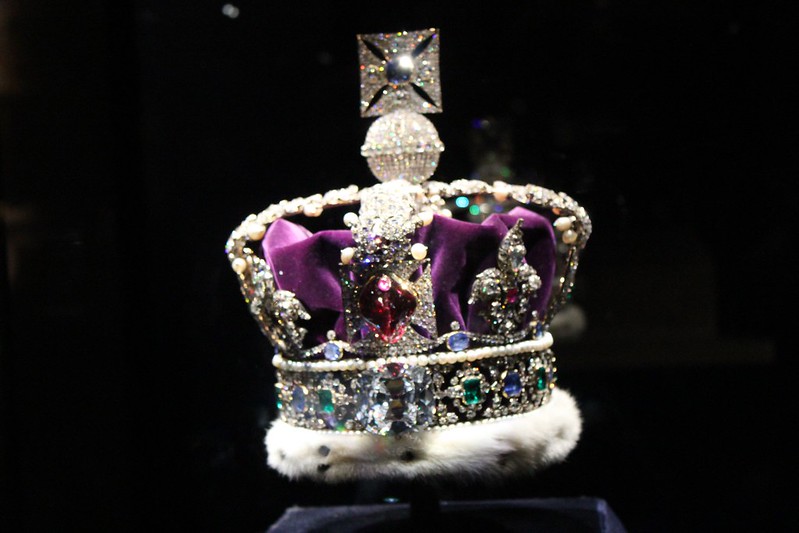

Although unlikely, a relocation to whatever Realm the King remains monarch of, would likely be a topic of discussion. Australia is one of 15 countries that are Commonwealth Realms. Arguably, we would be the most likely choice (over Canada and New Zealand), given the current monarch’s affection for us. However, the feeling is not unanimously mutual and even if the King were to do the migrant thing and expect his heirs to assimilate, I doubt this would warm the frozen hearts of republicans.
A Backup Plan
What are the other possibilities? We would be wise to delve into them well before it becomes imperative. Enough has been written about an Australian republic. If we truly value constitutional monarchy, we should rid ourselves of the false dichotomy that the only choice other than a British Constitutional Monarchy is an elected Australian Head of State. Republicans in Australia argue that the U.K. should have no legal jurisdiction over Australia. If that is so, then what happens in the U.K. should not deprive Australians of the choice of a constitutional monarchy. Therefore a referendum should include becoming either a republic or continuance of a constitutional monarchy in the form of a home grown Australian monarchy.
Modern Constitutional Monarchies
Constitutional monarchy is distinct in democracies across the world for the way it separates politics and the head of state. It is unique in providing an enduring, non-partisan persona for the nation to identify with. Its non-partisan character is due in no small part to the fact that the position is inherited, not elected.
Ultimately, a country’s constitution determines whether the Head of State is non-partisan, be it a President or a Monarch. However, in well-established democracies, the very fact of a monarch being unelected is what suits it [sic] so well to a symbolic, non-partisan and limited role. A President, however well the electoral system is designed to raise it [sic] above politics, is inevitably and inextricably tied up in electoral politics. I have written more extensively on the merits of constitutional monarchy versus a republic, HERE.
Monarchies are Made
Many constitutional monarchies have a long history of having evolved from early feudal states of monarchical autocracy. The survivors of this evolution have avoided overthrow in popular (and some not-so-popular) revolutions. England was one of them; although it became a republic from 1649 – 1660 (called the Commonwealth), parliament agreed to restore the crown.
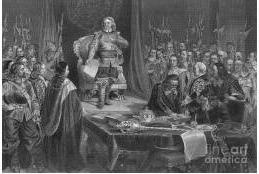
The line of succession in almost all monarchies has been interrupted, either for political or religious reasons or through deception. Also, rules of succession have disqualified women and illegitimate offspring. The oldest continuous hereditary monarchy in the world, Japan, cannot verify direct ancestry to its original Emperor Jimmu:
Japan, considered a constitutional monarchy under the Imperial House of Japan, is traditionally said to have originated with the mythical Emperor Jimmu. The first verifiable historiographical evidence begins with Emperor Kinmei in the 6th century.[3].
Wikipedia
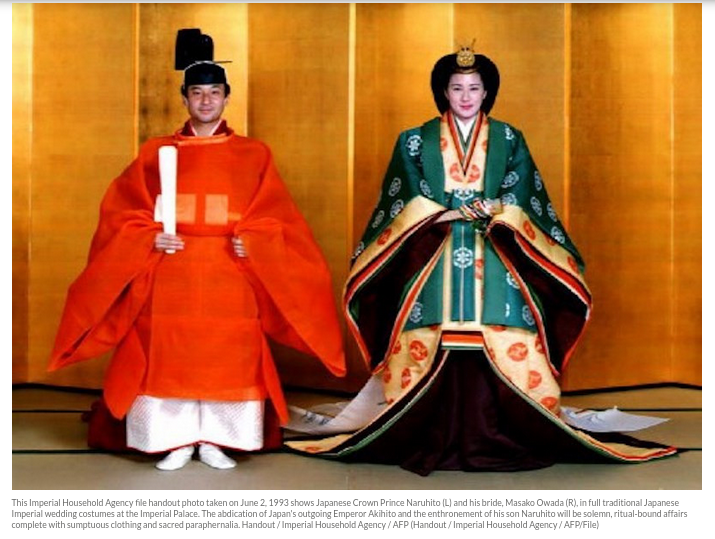
Constitutional monarchy has often been chosen as the preferred form of government. Some of these have been the product of a tug of war for power amongst aristocrats or between them and plebeian classes. The 16th century Polish-Lithuanian Commonwealth introduced an elective monarchy, whereupon members of domestic noble families or external dynasties were elected to the throne for life. The Holy Roman Empire is perhaps the best known elective monarchy and the current ones include Cambodia, the Holy See, Malaysia and the United Arab Emirates. Most of these monarchs have too much power to be considered constitutionally limited by Australian standards. A life-long appointment (or until resignation, as in the case of Pope Benedixt XVI) has the monarchical advantage of a familiar and more readily identifiable leader, but the complication of requiring a method of election. Again, we’re not talking about self-appointed heads of state for life like Xi Jinping.
Brazil and Mexico became independent constitutional empires in the 19th Century. More recently Spain (1978) and Cambodia (1993) became constitutional monarchies.
In recent times, indigenous monarchical movements in Hawaii and New Zealand appear to have been modelled [sic] on and inspired by European monarchies, to bring some unity to people previously divided into smaller entities.

Monarchy Is Not All About Tradition
The merits of a modern constitutional monarchy are not tradition as such. A modern monarchy’s method of succession is an experience we all share and that ties us all to nature. We are all bound by the common experience of birth and death. It is, therefore, a connection to the present, as well as the past. The centrality of family in society is the basis of its modern legitimacy, when it is sanctioned by parliament.
At present, in the British monarchy, we have both tradition and modernity. The fact that it has persisted for so long is not peculiar, as Dennis Altman has described constitutional monarchies to be; it is for good reason. As a former republican, I can attest to this after a life time of probing the issue.
What would an Australian monarchy look like?

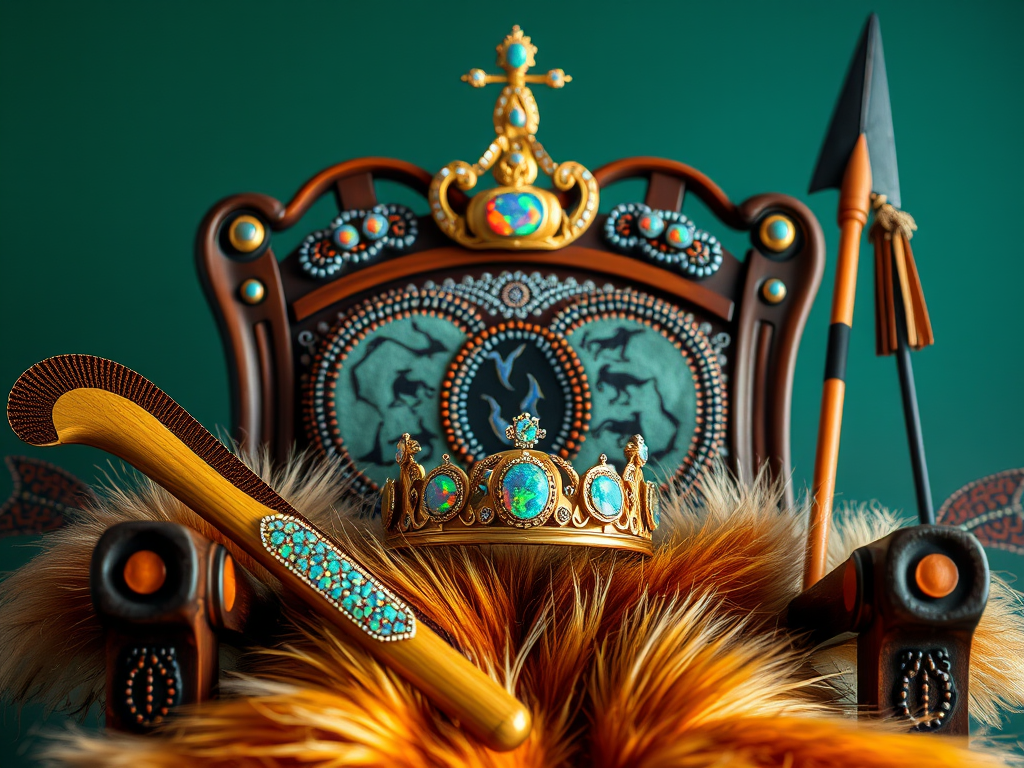

The unlikely scenario above should prompt Aussies to consider our Head of State arrangements. However, the possibility of abolition in the U.K. should also prompt us to appreciate what we have while we still have it. That it could be taken away from us, ought make us all the more cautious.
Too often a President is thought of as inevitable. It isn’t. Sleep-walking into such boring mediocrity is avoidable.
Whatever the circumstances are that cause Australians to vote at a referendum on our Head of State, some thought ought to be given to a home-grown monarchy.
Home-grown means the monarch must be Australian-born. Who are the likely candidates for a founding Australian dynasty? The decision would be consequential, but not as binding as some might think.
In my next installment, we will look at the options.


Leave a reply to Politicizing the Crown – Equanimity Cancel reply