
In Queensland – Who Is There To Choose From?
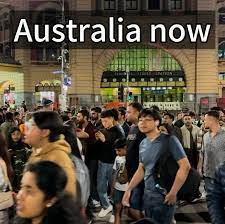
For twenty years the major parties have colluded to keep immigration off the agenda. ‘Bob Hawke made the remarkably frank admission that immigration policy had effectively been a conspiracy by the political establishment against the Australian public’ (TAPRI). This year, they’re doing it again.
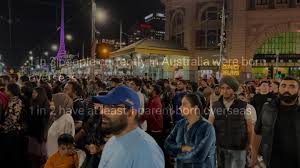
Survey after survey shows that the majority of Australians oppose the level of influx Federal governments have pursued for two decades. Their opposition is growing. With the massive spike over the past two years, frustration is mounting.
The extent of political belligerence on the issue is so pervasive that only a minority of parties are stepping up.
Across social media channels I repeatedly see people asking, ‘Who do we vote for?‘
So I did the research – at least for Queenslanders’ choices in the Senate.
2025 Election Leader Board
This Leader Board is a guide to the immigration policy positions of candidates and parties in the upcoming 2025 election. It ranks them from low to high and provides a brief description showing both explicit and implied immigration policy. The primary source of information is candidate(s)’ and/or party websites, complimented by track records and public statements. (As of writing, Wikipedia is the source regarding registered candidates as the AEC releases this information after the election is announced).
- Explicit refers to a target NOM figure or clear direction.
- Implied refers to policies that appear to be designed to affect immigration one way or the other without a specific NOM figure or target. Implied usually indicates immigration is a low priority. Note that as current immigration rates are high, a continuation or support for present levels is noted as ‘high’.
Queensland Senate
The top pick so far is People First (Gerard Rennick). This may change, so stay tuned for updates (subscribe below).
House of Representatives
There are far fewer options in the lower house because of our single-seat, majoritarian electoral system. Were it multi-member seats with proportional representation there would be more choice. This is the line-up in my electorate:
| Liberal National Party | Explicitly lower ‘reducing the permanent migration intake by 25 per cent’ (Note temporary migration makes up the bulk of the intake.) |
| Australian Labor Party | Implicitly low, at odds with practice |
| Family First | Implicitly high ‘planned … supply … to keep up with demand’ |
| Australian Citizen’s Party | Implicitly high (3.8) ‘could maintain a high immigration rate’ |
| Greens | Explicitly high emphasizing ‘refugees and reuniting families … regardless of where they come from’ |
I encourage you to do the same research in your state and electorate and share it around.
Given the absence of choice on immigration it is highly advizable to be familiar with using your preferential voting power. Wherever you are, it makes sense to get your parliamentary representative on as thin a margin as possible to make it accountable to you, the constituent, not to its party. Even an independent on a safe margin is likely to become a lazy independent.
Of course there are many issues other than immigration that may sway your vote. For example, People First has policies that would increase carbon emissions, yet reducing immigration will offset this. But by how much? While carbon emissions are a low priority for People First, it has measures to protect ‘Australia’s environment and biodiversity’. It will be up to you to weigh the odds.
Another important consideration for me is moving away from GDP growth as a measure of prosperity.
Equally important is wealth distribution – which parties/candidates support shutting down the wealth pump? Financial hardship is a major deterrent to the individual’s ability and willingness to grapple with the many complex issues facing us all today.
I began a Leader Board for voters concerned about three broad areas:
| GDP Growth (economy, population) | Wealth Distribution | Environment, climate change |
However, there are so many overlapping policies that affect these issues that it soon became apparent a Leader Board would be quite difficult to achieve. This is because most parties’ policies conflict across these three areas, meaning one policy undermines the other. Or worse, they have policies that support all three and at the same time claim to try to mitigate the harmful effects of them. These parties don’t recognize how pivotal all three are. Suffice to say that I know of only one or two minor parties that genuinely grasp all three: steady state economics, genuine wealth redistribution and environmental protection policies.


Leave a comment