
The Solstice Is A Solace
As our planet tilts its northern side toward the sun, some folk there, bathed in its warm, calming rays, seem unmollified.
But hunkering down in an Australian Winter is fun – especially in subtropical Brisbane. Unfortunately, there’s a tendency to do the same thing with views on climate science these days – to name just one policy area.

The Middle East
The war in the Middle East has a lot of people worried. Friends from Europe to the Galapagos tell me the world is falling apart. I’m paying it scant attention because, well, I’ve given it enough thought over a lifetime of 65 years and it’s not my war. Ultimately it’s up to them and the extent to which the international community should be involving itself is to reform the U.N. so that it is a proper arbiter of geo-political tensions. Currently, it is failing in that core mission while over-reaching in just about every other area. Superpowers and wanna-be superpowers (like Australia) can’t resist meddling. Let’s look at what really matters here in Australia.
Climate Complexities
Former Liberal Senator Gerard Rennick caused quite a sensation during his term in office and more so with his new break-away party People First. During the election, he generated considerable support for his party among those searching for an alternative to the major parties, particularly the Liberals lost in the middle. For a 5-month old party, it produced a remarkable result, garnering up to 6% of the vote in some lower house seats and he personally only just missed out on being returned to the Senate to Malcolm Roberts (PHON). The party is now working on building up to the next election.

Mr Rennick is intelligent, eloquent and sharp on details. Many of his policies are spot on with Aussies who want to see Australian wealth prioritized to middle class Australians.
In typical fashion, the legacy media have zeroed in on what it hopes is widespread deal-breaker material, saying he’s an anti-vaxer and climate denier. A lot of sensible people dismiss him. This is how the status quo survives.
The anti-vaxxer slur is losing traction among the public as hindsight kicks in and more people recognize our governments went in too hard and too top down. Truth is, most anti-vaxxers are no more anti-vaccines than pro-abortionists are pro-abortion. They are more concerned about excessive use of vaccines and other profitable pharmaceutical products at the expense of paying attention to improving our immune systems and general health, which is both a personal education issue and an environmental issue. These are not quick fixes. They are large and long term. Sweden’s COVID policies and RFK Jnr are instructive.
But there’s a problem – at least for me. Mr Rennick disputes that increased C02 in the atmosphere has anything to do with global warming. He disputes the science of the greenhouse effect in the atmosphere. This has profound energy policy ramifications.
People First will remove all funding and references to Climate Change.
People First will also encourage and be willing to fund State Governments building new baseload power stations using Coal, Nuclear, Gas and Dams.
People First Party Energy Policy
Climate Science For Dummies
I’m no dummy, but climate science is complicated enough that I am relegated – like the vast majority of us – to being a punter. Here’s how well I can get my little head around it:
Mr Rennick contends that gases are a poor conductor of heat (which is true, compared to solids) and that therefore C02 which is a gas, cannot cause the atmosphere to heat up. But apparently conduction is not the main way heat is transferred in the atmosphere. Radiation and convection, not conduction, are the dominant modes of heat transfer:

Radiation: Greenhouse gases like CO₂ absorb infrared radiation from the Earth’s surface and re-emit it, including back toward the surface. This traps heat — a well-known, measurable effect.
Convection: Warm air rises, cool air sinks — this physical movement redistributes heat much more efficiently than conduction.
Hamish Clarke (dude on Facebook responding the Mr Rennick)
There’s more to it than that, but I don’t want to dive too deeply, for fear of putting you to sleep. But allow me to cover one more fundamental point.
Aerosols
No, not the stuff that comes out of your spray cans.
Back in the 1980s and 90s, ‘aerosols’ was common parlance for chlorofluorocarbons that were causing the hole in the ozone layer. The word ‘aerosol’ is used by scientists to mean “atmospheric particulate.” They are “tiny particles in the air that can be produced when we burn different types of fossil fuels — coal, petroleum, wood and biofuels — in different ways. Aerosols “can also be produced naturally, for example, through being given off from trees or burning vegetation” (Dr. Nadine Unger NASA Scientist (2009)) and, I presume, volcanos [sic].
Aerosols have a profound impact on the climate because, just like greenhouse gases, they are able to change the Earth’s “radiative”, or energy, balance. Aerosols can control how much energy from the sun reaches the planet’s surface by changing the amount that is absorbed in the atmosphere and the amount that is scattered back out to space.

There are two kinds of aerosols: One kind has a purely warming effect that traps heat in the atmosphere, conveniently called soot or black carbon. The other kind has a cooling effect because it reflects sunlight, called the masking effect. Although these ‘cooling’ aerosols also do some warming, the net effect is cooling. It turns out that most aerosols have a cooling effect.
Since the Industrial Revolution, humans have pumped more and more aerosols into the air, and this in turn has actually counteracted global warming to a significant degree. Aerosols may have masked about 50 percent of the warming so far, keeping the planet about 1 °C (1.8 °F) cooler than it otherwise would have been. During 9/11, Covid and other times when airline flights were dramatically reduced (and consequently contrail clouds disapated [sic]), the air cleared up and there was a measurable, temporary jump in daytime temperatures and drop in night time temperatures.
If we prioritize reducing the ‘soot’ (warming) aerosol emissions, we will buy ourselves some time. Meanwhile, the cooling aerosols are detrimental to our health – especially our lungs. So it’s in our interests to reduce fossil fuel use.
If you’re confused, you’re not alone. It’s important for us all to be climate-literate, not just because we vote in the people who make policy, but because we choose how to fuel our daily lives. But honestly I feel a little dizzy. Mr Rennick isn’t the dizzy type, but I believe he has gone down a rabbit hole on this one because he’s responding to the politics of climate change. That is understandable, too, because the cost of responding to climate change and transitioning our energy systems to ones that are more in balance with the Earth’s regenerative capacities, has been foisted onto the masses who have already been immiserated by years of growing inequality.
As a punter, I look at the 200 years of industrial carbon-emitting activity and ask myself, ‘Does that represent a change to the natural world?’. Of course it does. Then I see the melting polar ice-caps, Greenland, temperature graphs, and the mammoth scientific consensus (keeping in mind that Creationism was the consensus 200 years ago) and the evidence is clear to me. Personal witness over 65 years as well as what older people tell me, seals the deal. The planet is warming, and we’re doing it.
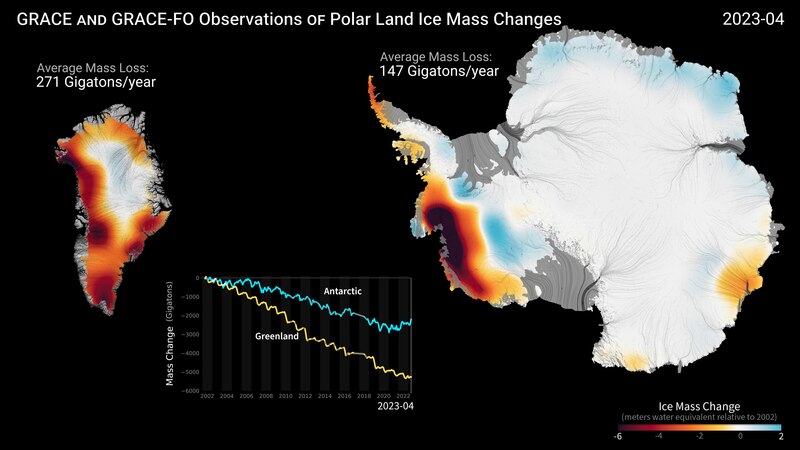
I campaigned hard for People First during the last election, because it has so many laudable policies in so many other areas, many of which will put a brake on Australia’s carbon emissions rising, such as reducing immigration. Some of its energy policies are commendable:
People First will encourage State Governments to have a gas reservation policy in place to ensure Australians do not have to import gas when it’s needed.
Its sovereign wealth policies are exemplary.
The net value of these policies is so positive for Australia that it is imprudent to dismiss the whole party outright.
Mr Rennick has garnered considerable enthusiasm, so it’s a conversation worth continuing.
IPAT Spat
Another conflict I’m dipping in to is the the mathematical notation of a formula put forward to describe the impact of human activity on the environment.
Impact = Population x Affluence x Technology
It has been suggested that human services that contribute to the natural environment’s well-being as opposed to human activity that degrades it should be factored into the equation also.
Watch this space for that one. Meanwhile, wherever you are, look forward to Spring or Autumn and don’t Fall down under.


Leave a reply to Time’s Running Out – Equanimity Cancel reply