
Out Back of Beyond
Birdsville is famous for being one of Australia’s most remote towns. And it truly does take some effort to reach – the Queensland government supports the Rex regional airline from Brisbane that takes more than 6 hours and stops FOURS times at Toowoomba, Charleville, Quilpie and Windorah.
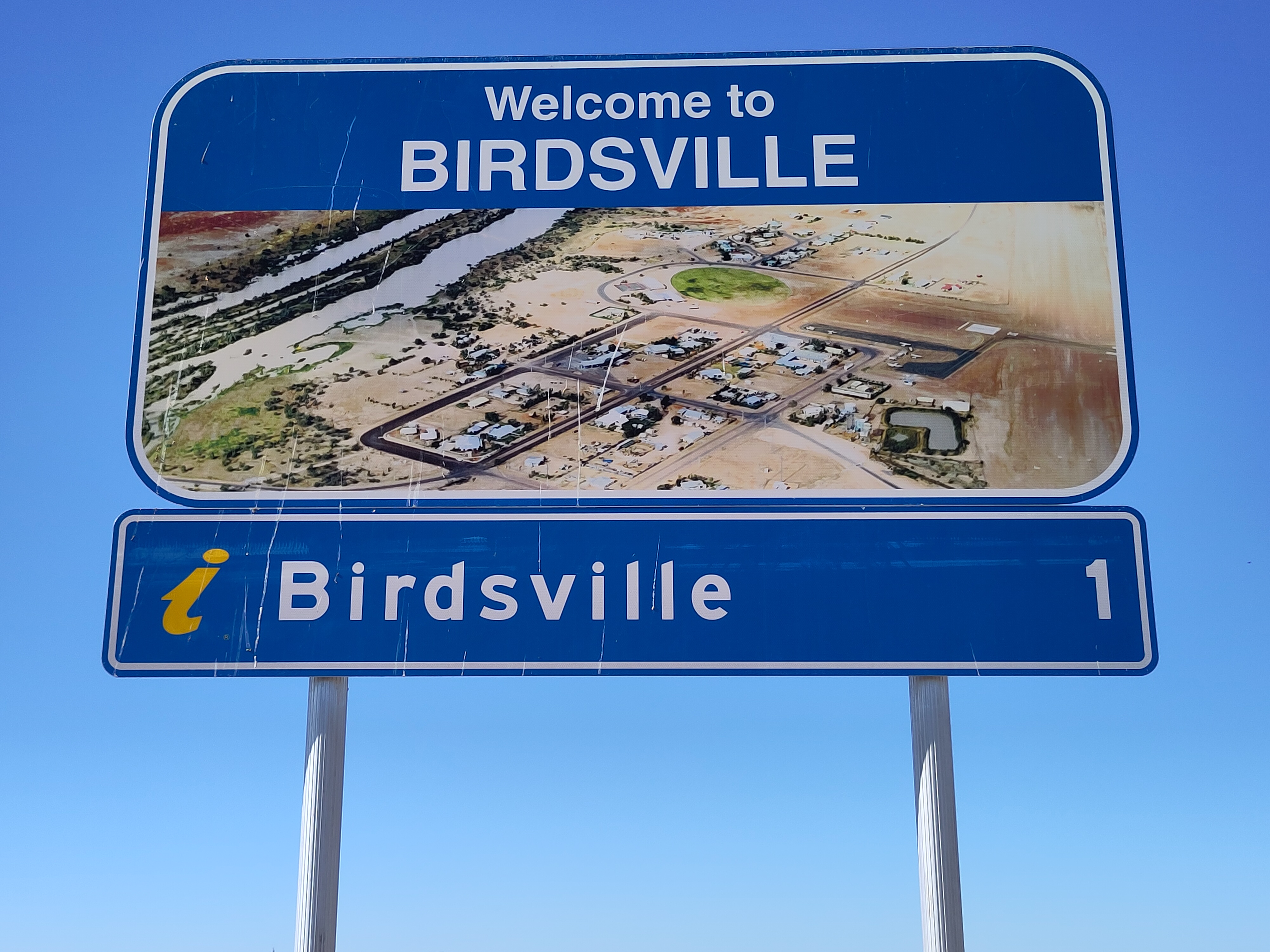
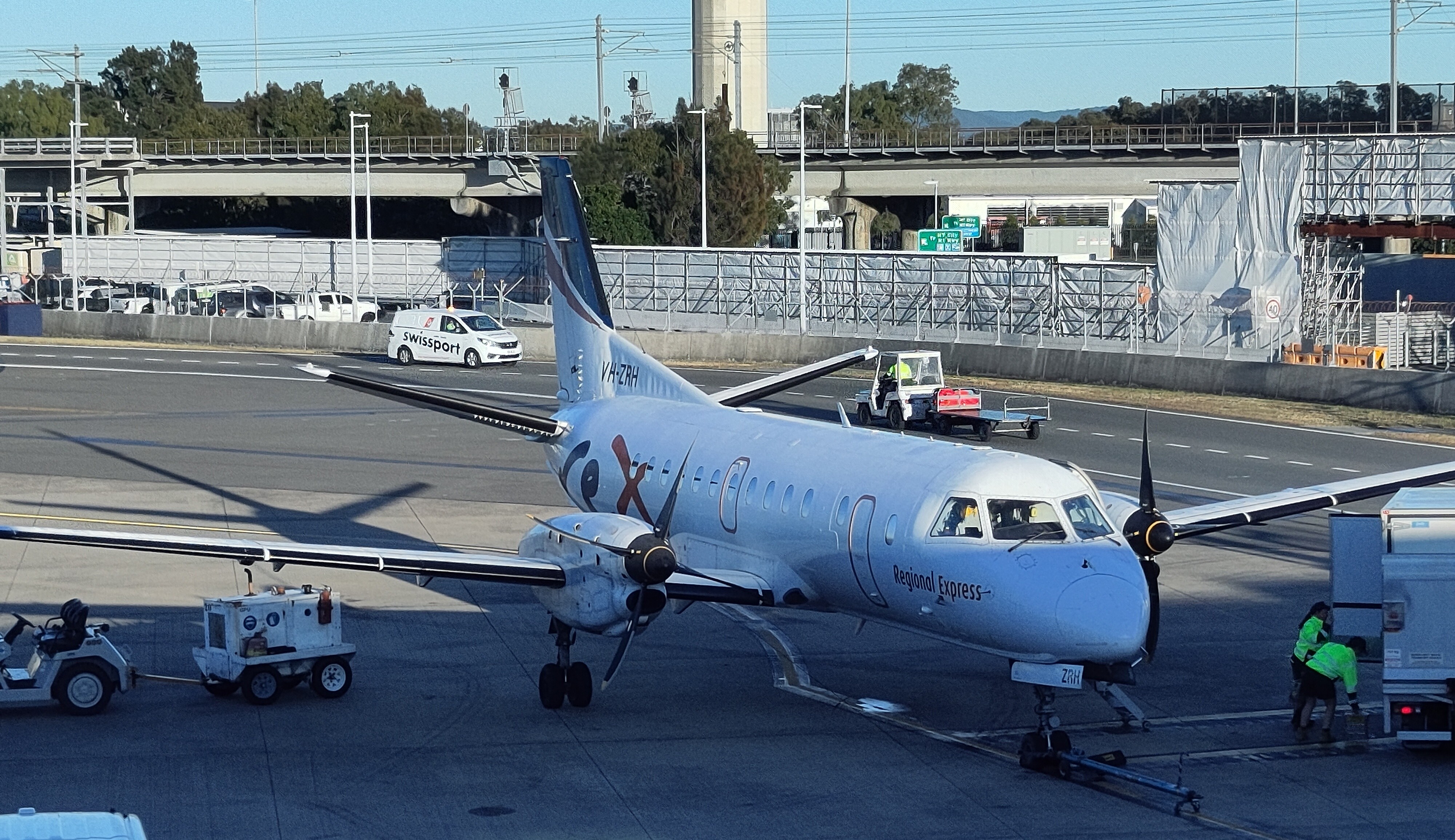
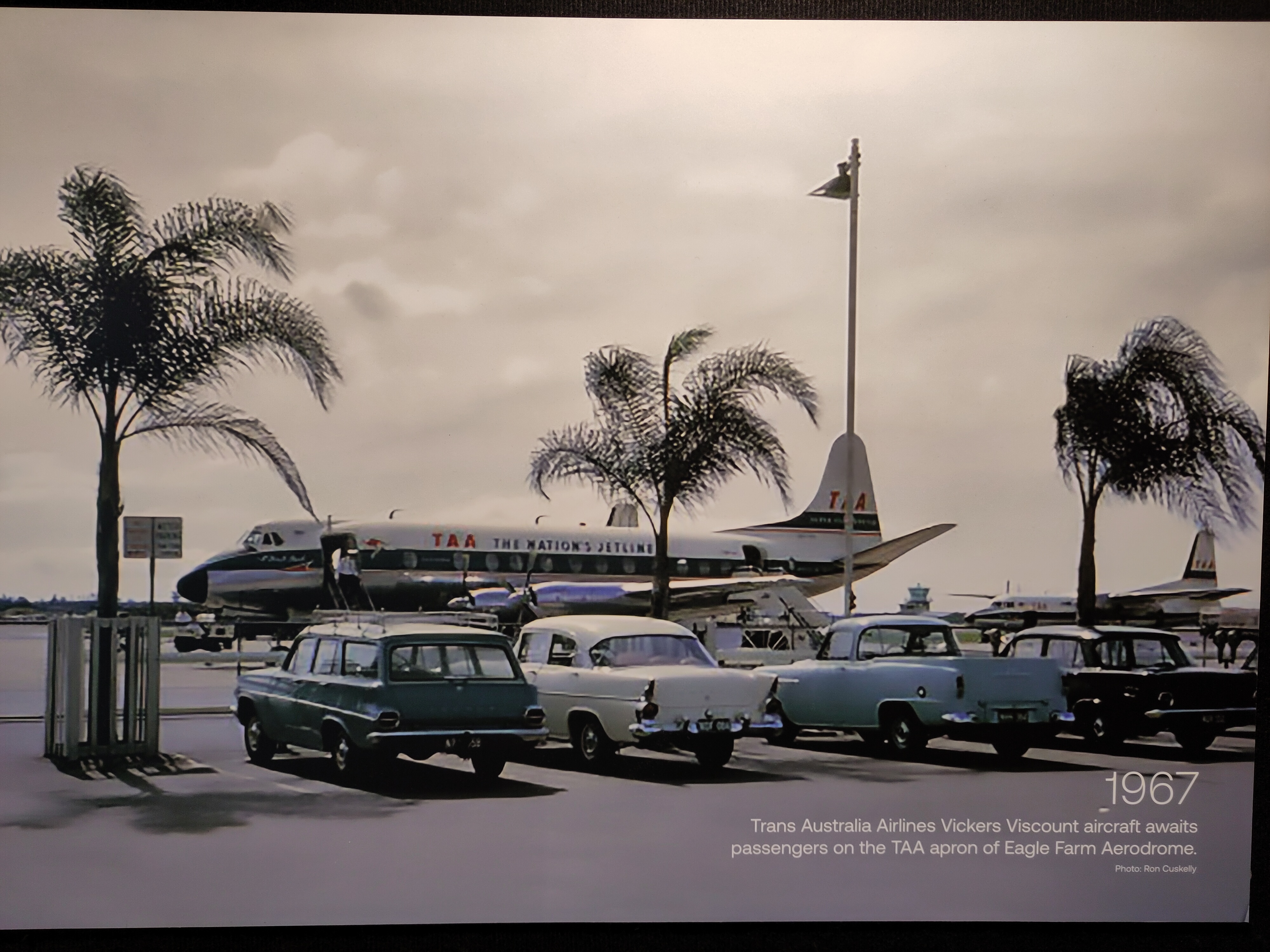
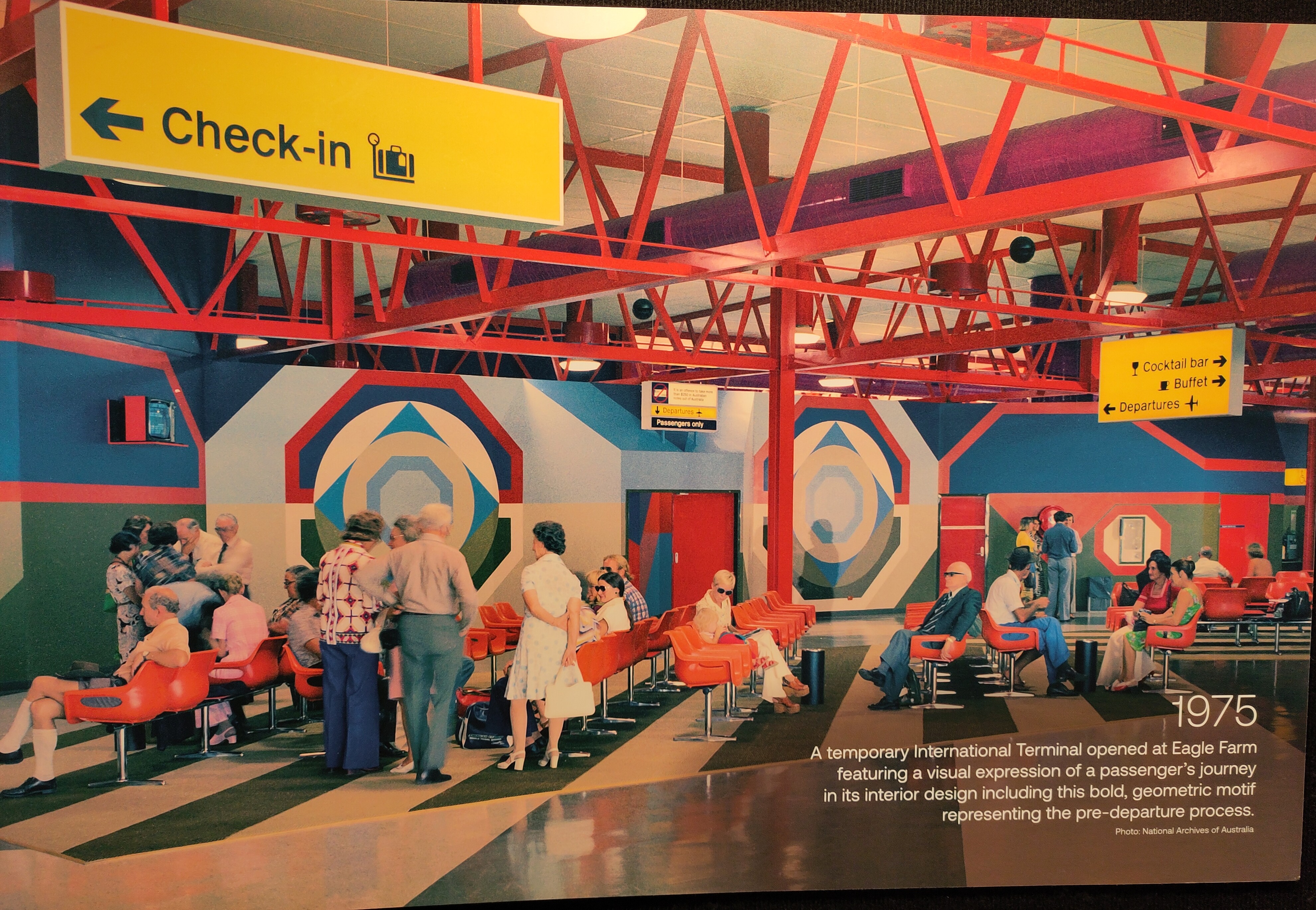
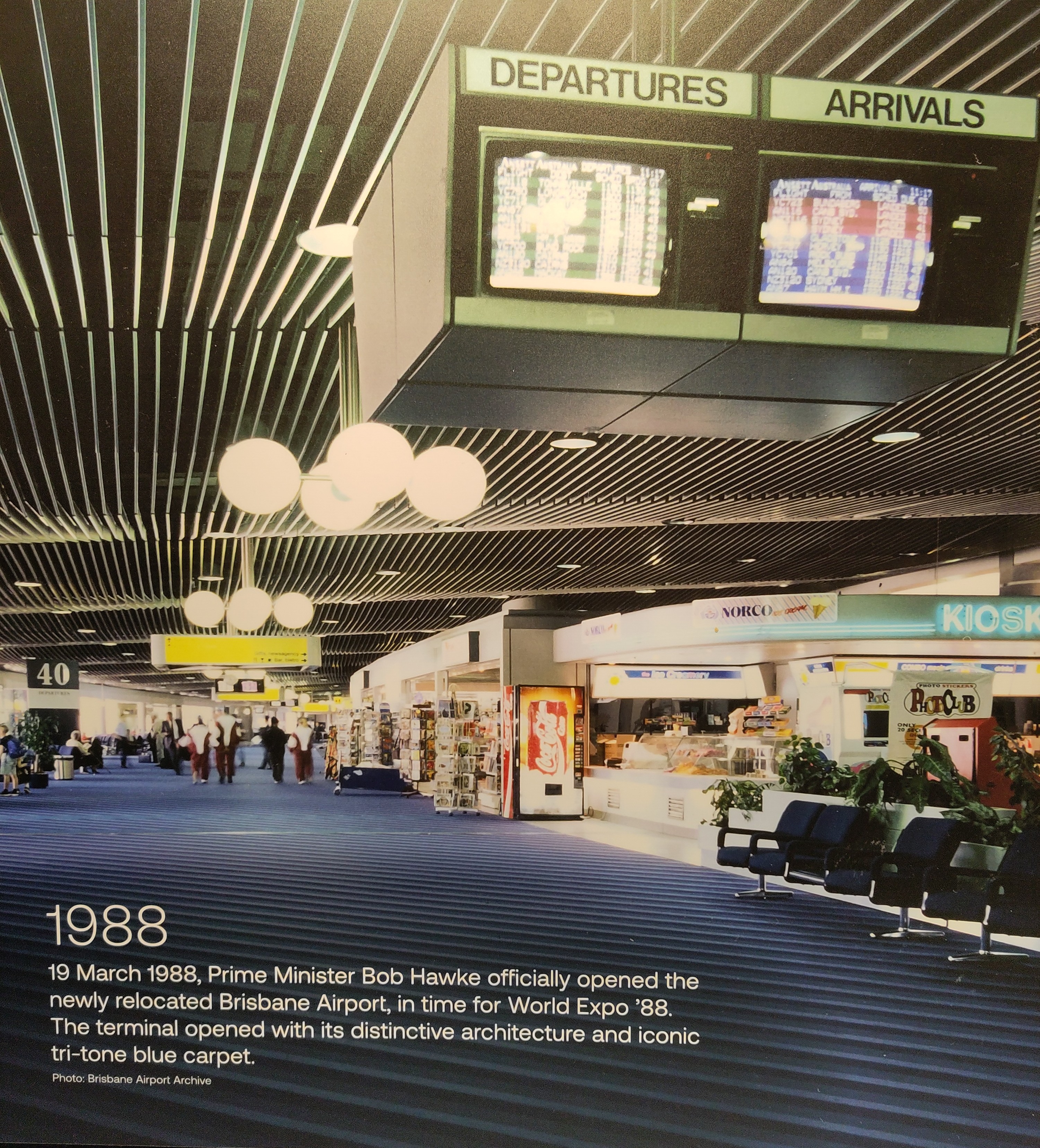
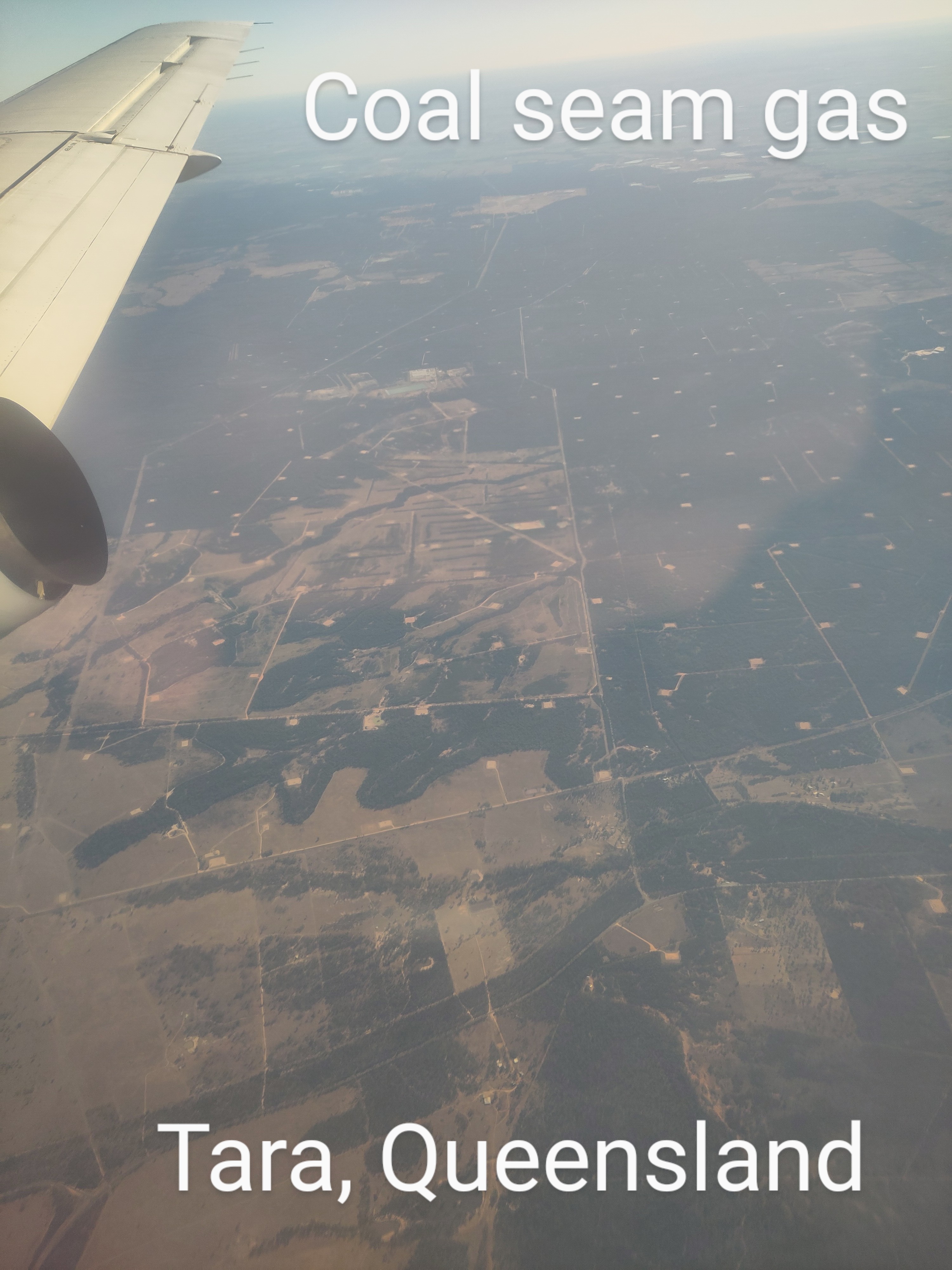
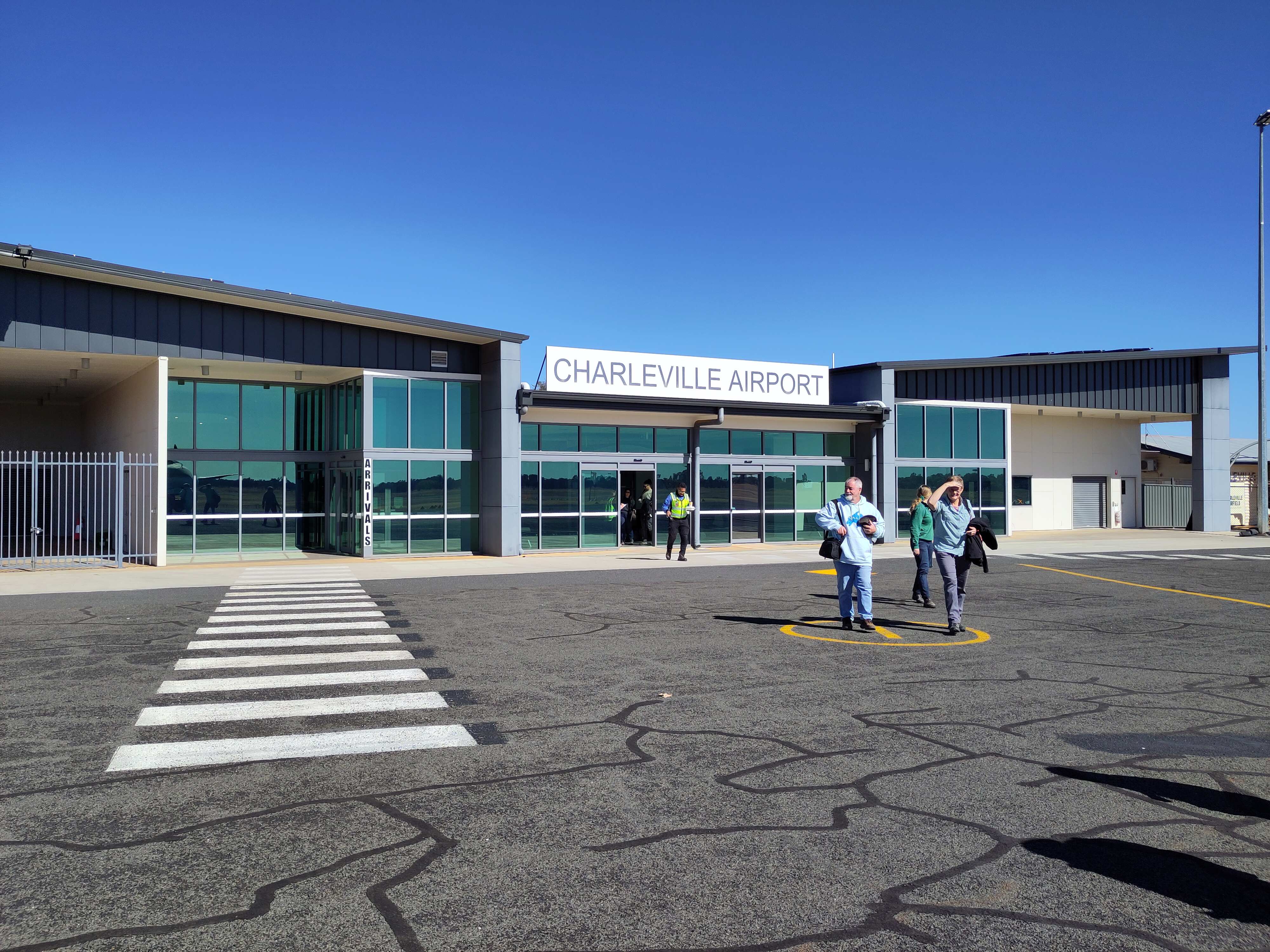
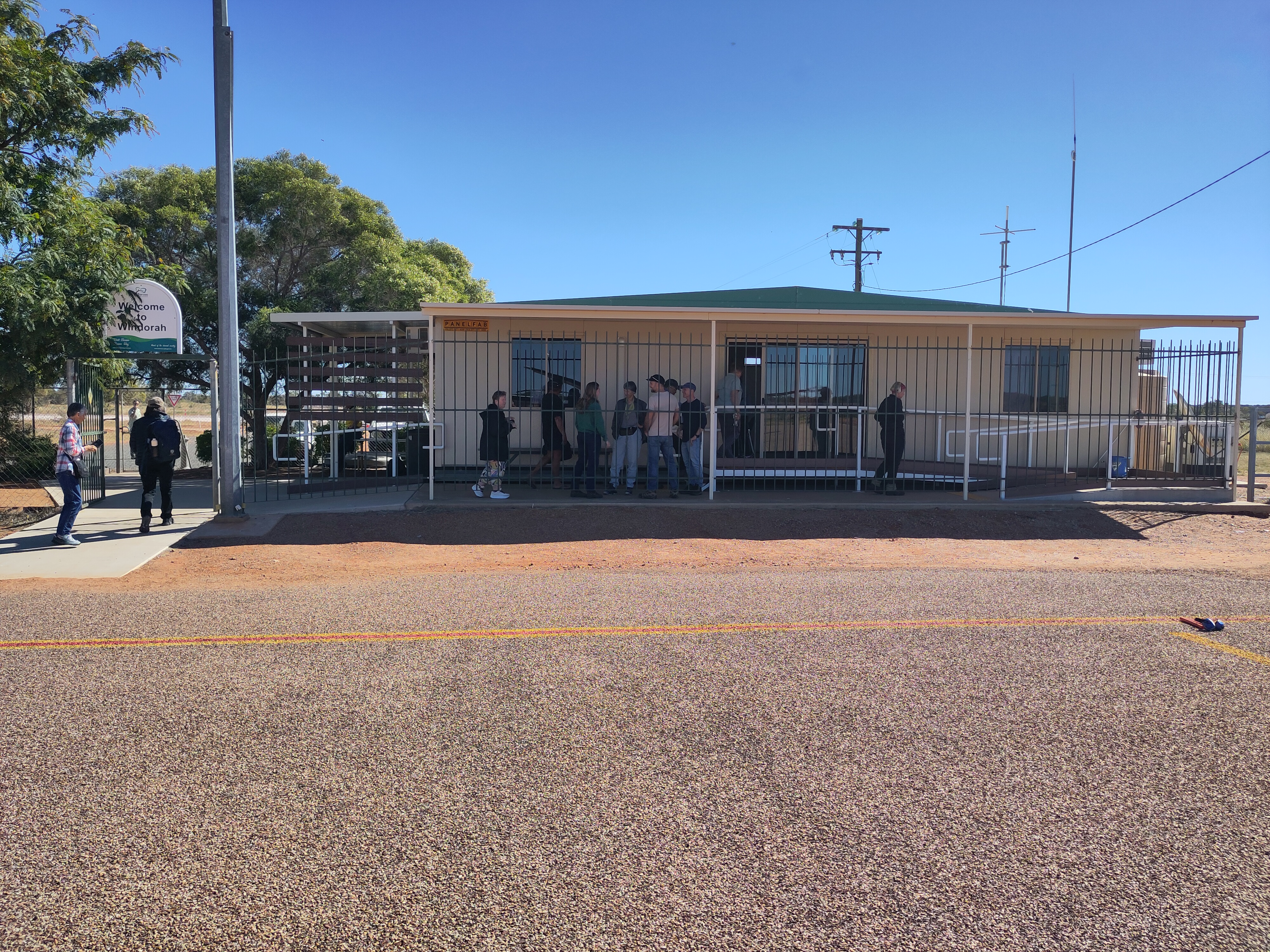
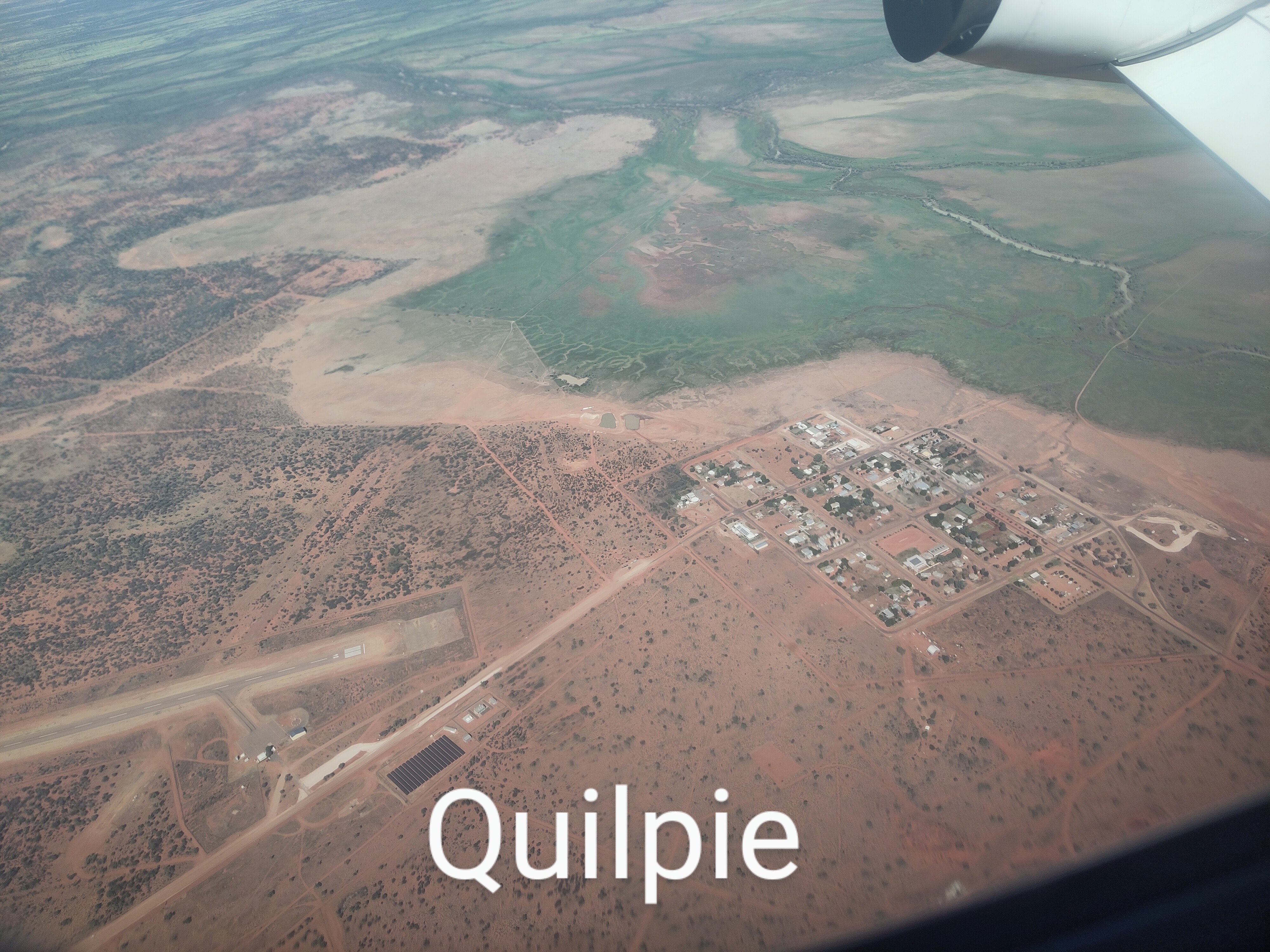
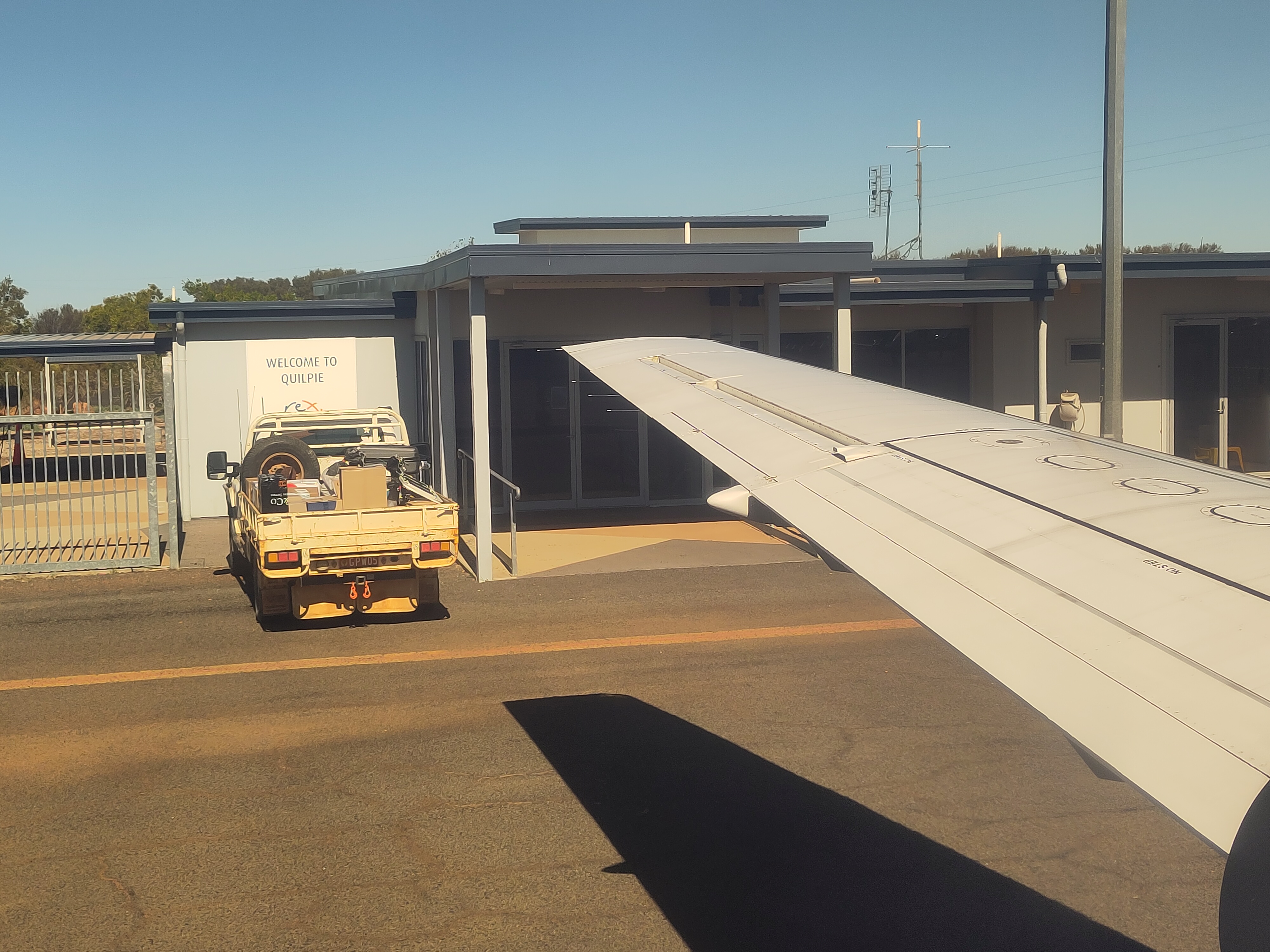
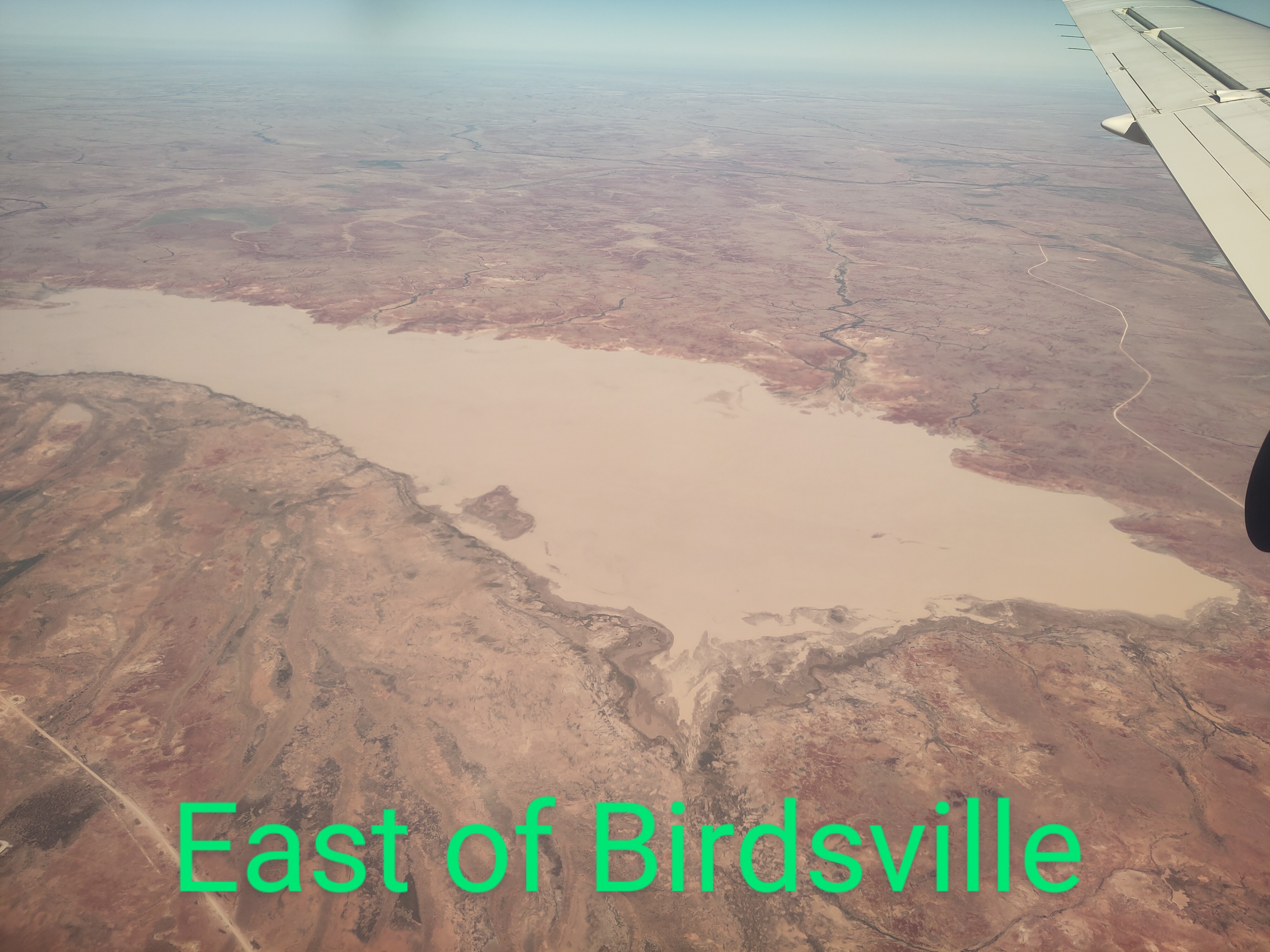
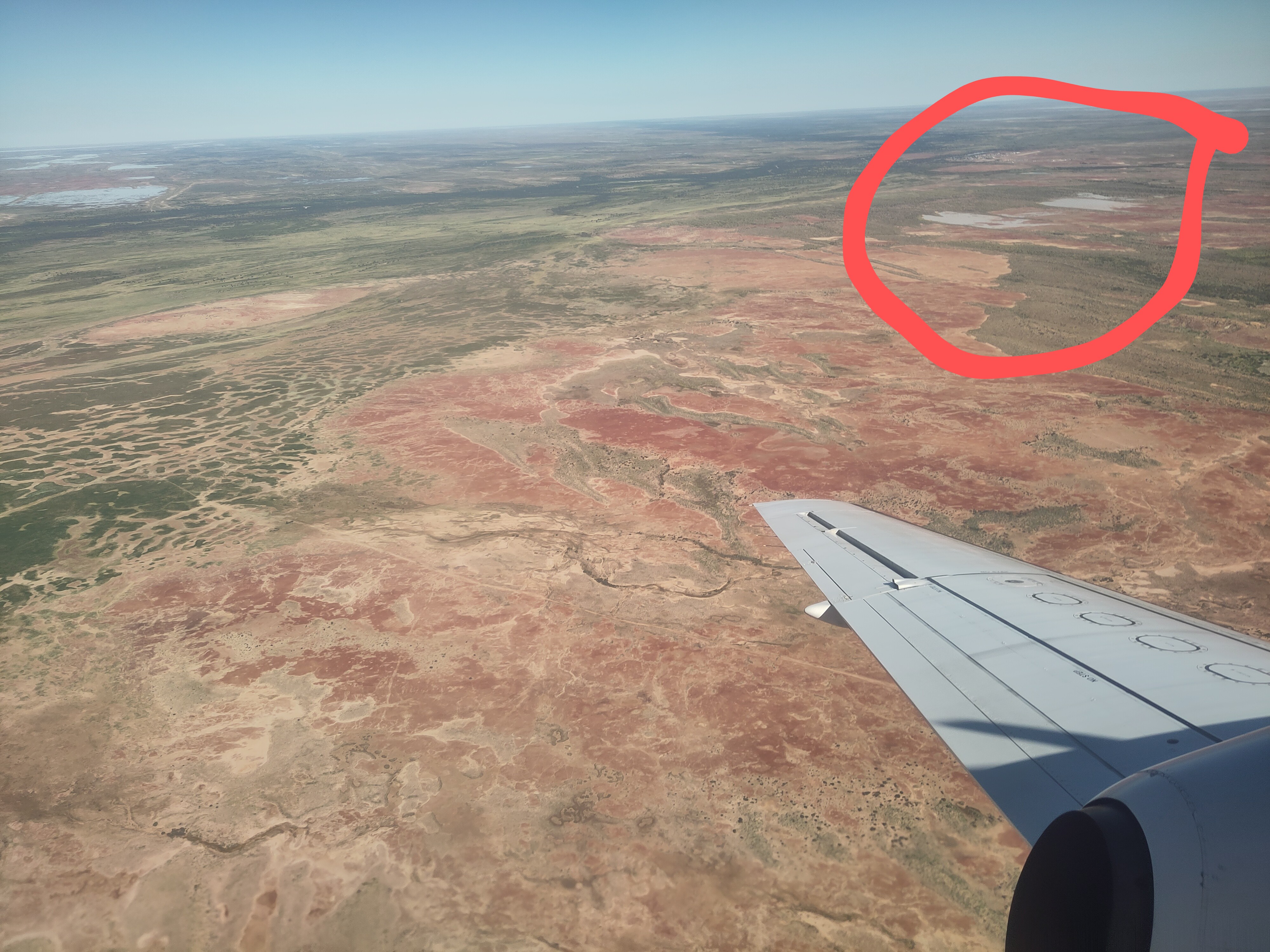
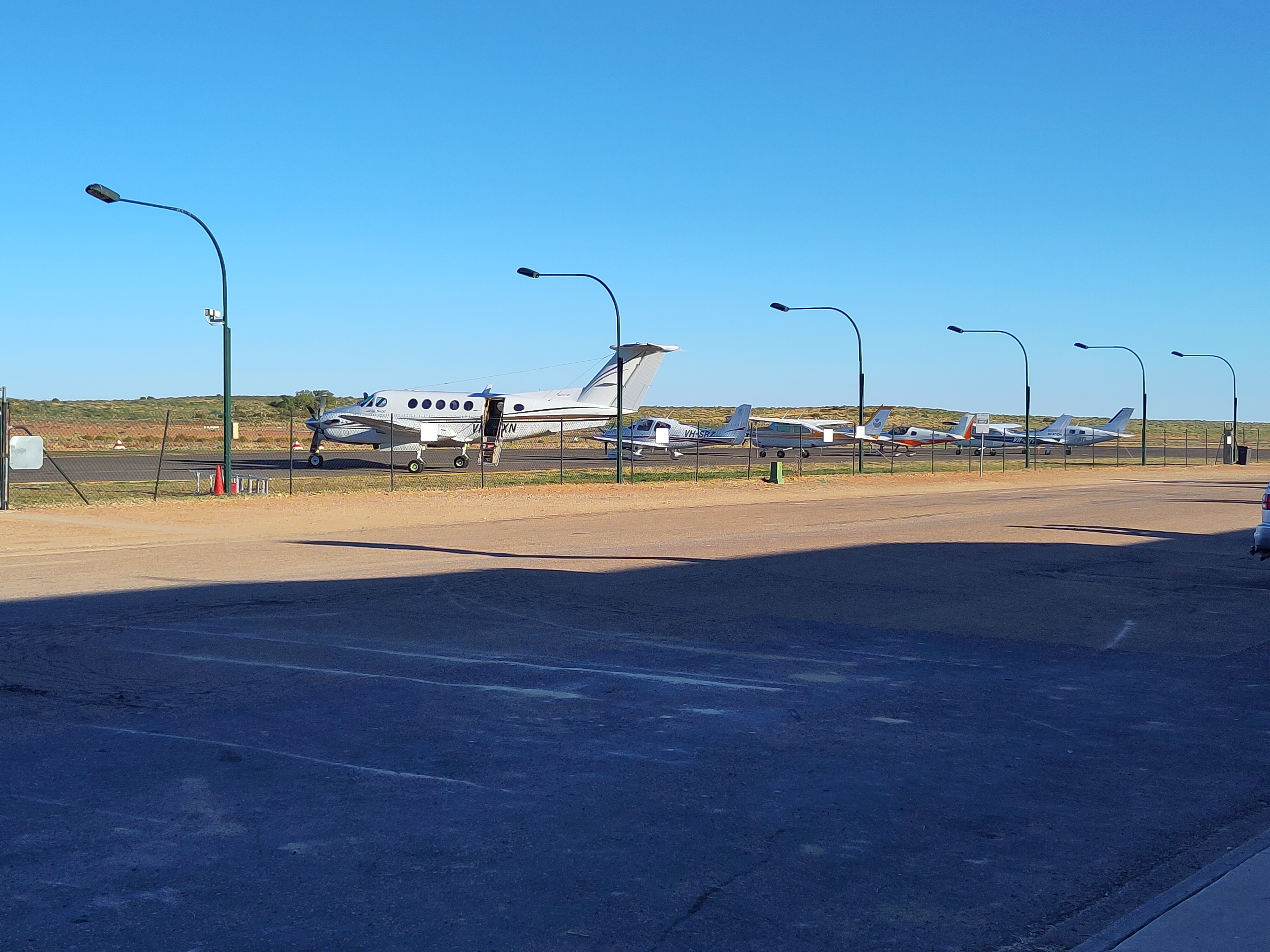
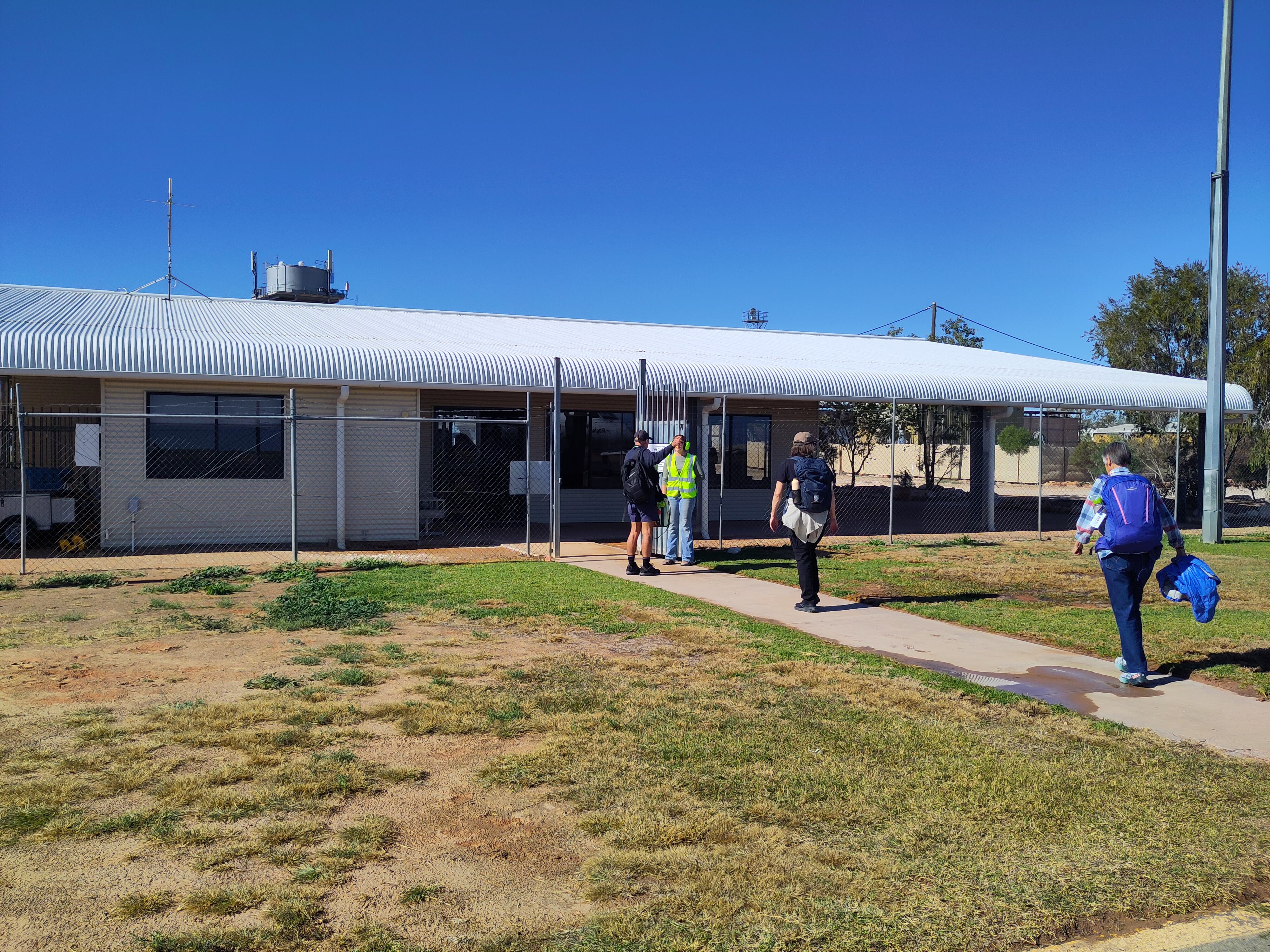
(Click an image for caption details)
Birdsville’s remoteness has a bucket-list quality that draws tourists from all over, especially after a big wet like now. Tourists turbo-charge the economy and make it feel much less remote!
Economy, Township, People
Birdsville is as far north of Brisbane as Hervey Bay is, but being so far west and in the same time zone, the sun rises half an hour later.
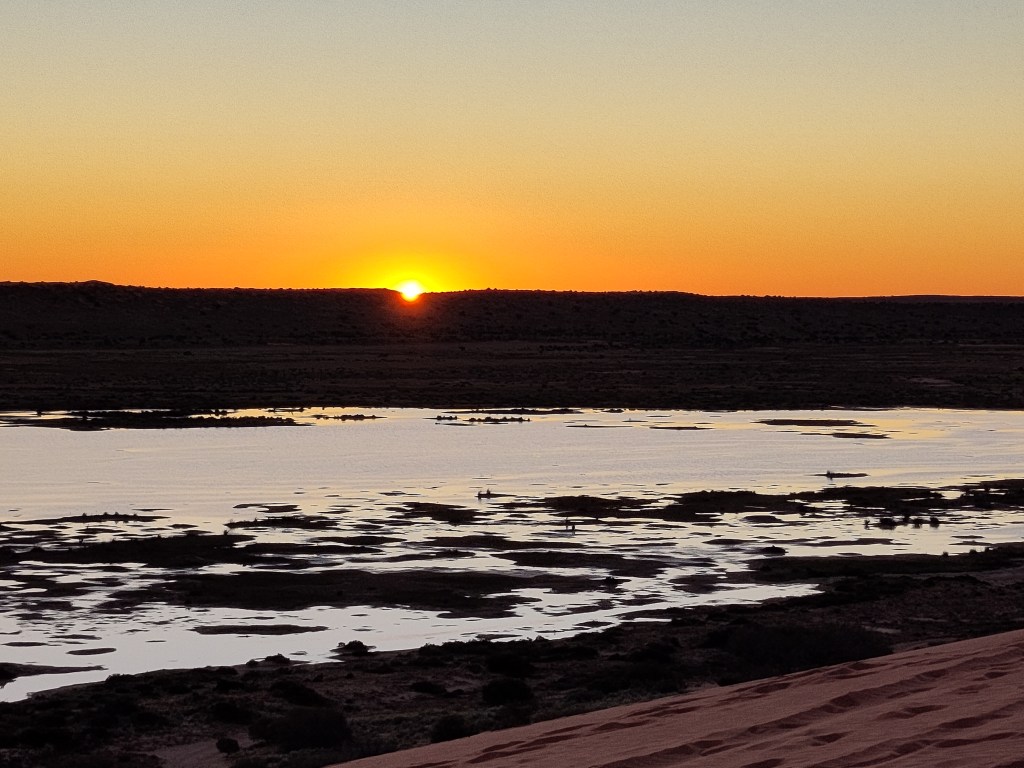
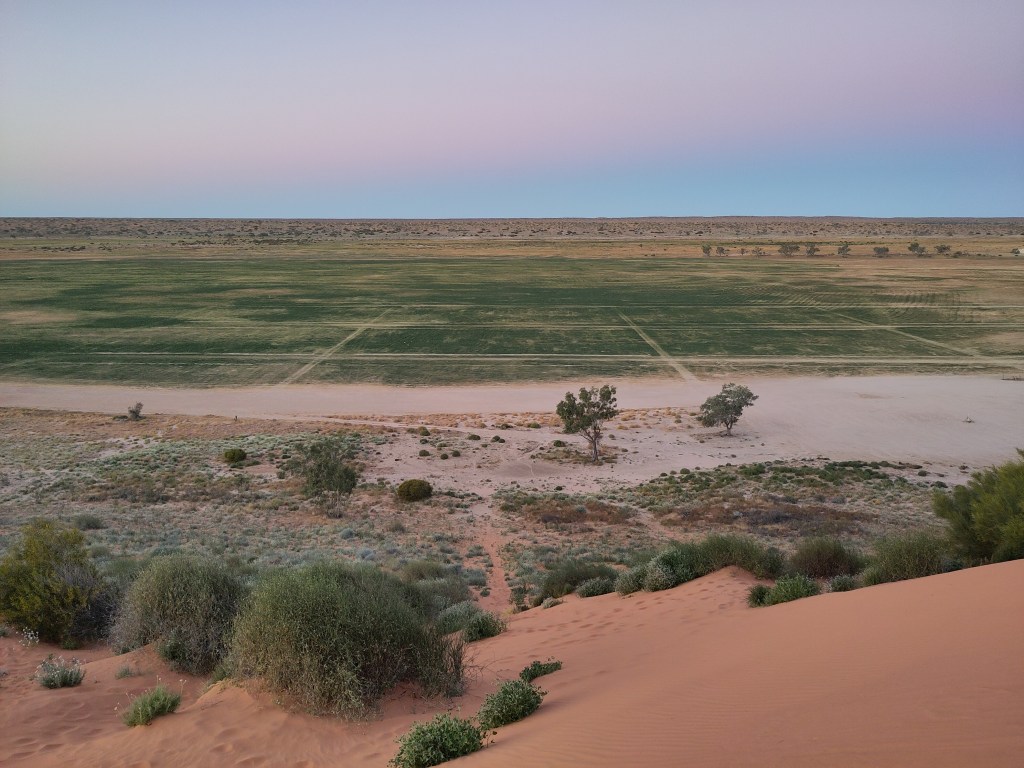
The Big Red Bash is a music festival that draws a thousand people. The annual Birdsville races are in September.
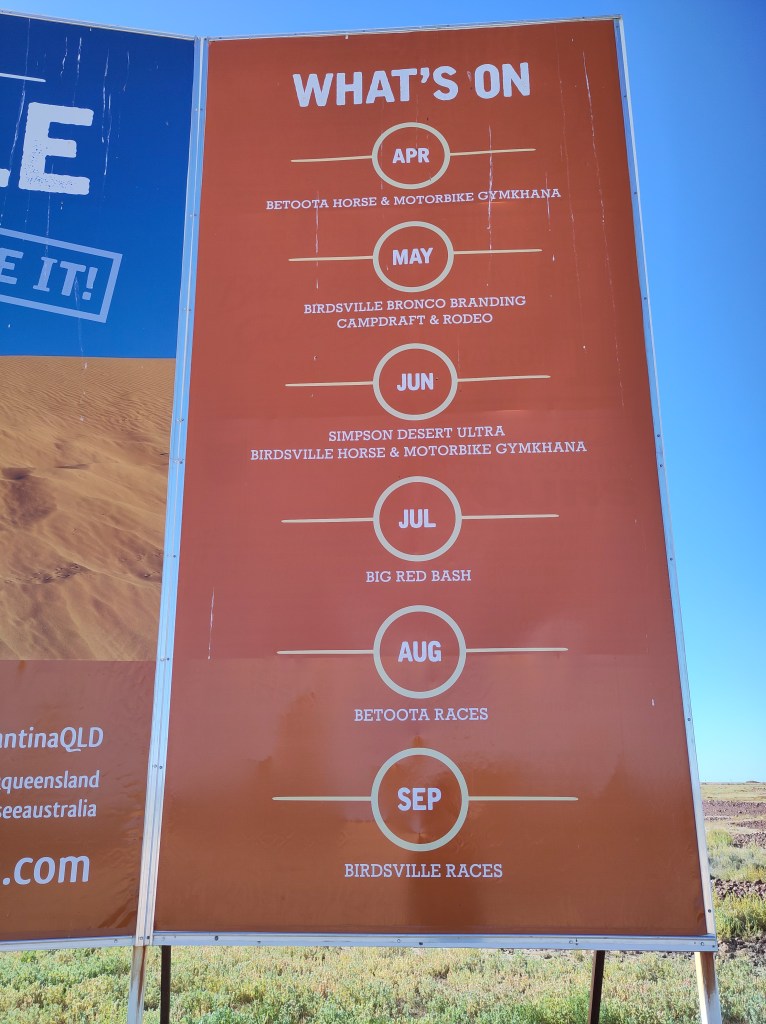
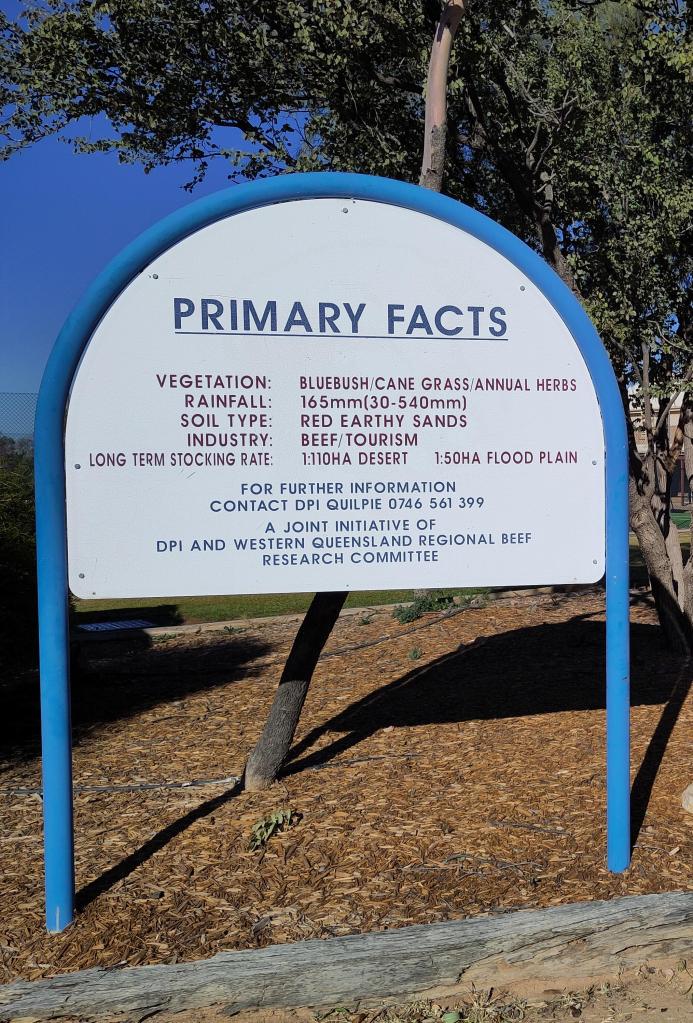
Tourism and beef (cattle stations) are the main economy.
The Southern Most Town of Capricornia
I’d like to meet the 100-odd people who are here throughout the six month summer ‘siesta’; the few who keep the place going in drought. They’re the ones who can tell me how important its affiliation to Queensland is. Apart from seeing Lake Eyre full, I came here to research for my Capricornia project. Is there more attachment to the Centre, the North, the Desert, the South or the West? Or is it more a town unto itself?
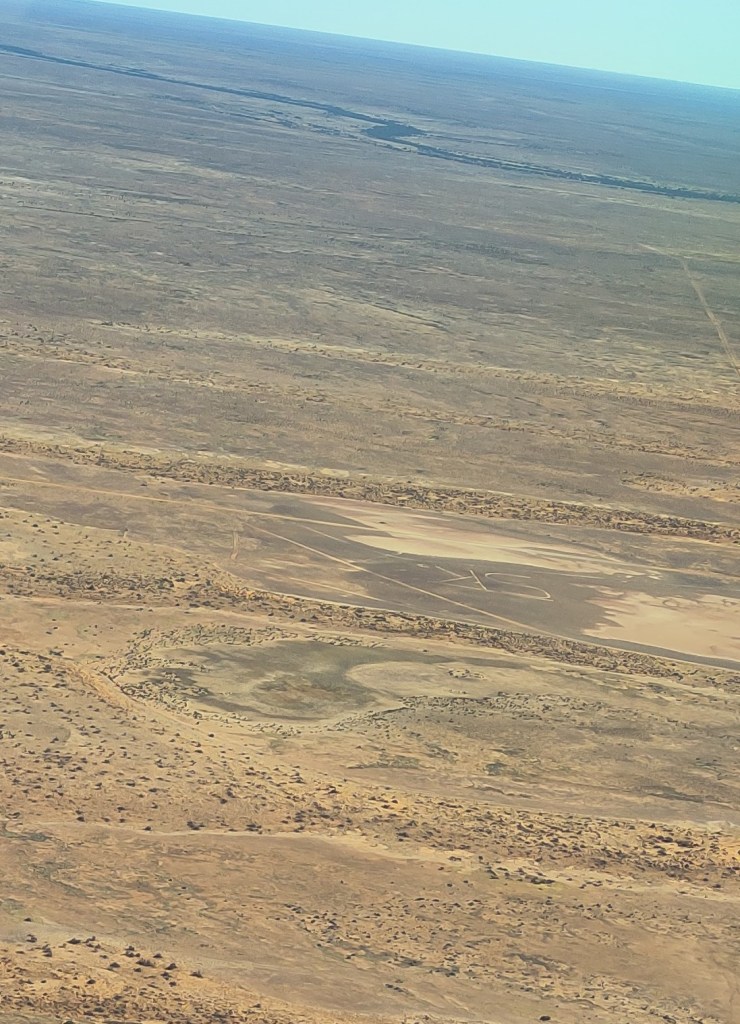
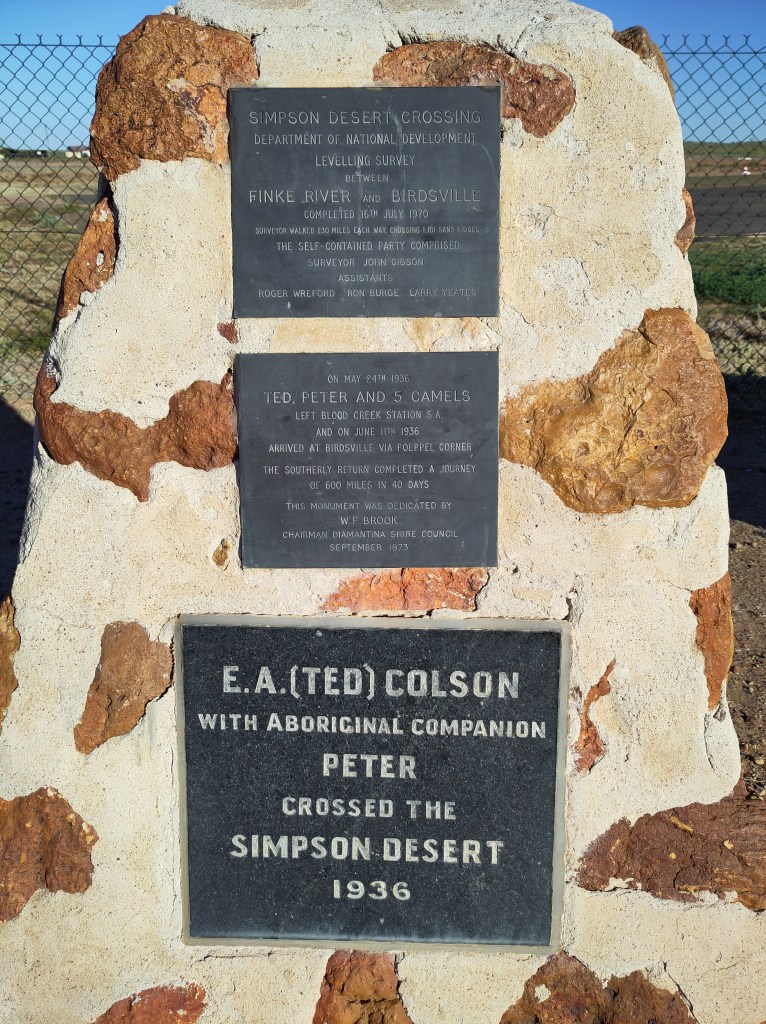
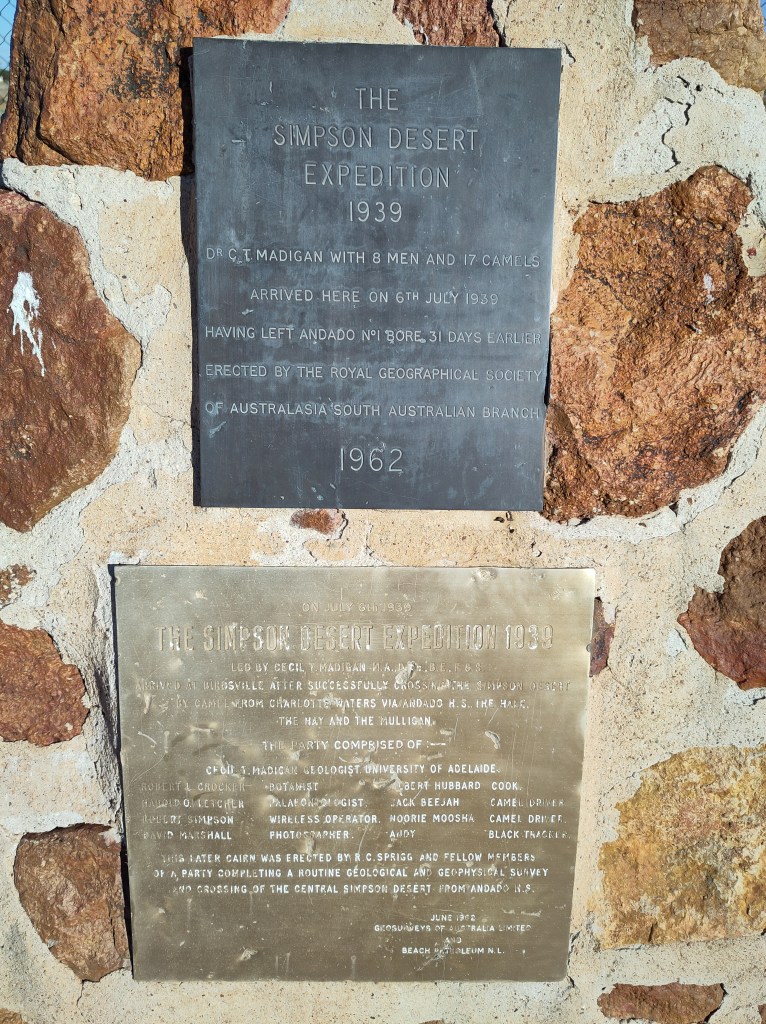
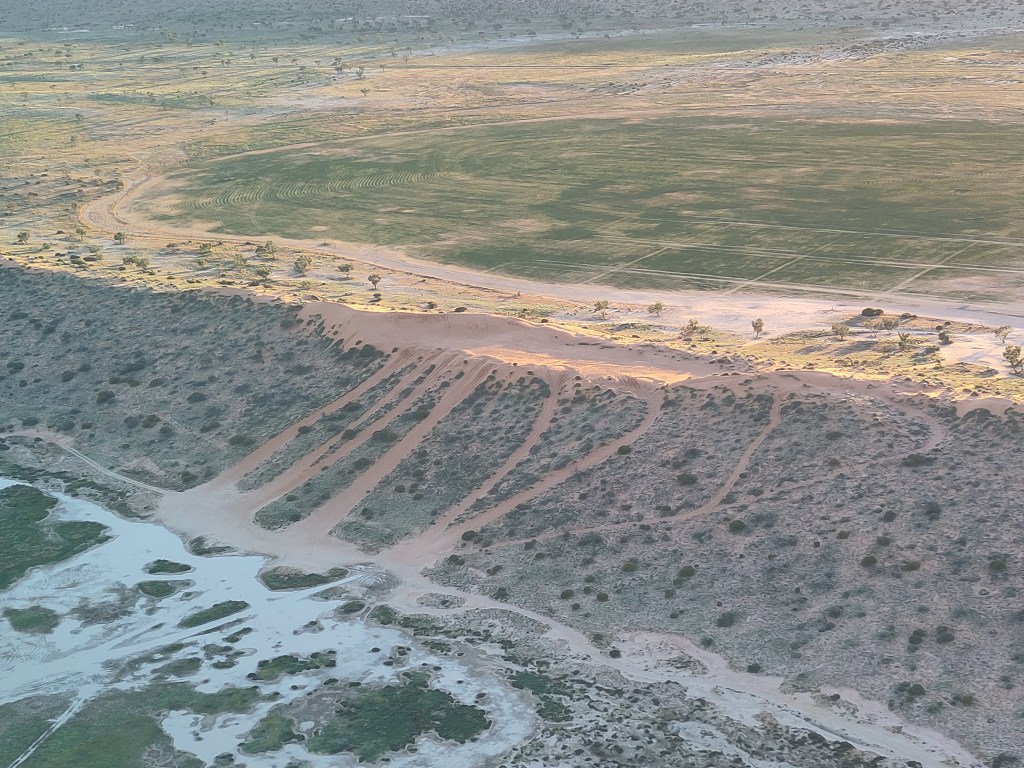
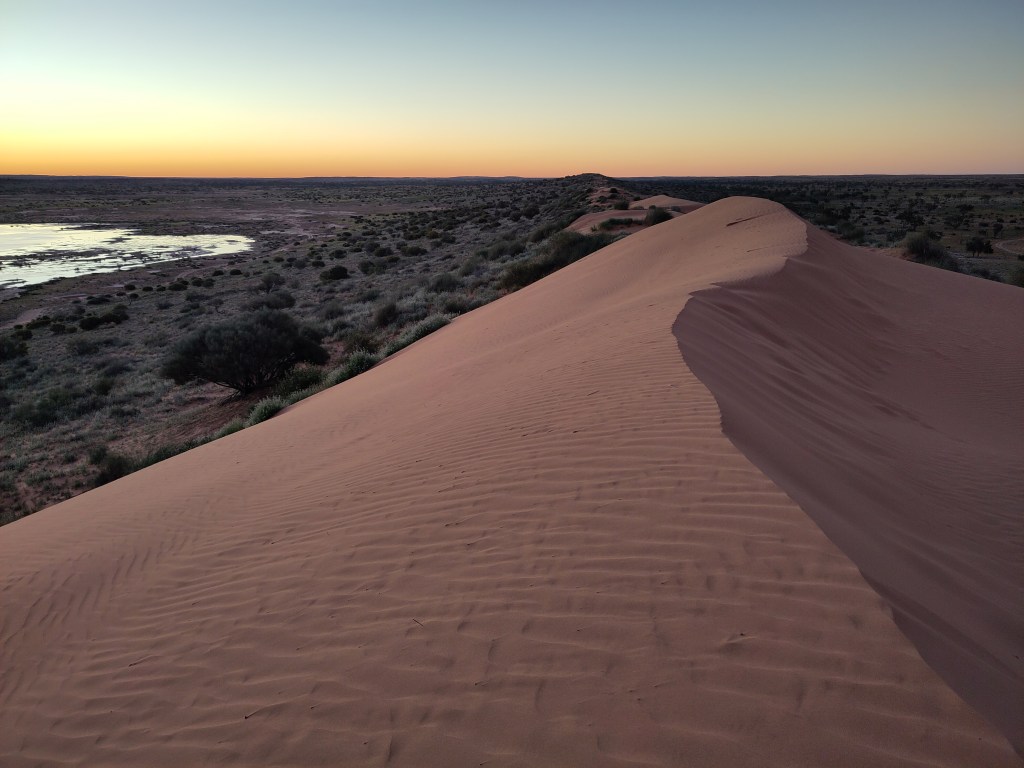
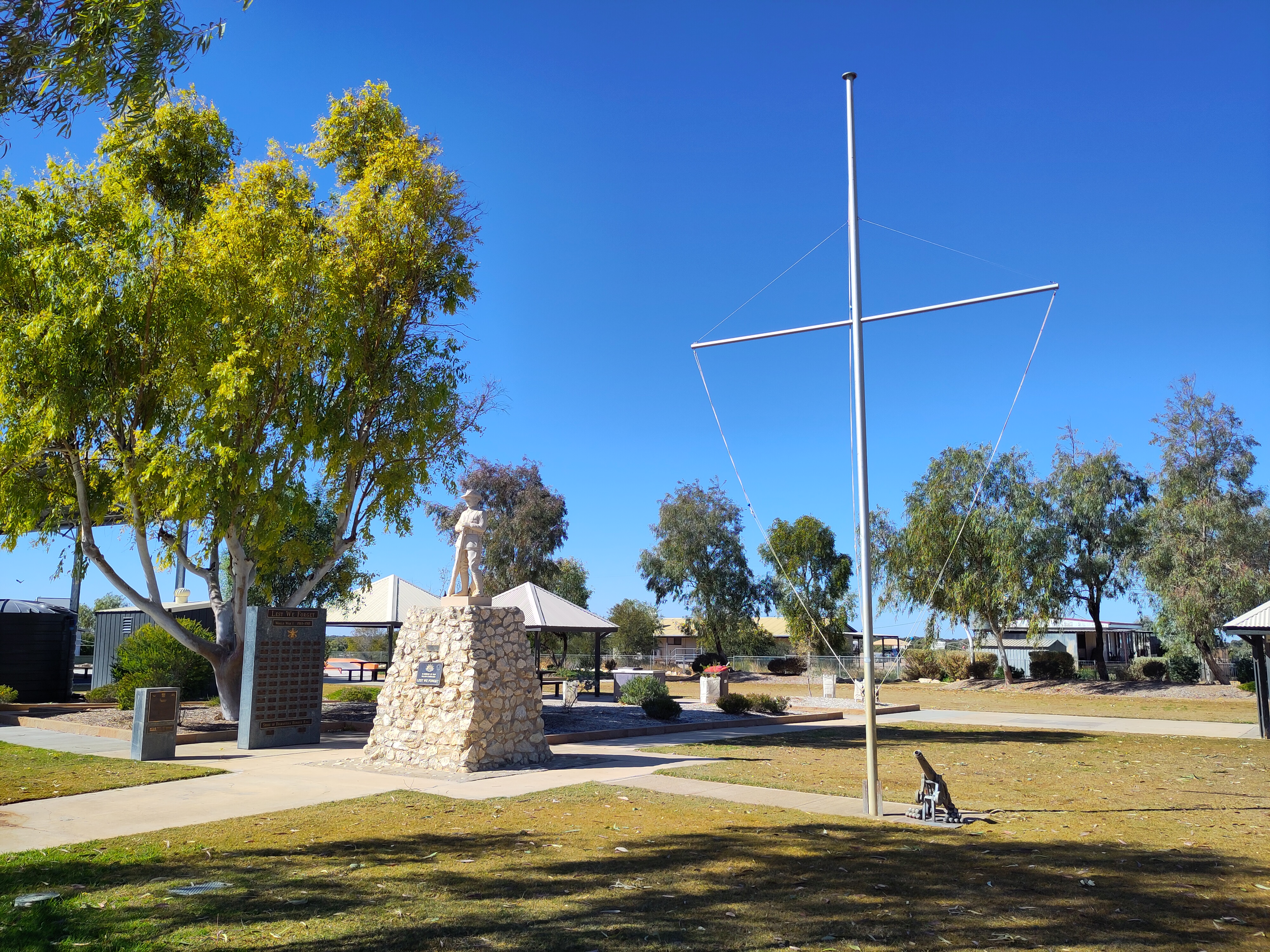
There’s a big barrier to the west – the Simpson Desert. With 1,200+ sand ridges, putting a road through would be a herculean task. It’s a popular spot for camel treks. Plaques are the airstrip stand testament to the early crossings. Now it’s a 4WD sport.
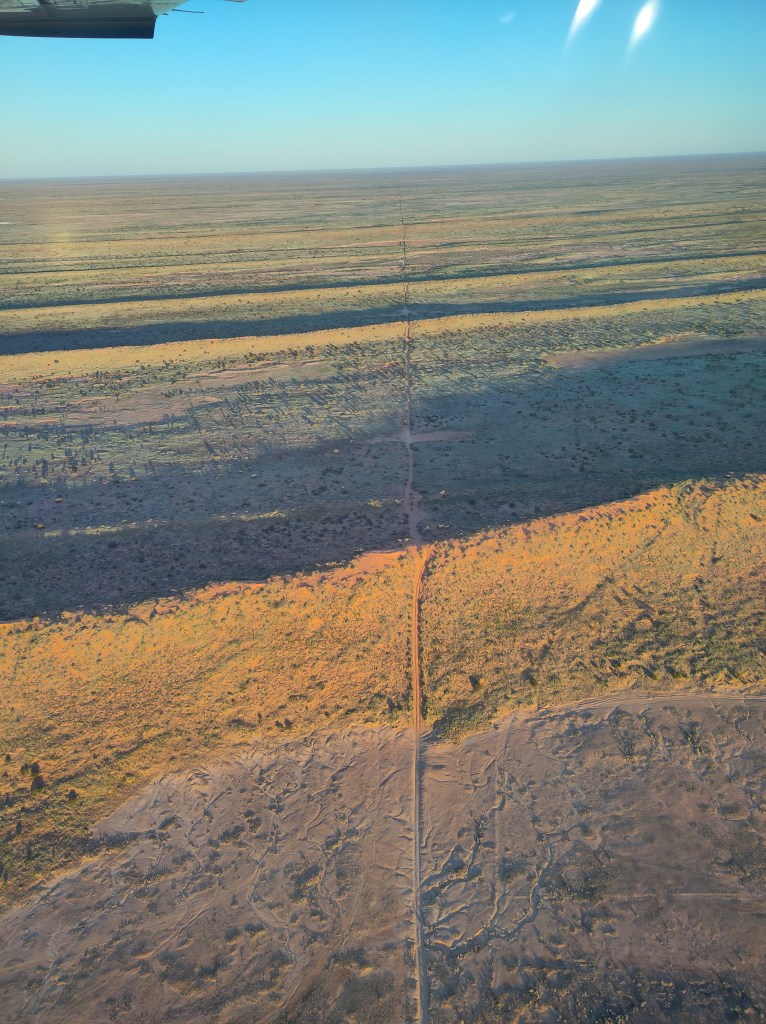
The dunes of the Simpson run north-west, created, it is believed, by eddy winds that ran in that direction, but no one could tell me how old they are.
Aborigines
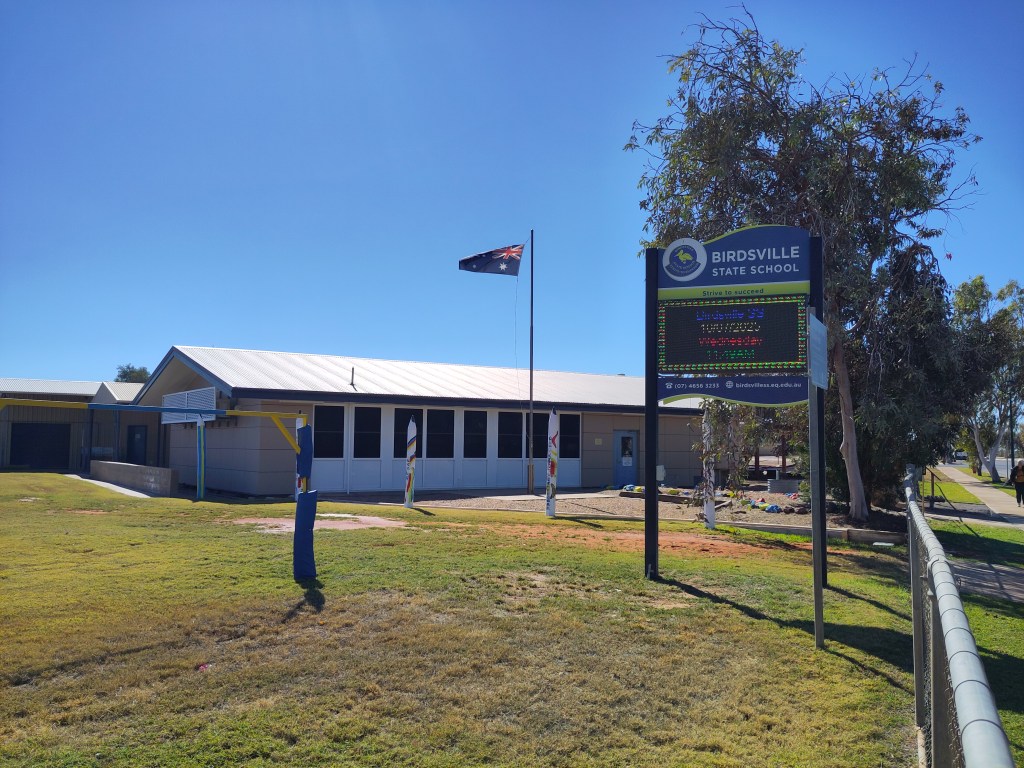
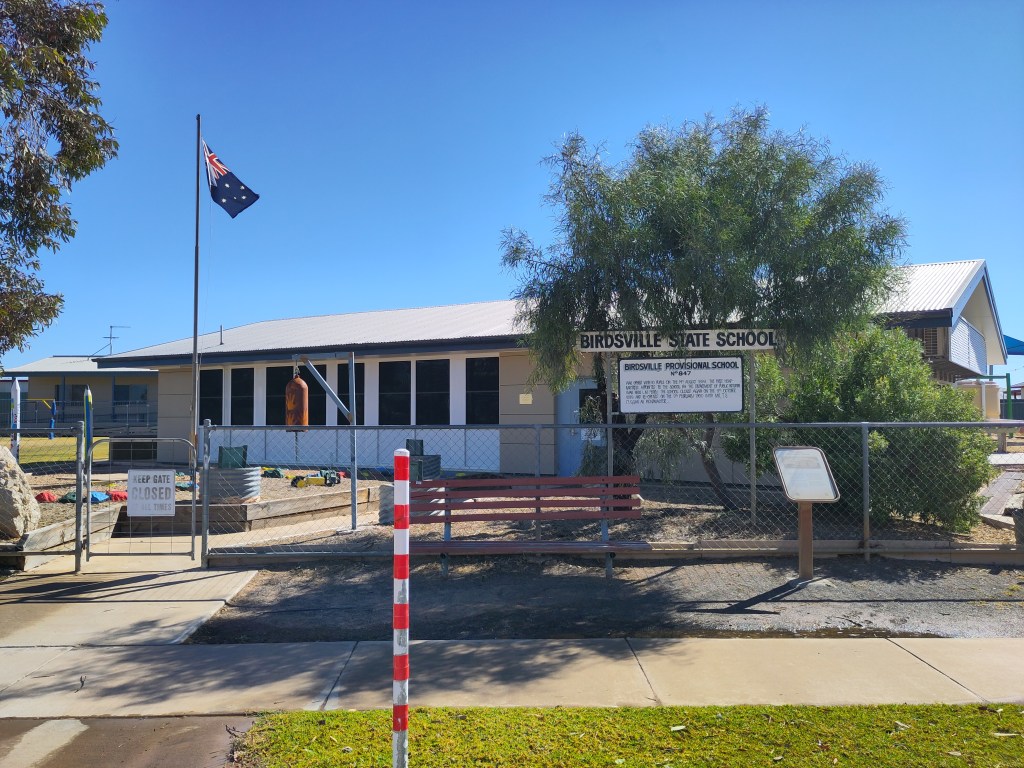
The local Wangkangurru people came out of the outback, attracted by the easy supply of food the relative newcomers had. They seem to have merged peacefully with no accounts of conflict. Perhaps because there was not much to fight over, the image portrayed is of people needing to help each other. Education has not been neglected and photos of classes show half the students as Aboriginal.
There are many limits to living out here and at some point children leave for extended periods to attend high schools elsewhere.
Diamantina
Birdsville is in the Shire of Diamantina. The main river through it bears the same name. I had hoped to meet the Mayor and learn more about shire’s needs and perspectives, so I wrote to him and his deputy and offered to shout them a beer at the pub. A couple of days into my stay I was wondering where the Shire Chambers and offices were, because nobody had mentioned them. Little wonder I didn’t hear back from their Excellencies; the ‘capital’ is in Bedourie, two hours drive north. Betoota is another (historic, barely occupied) town in Diamantina.
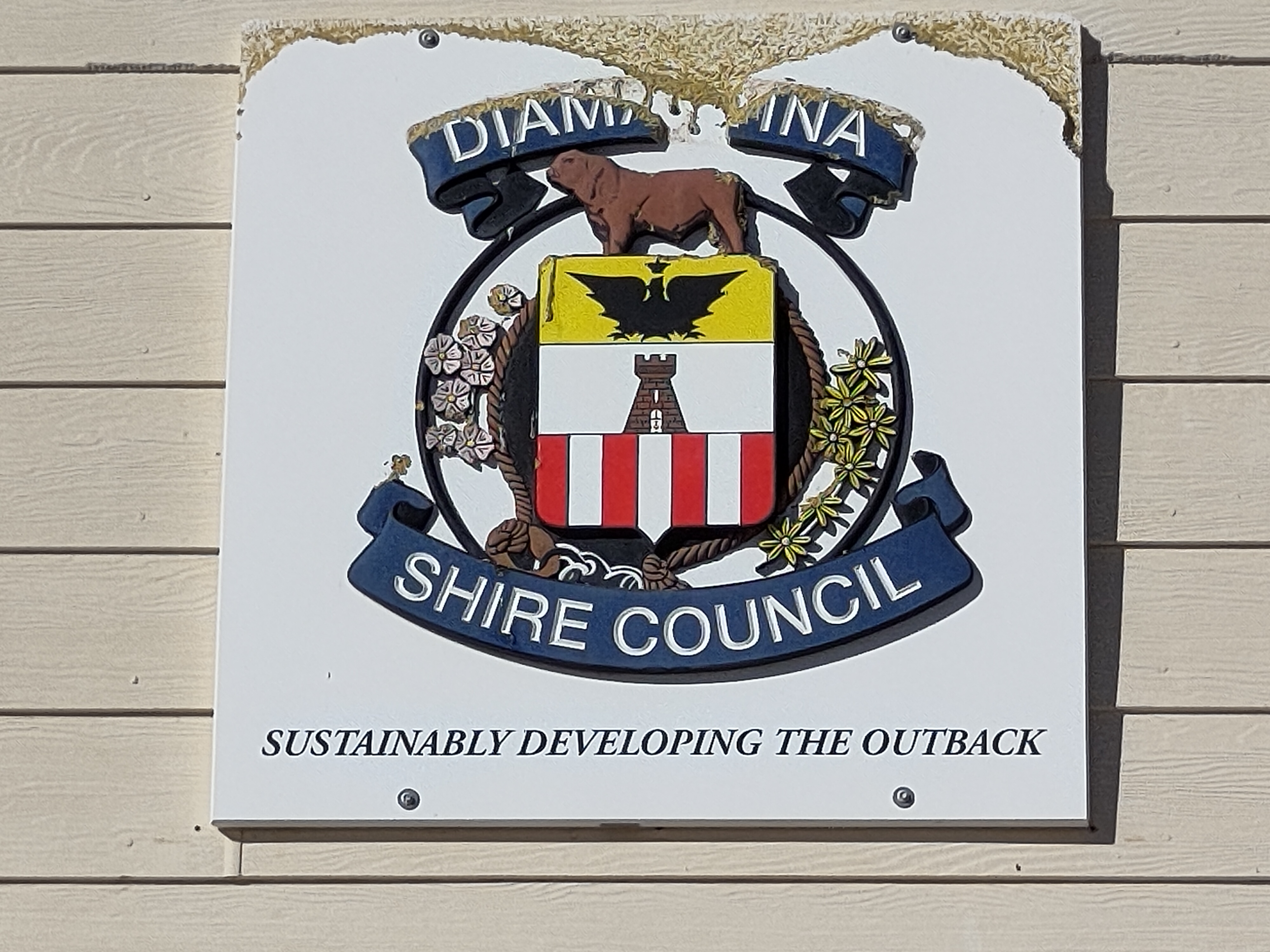
Diamantina Coat of Arms 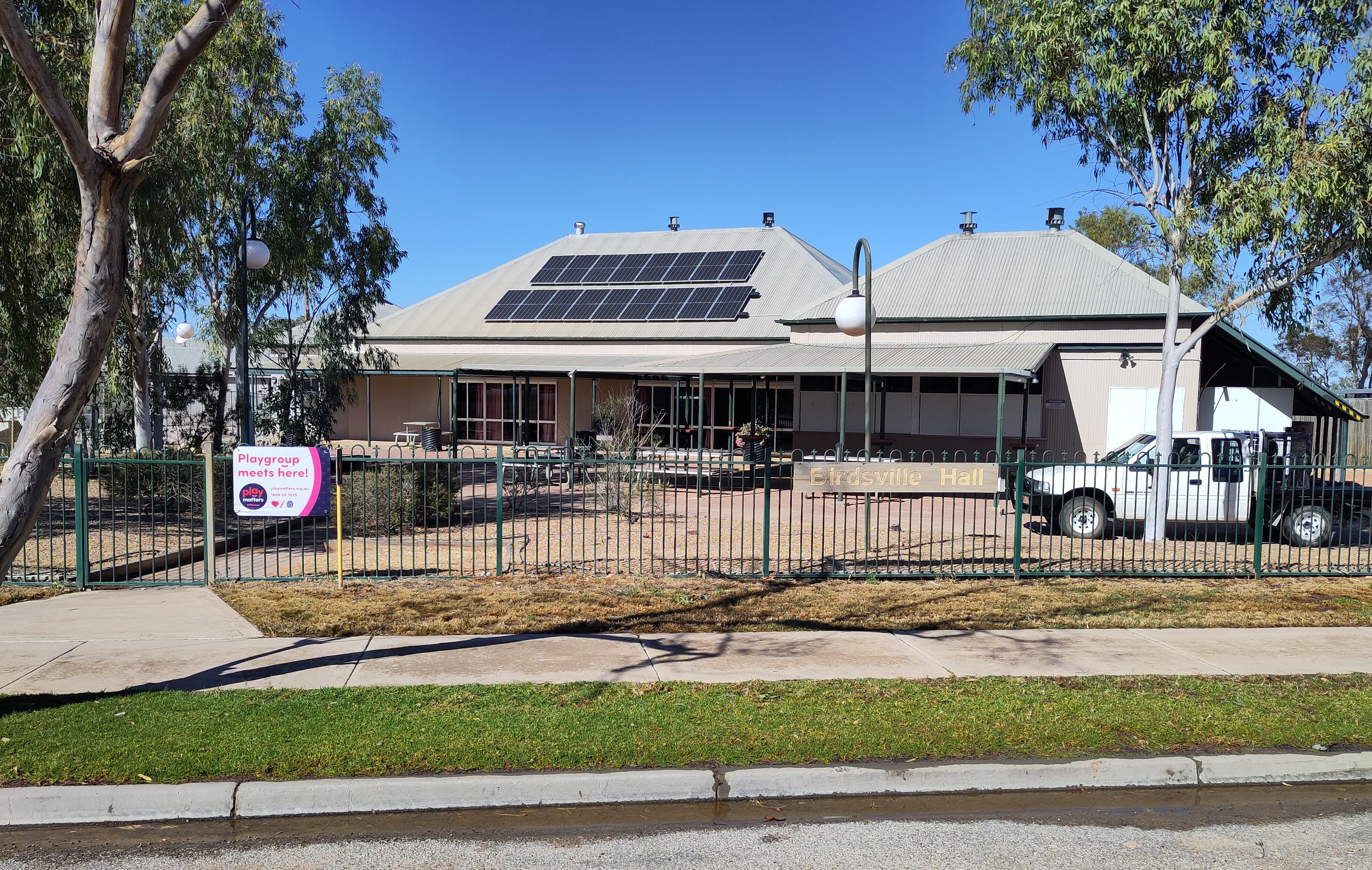
Birdsville Hall 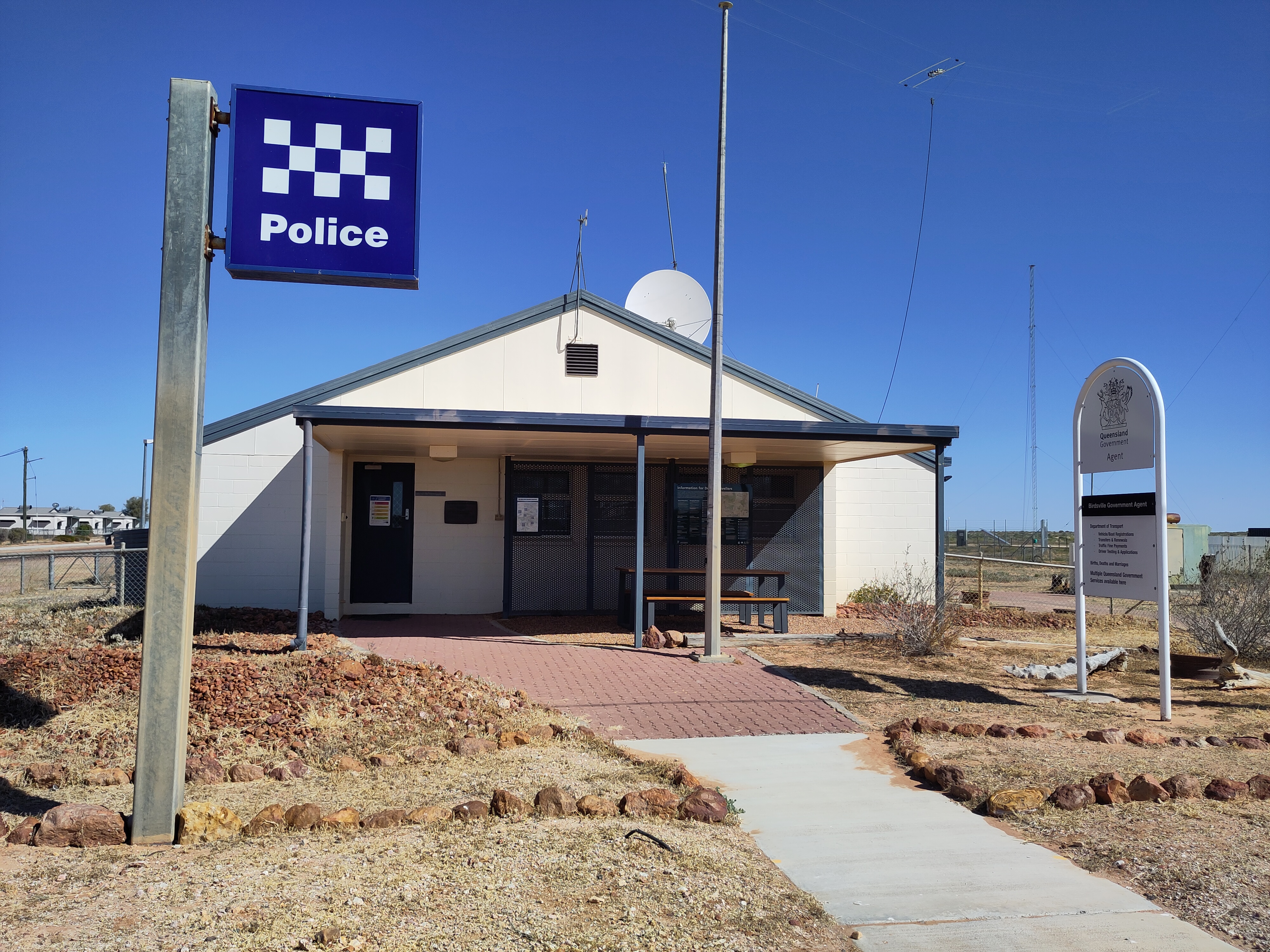
Police Station 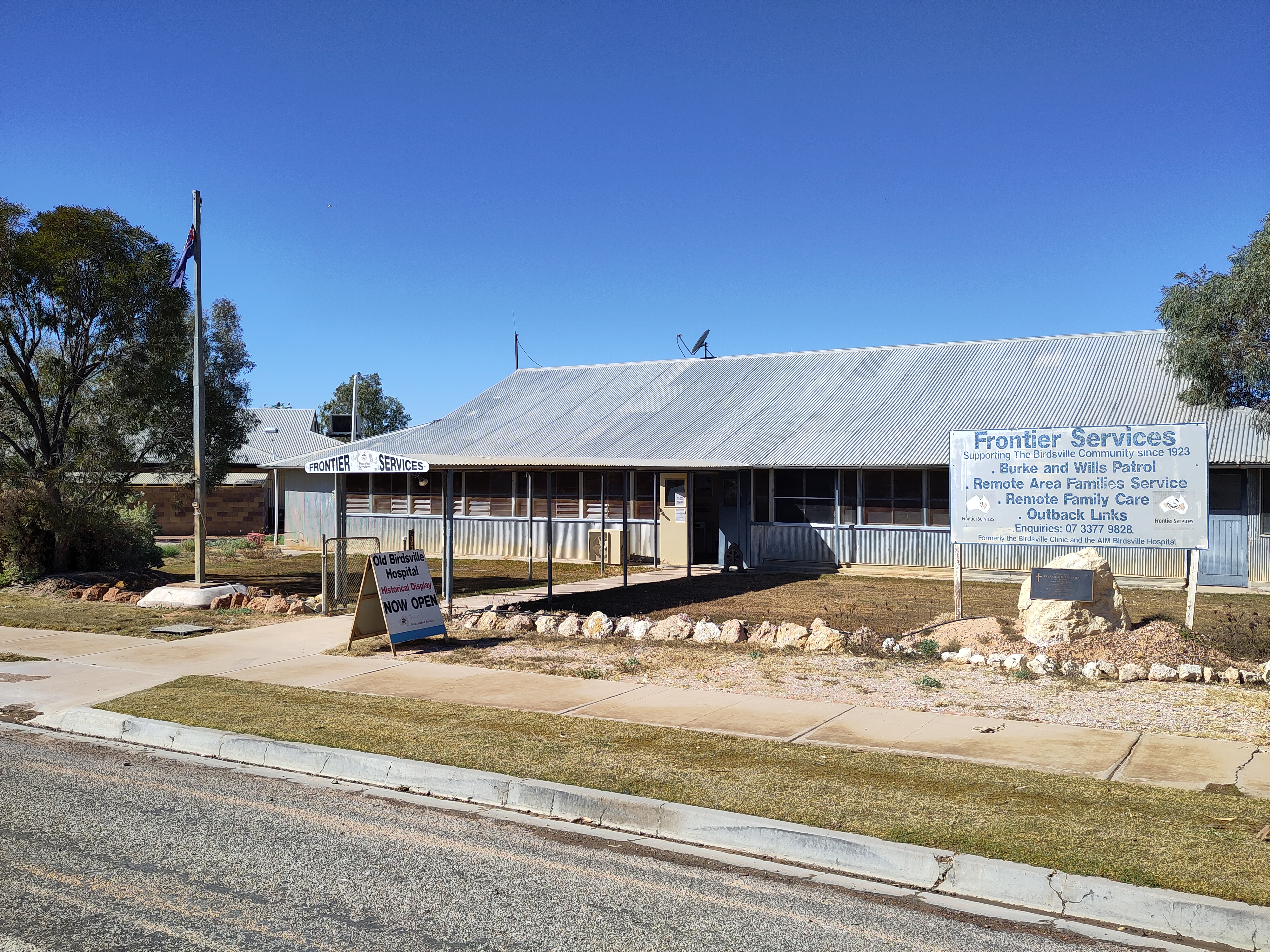
The Old Hospital 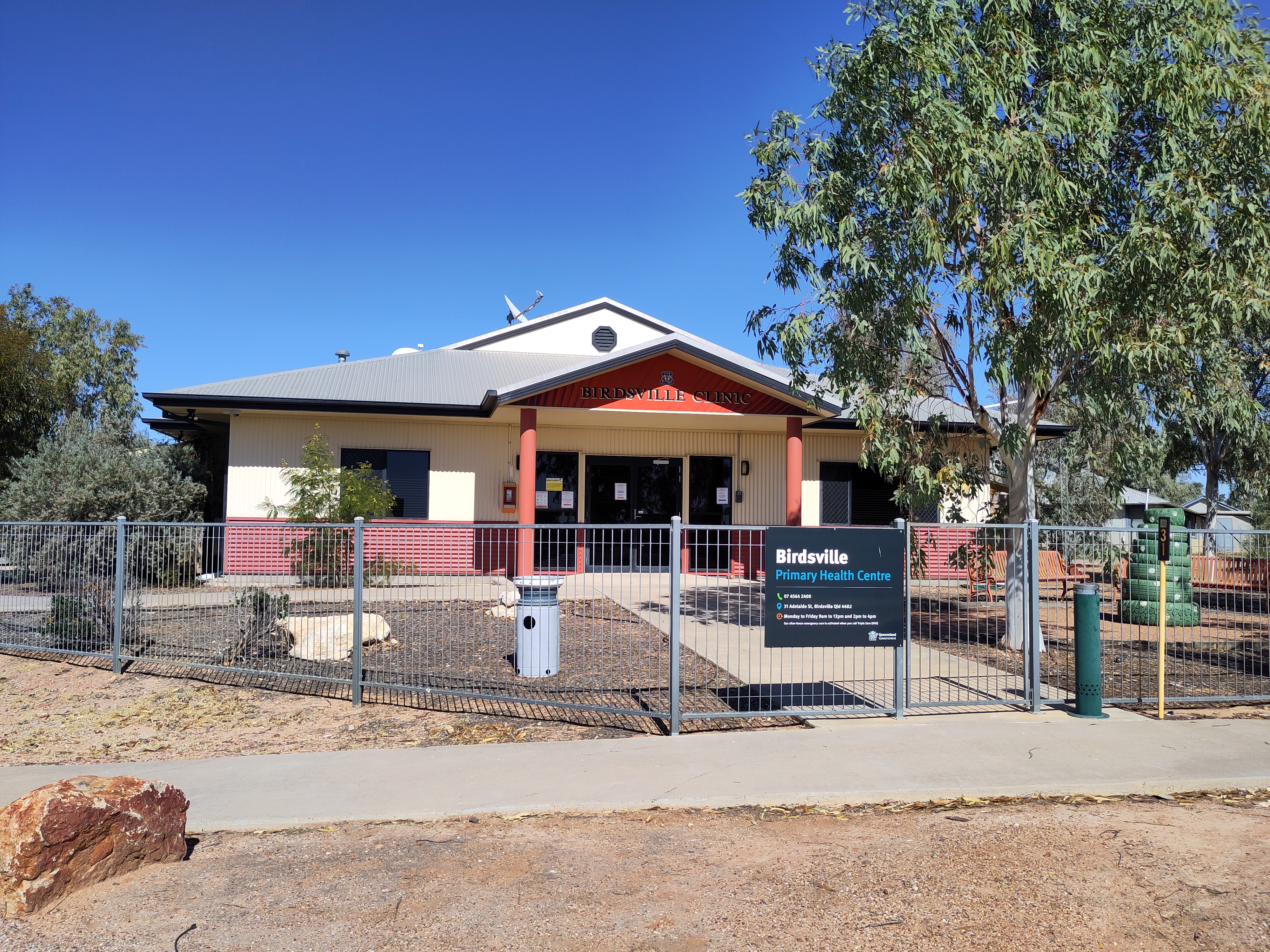
Birdsville Clinic 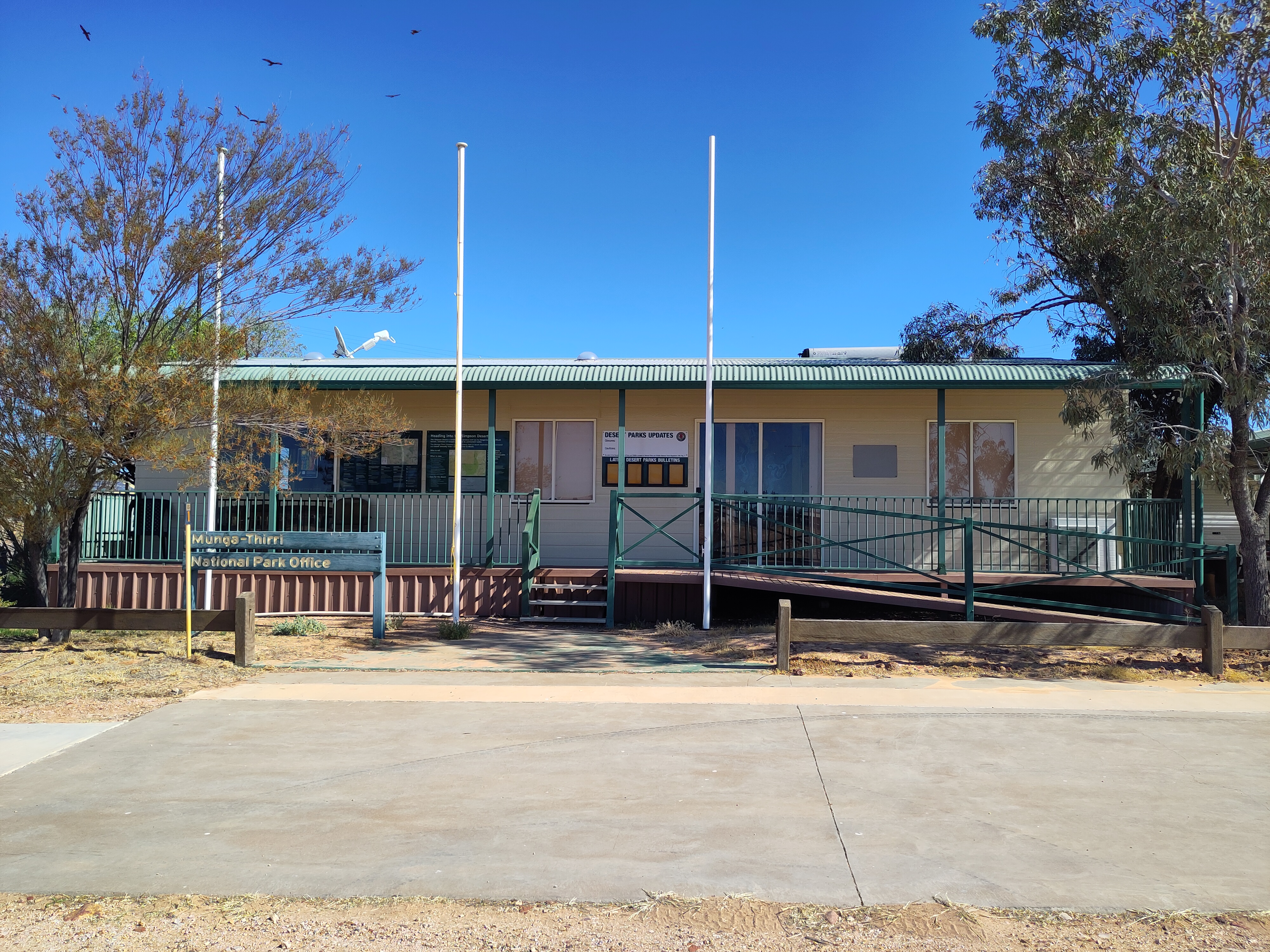
Birdsville National Park Office 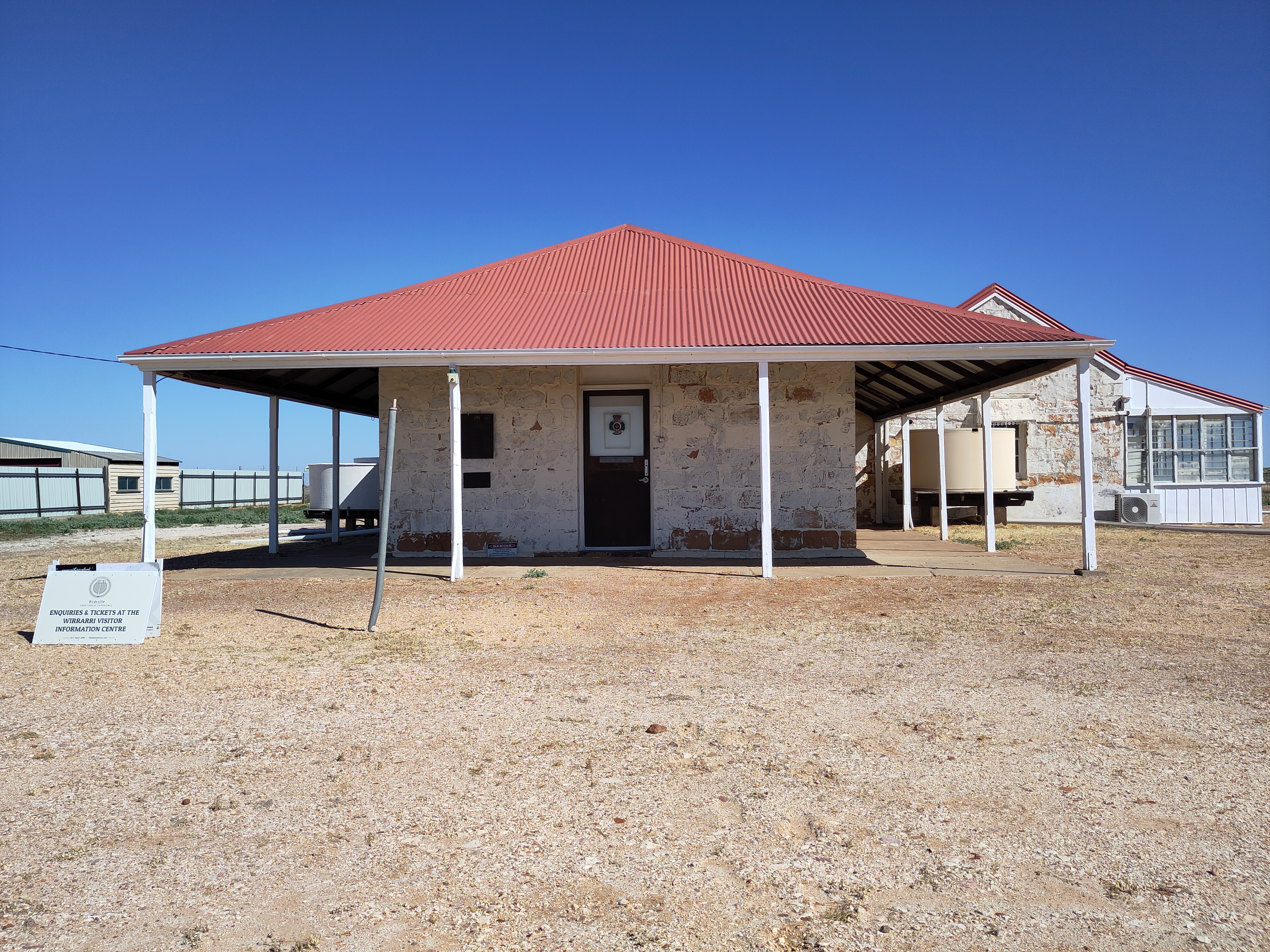
Old Courthouse 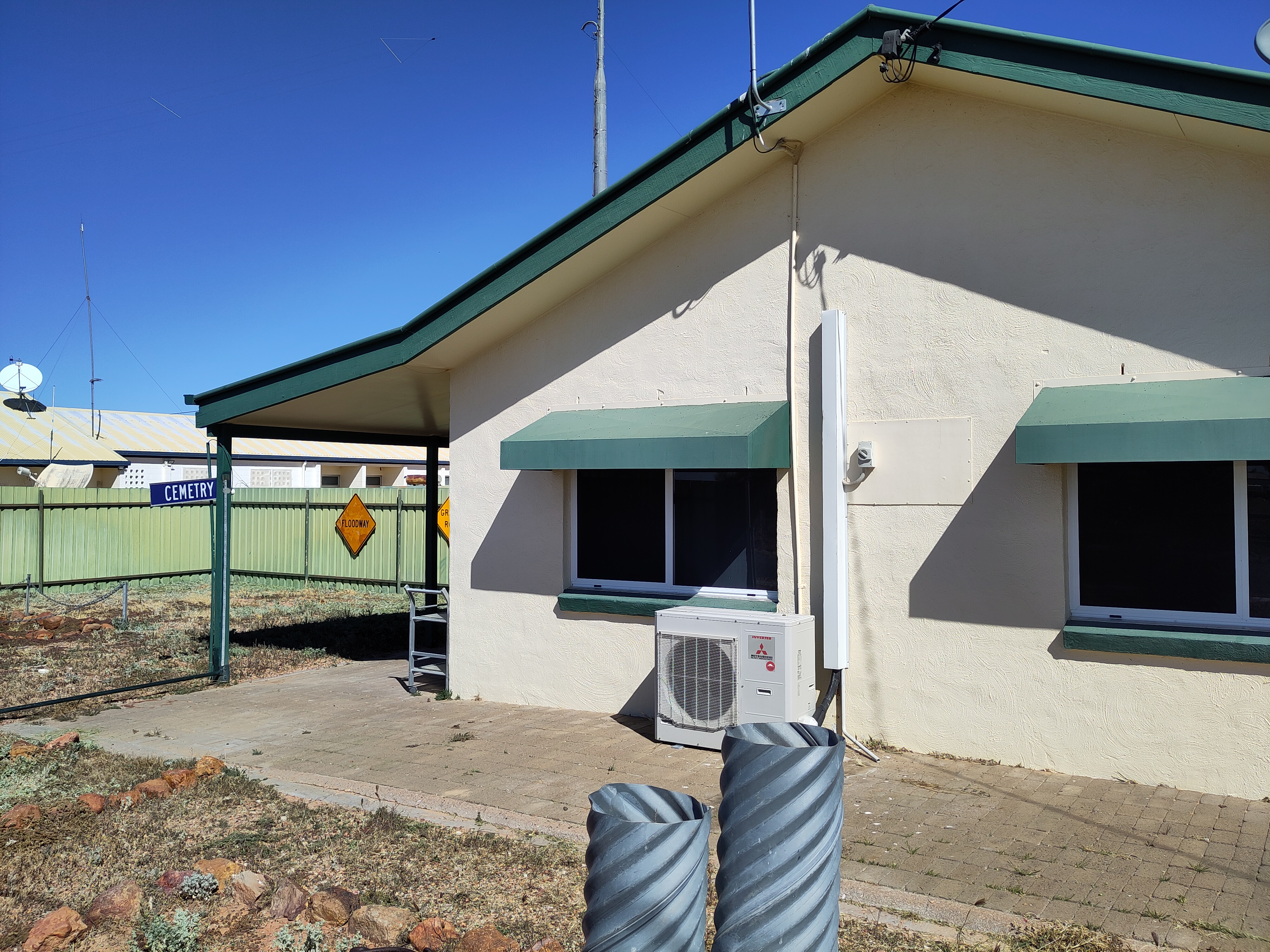
Cemetry Office 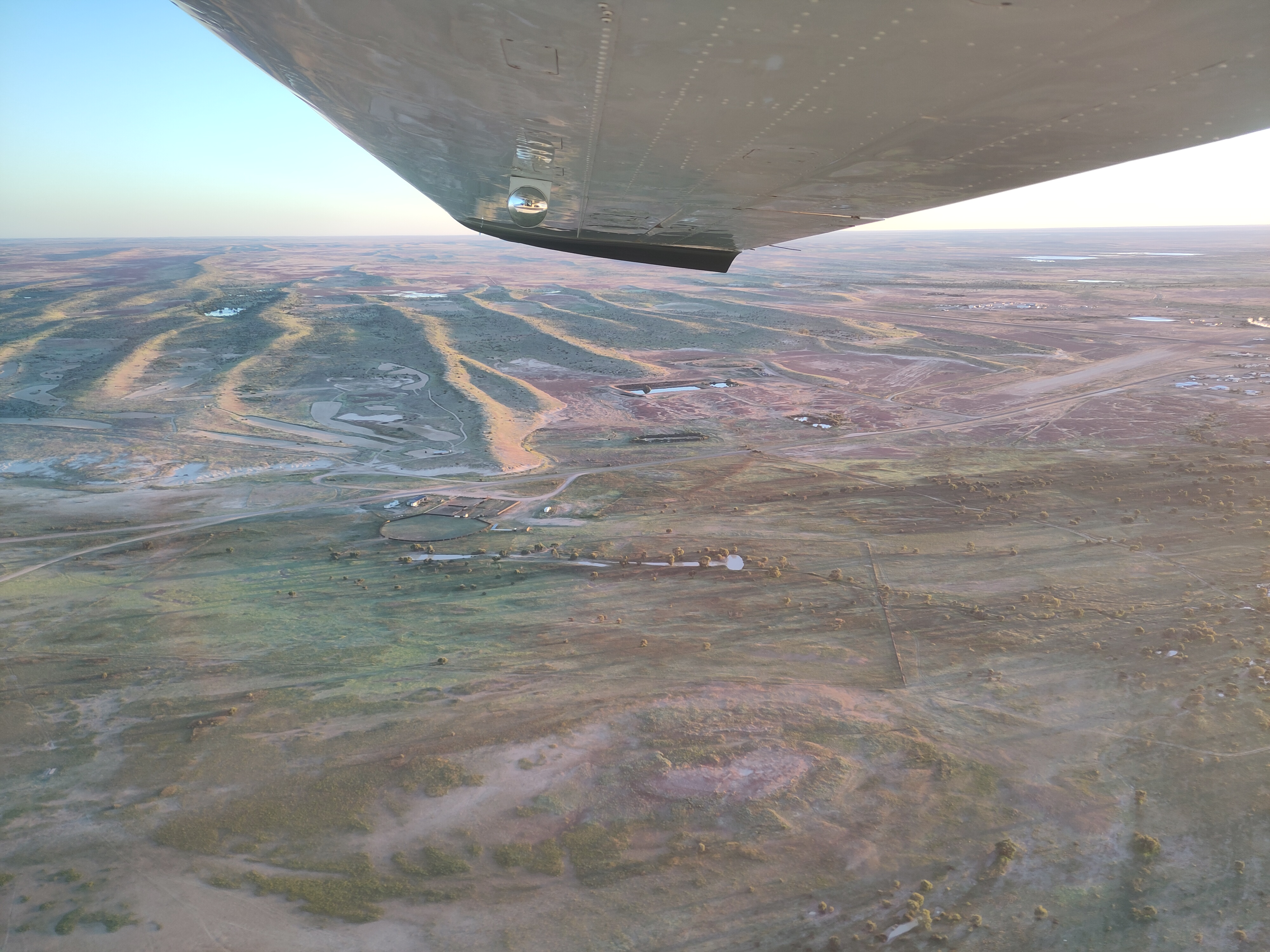
Golf Course 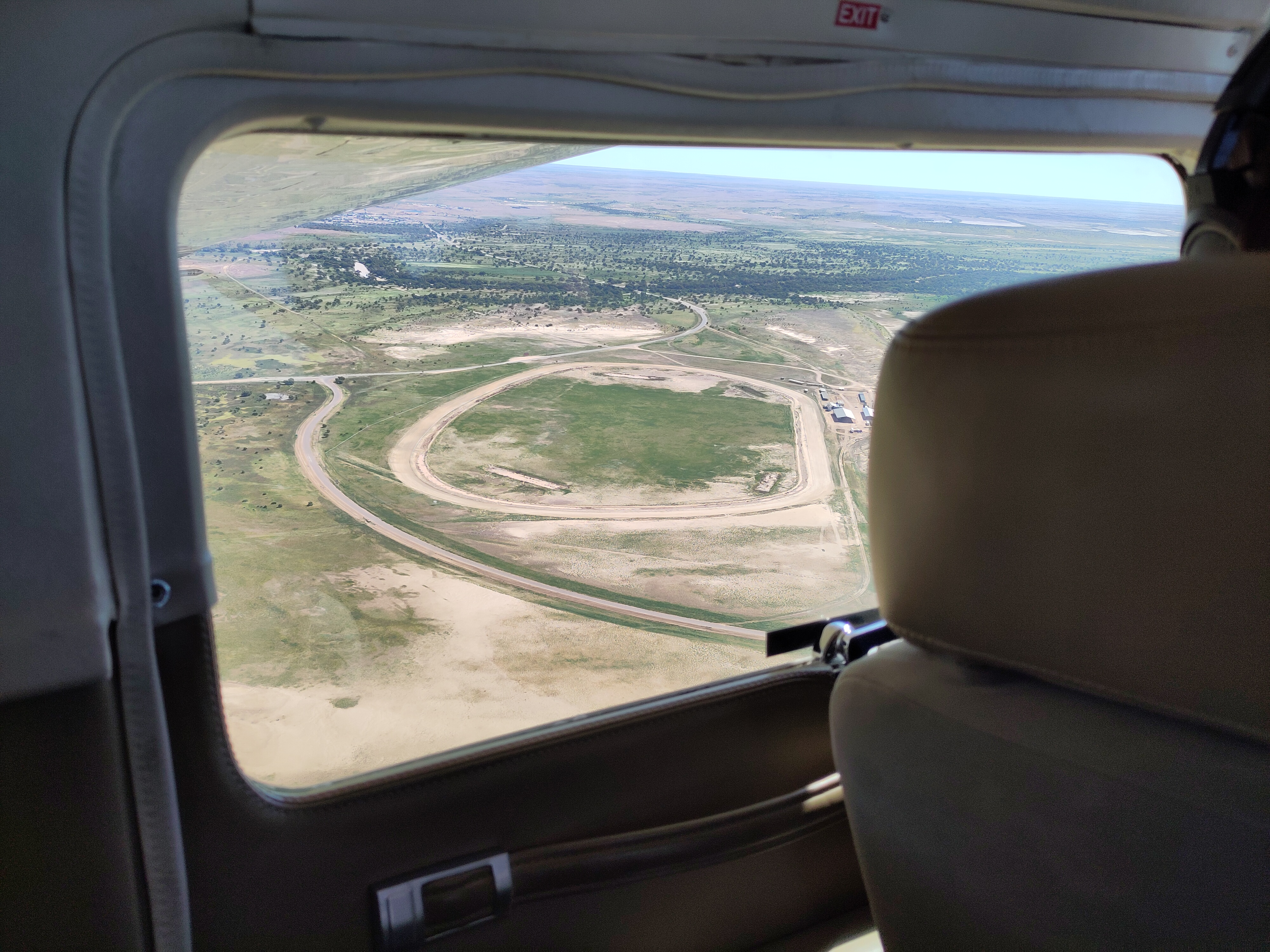
Birdsville Racetrack 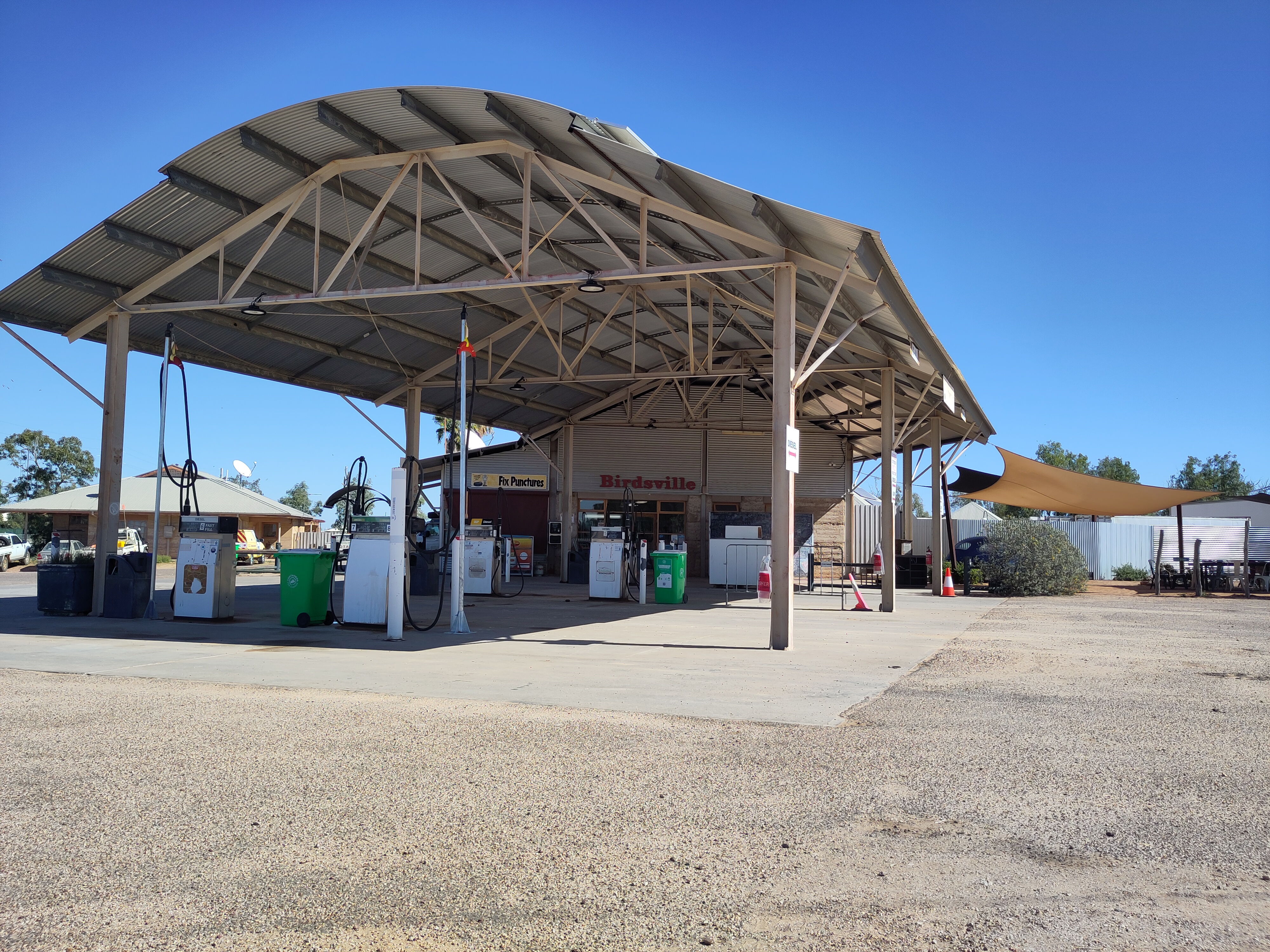
Roadhouse 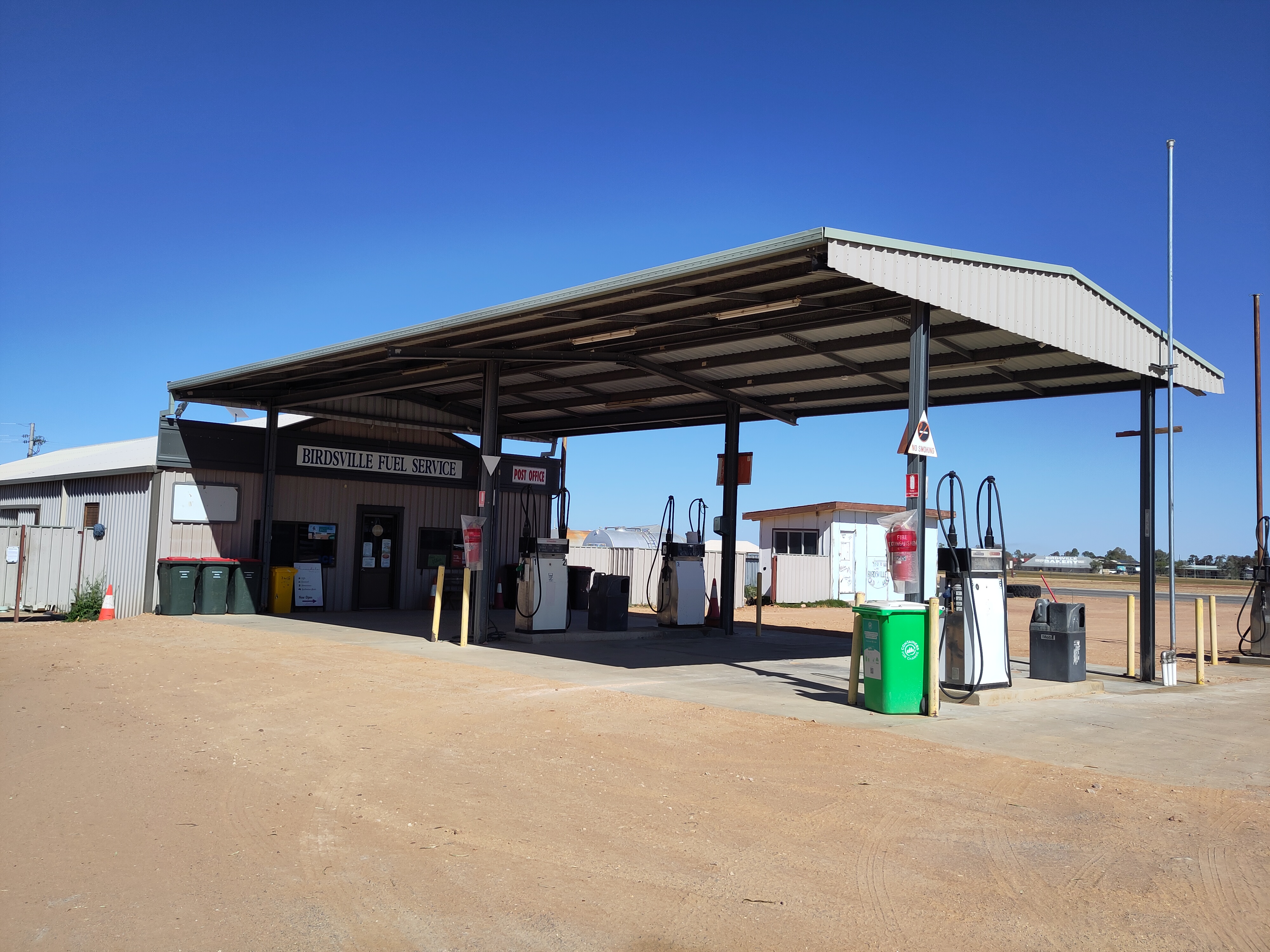
Servo 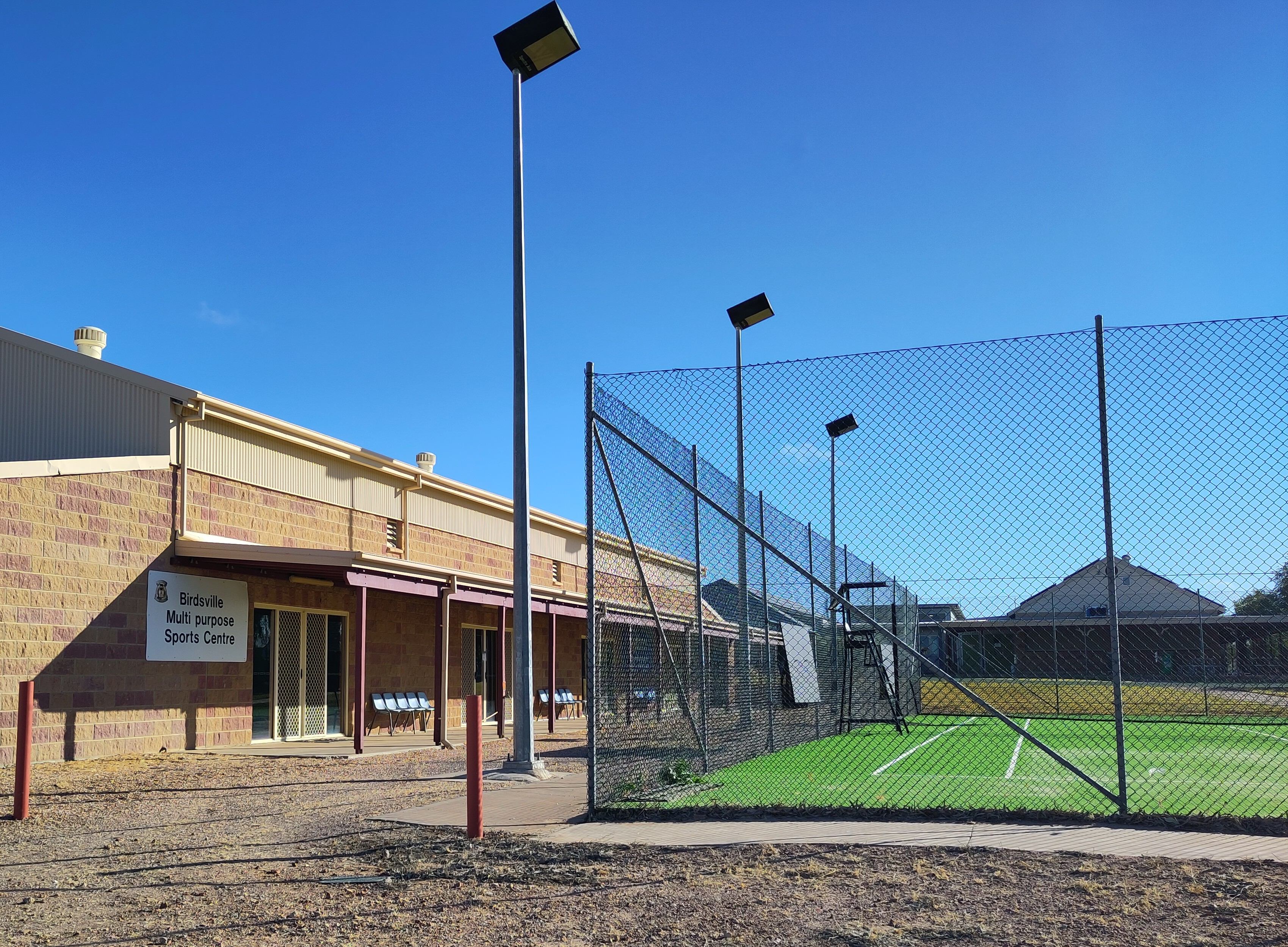
Sports Centre 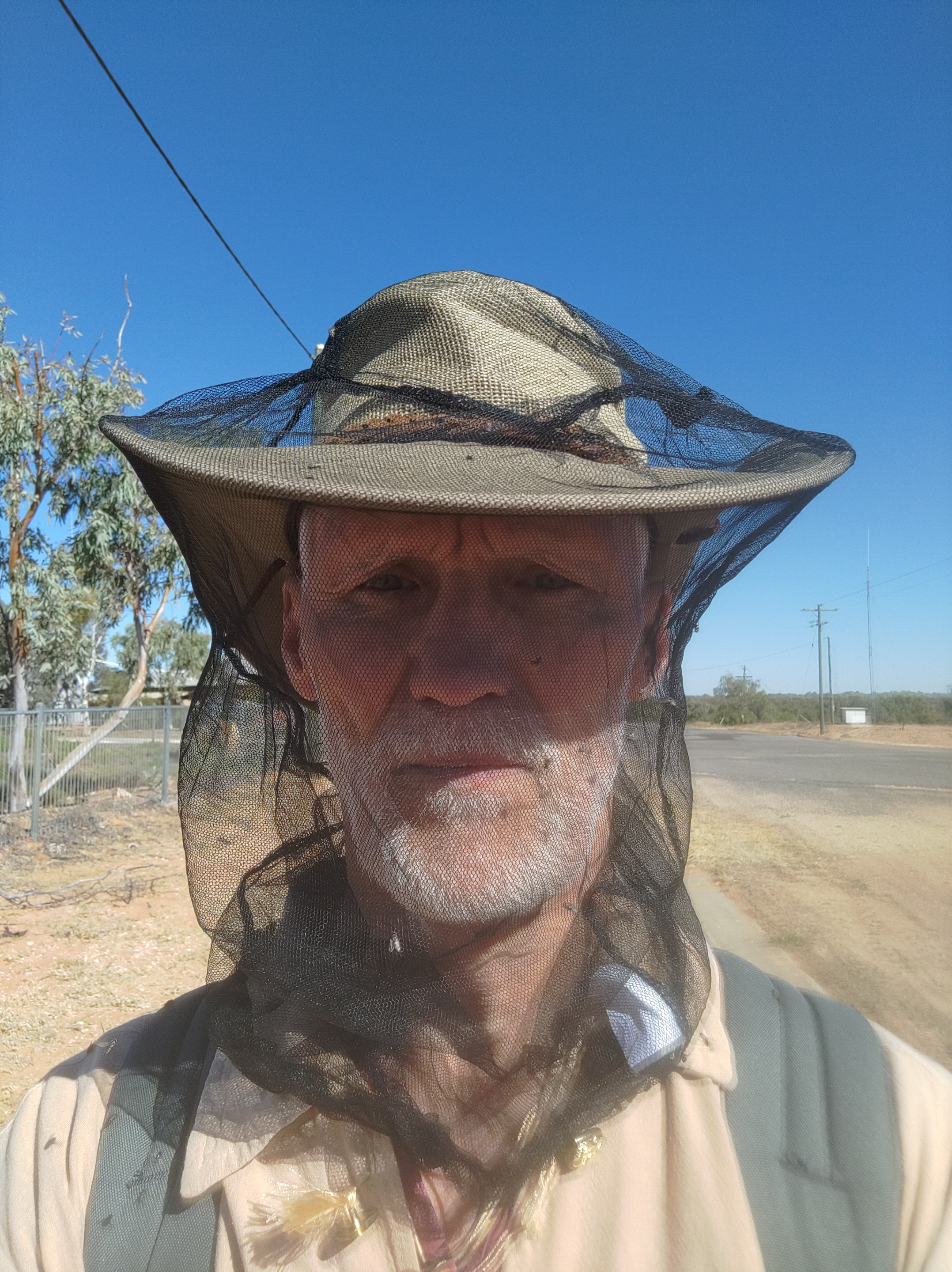
The flies are awful! 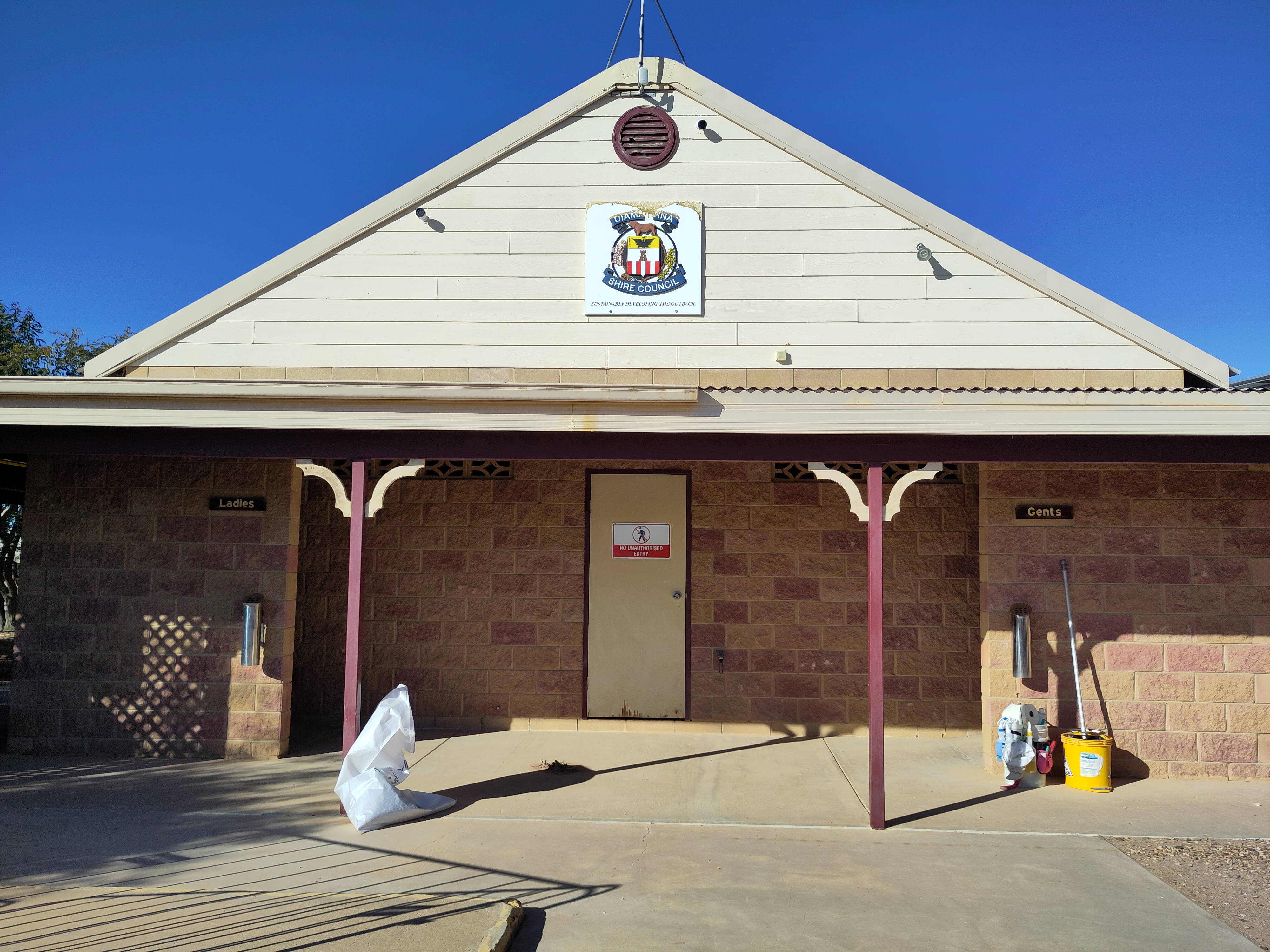
Putting toilets first! 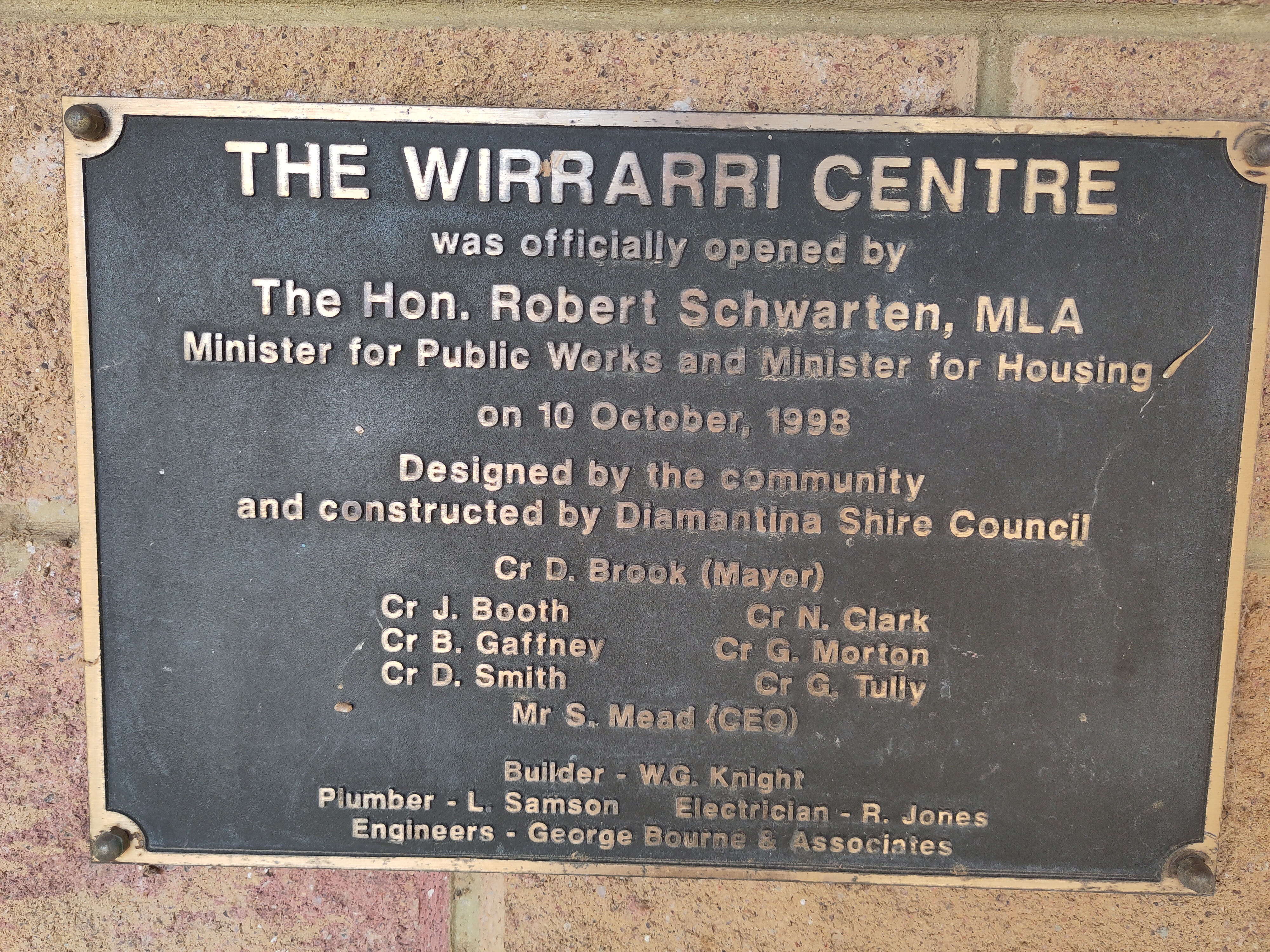
Wirrarri Community & Information Centre 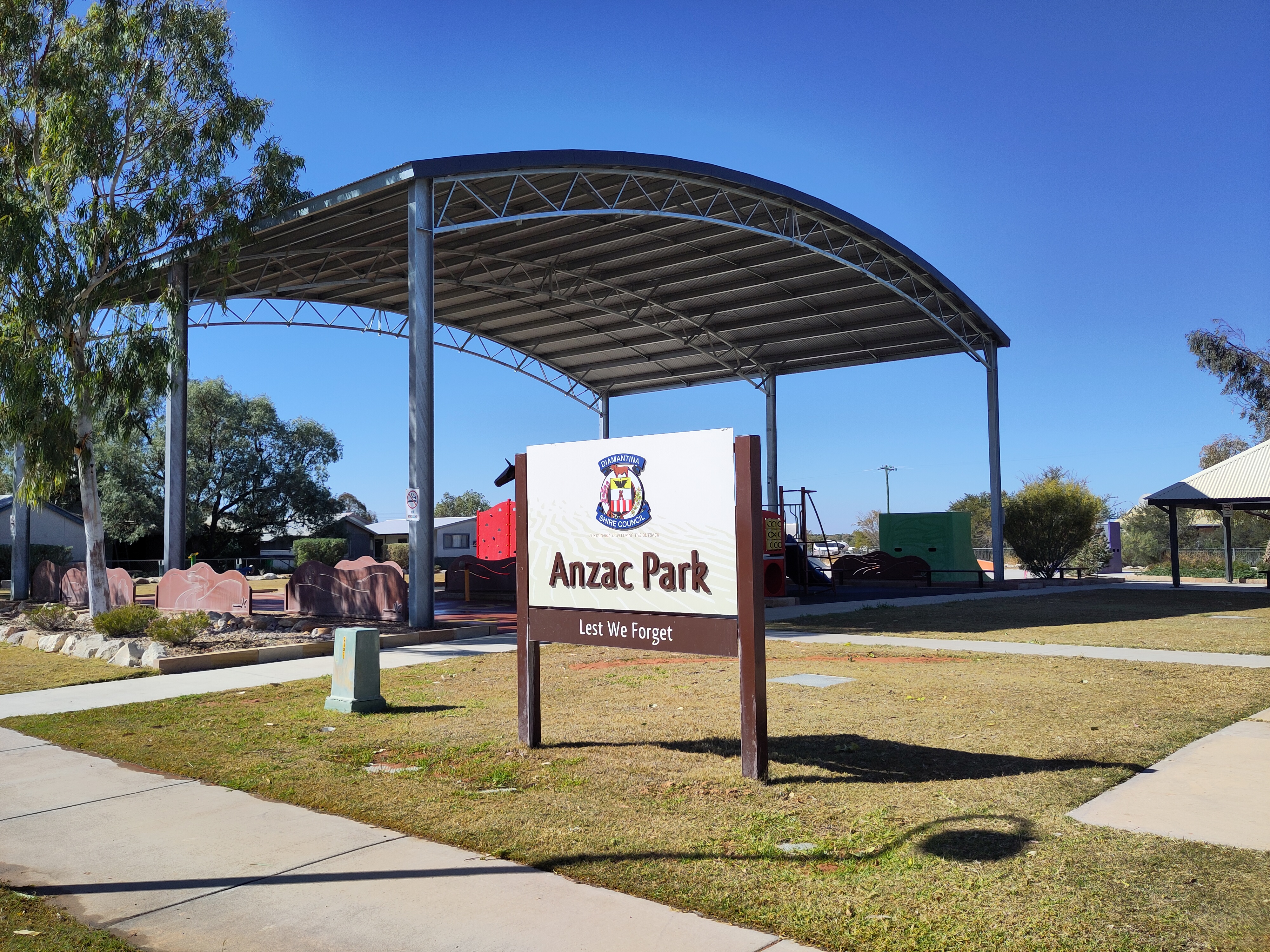
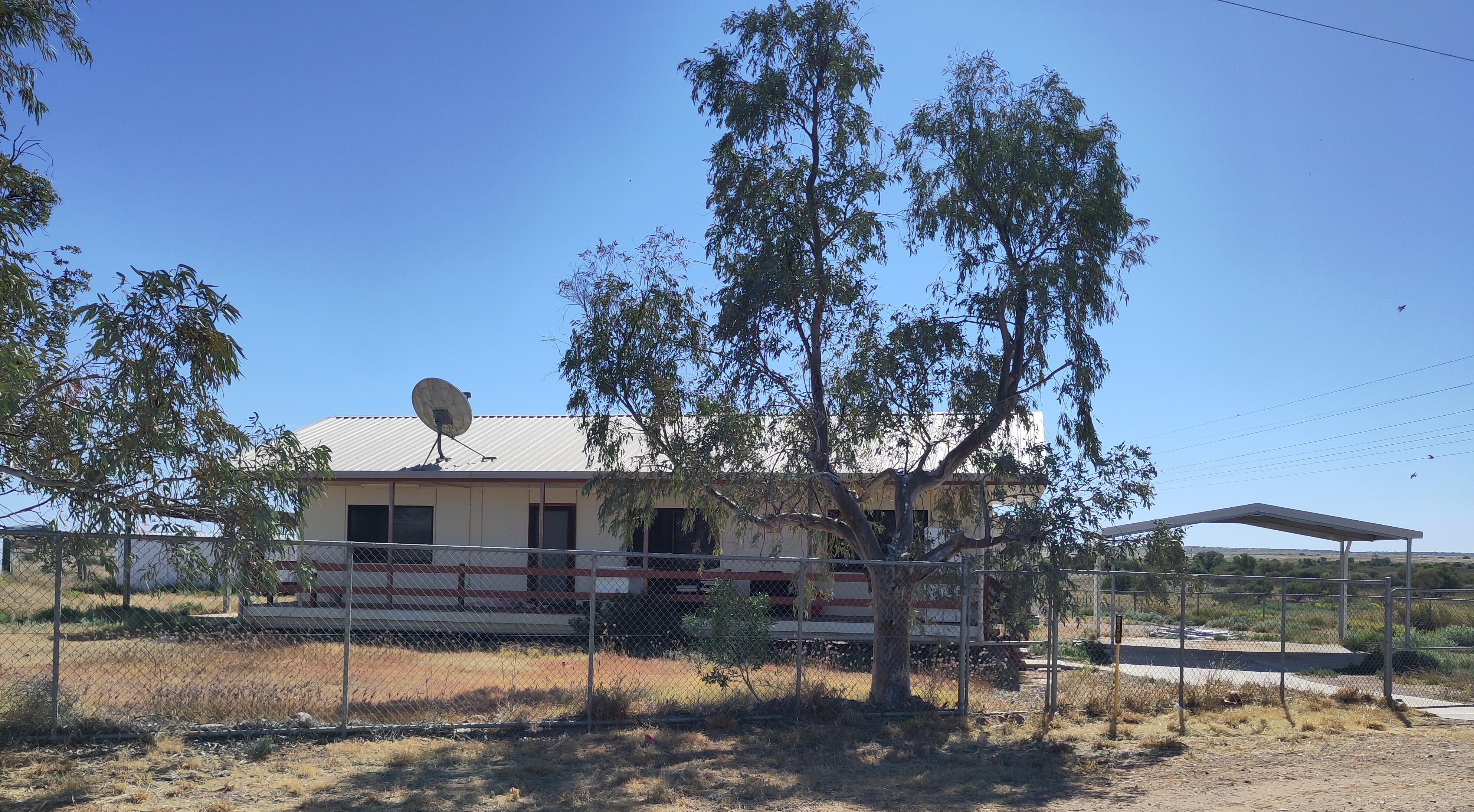
Residential home on town outskirts 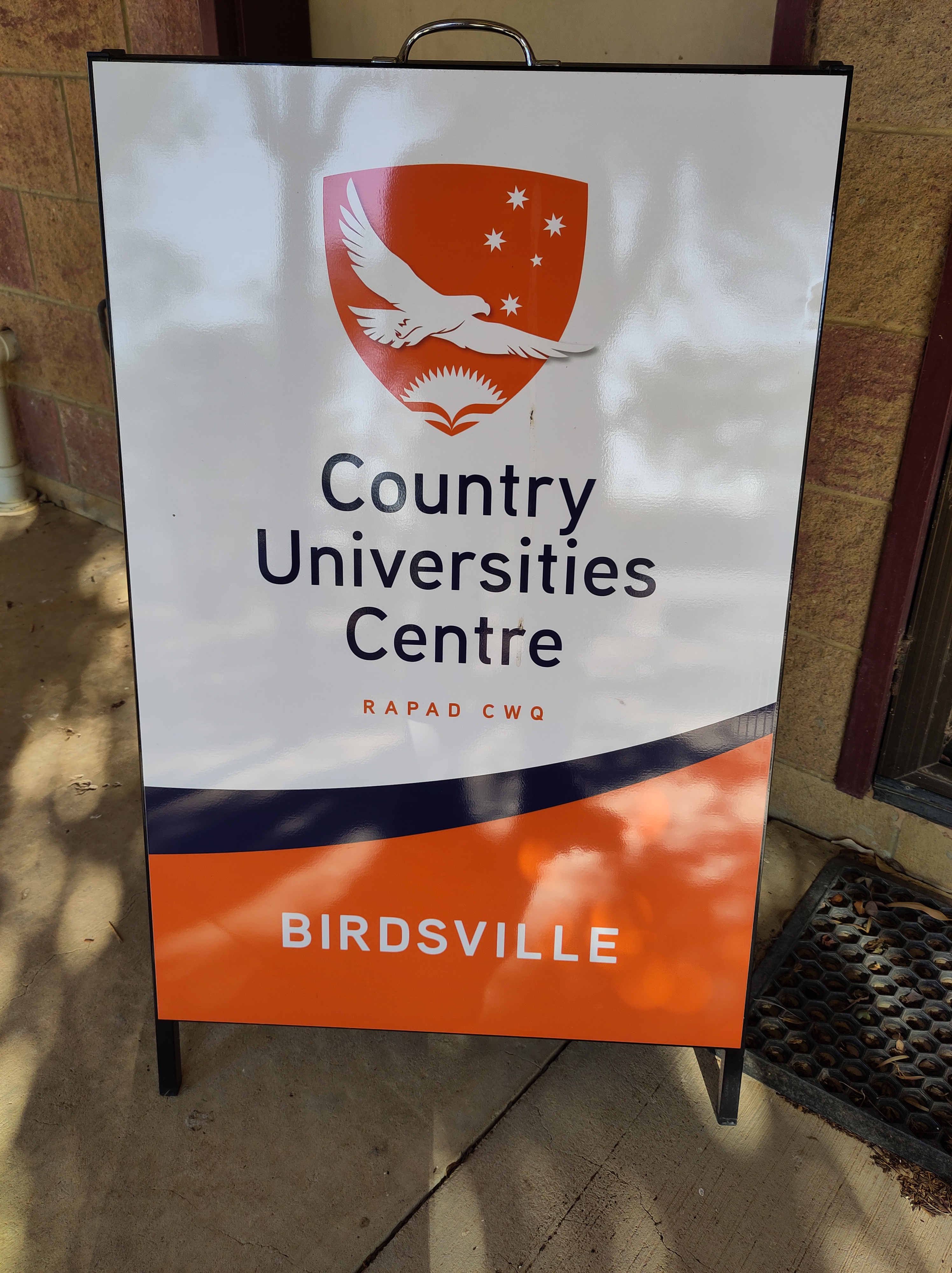
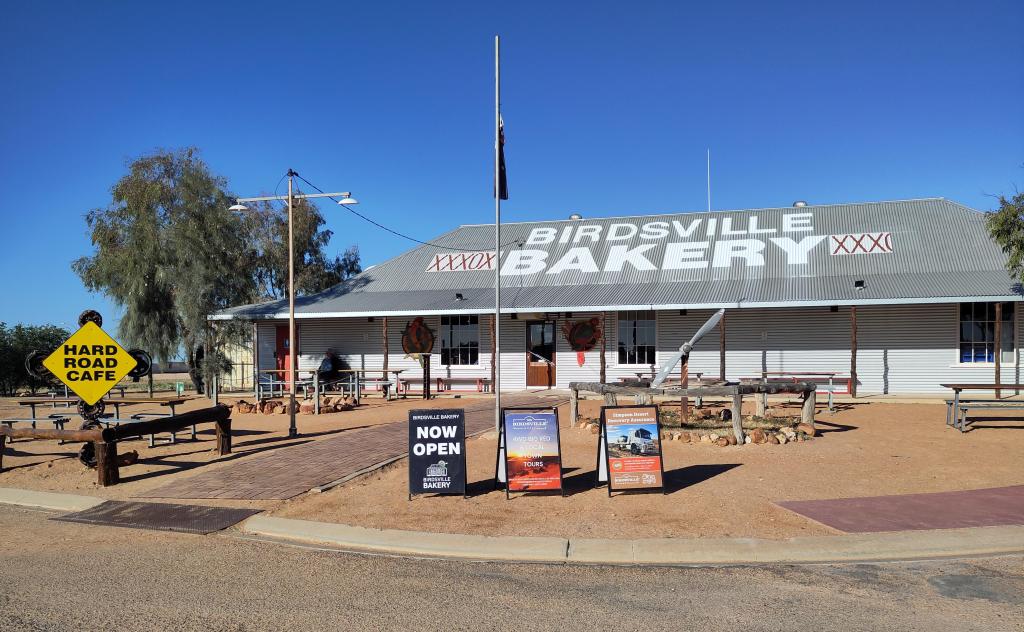
The Birdsville Bakery is famous for its curry camel pie. Very tasty. The bakery was set up by a novice who nevertheless built it up from scratch. The stories goes that after many successful years, he sold to a shyster who ripped him off, so he died without a cent and it took a legal battle to revive it. One wonders how such a thing could happen in a small community – doesn’t word get around?
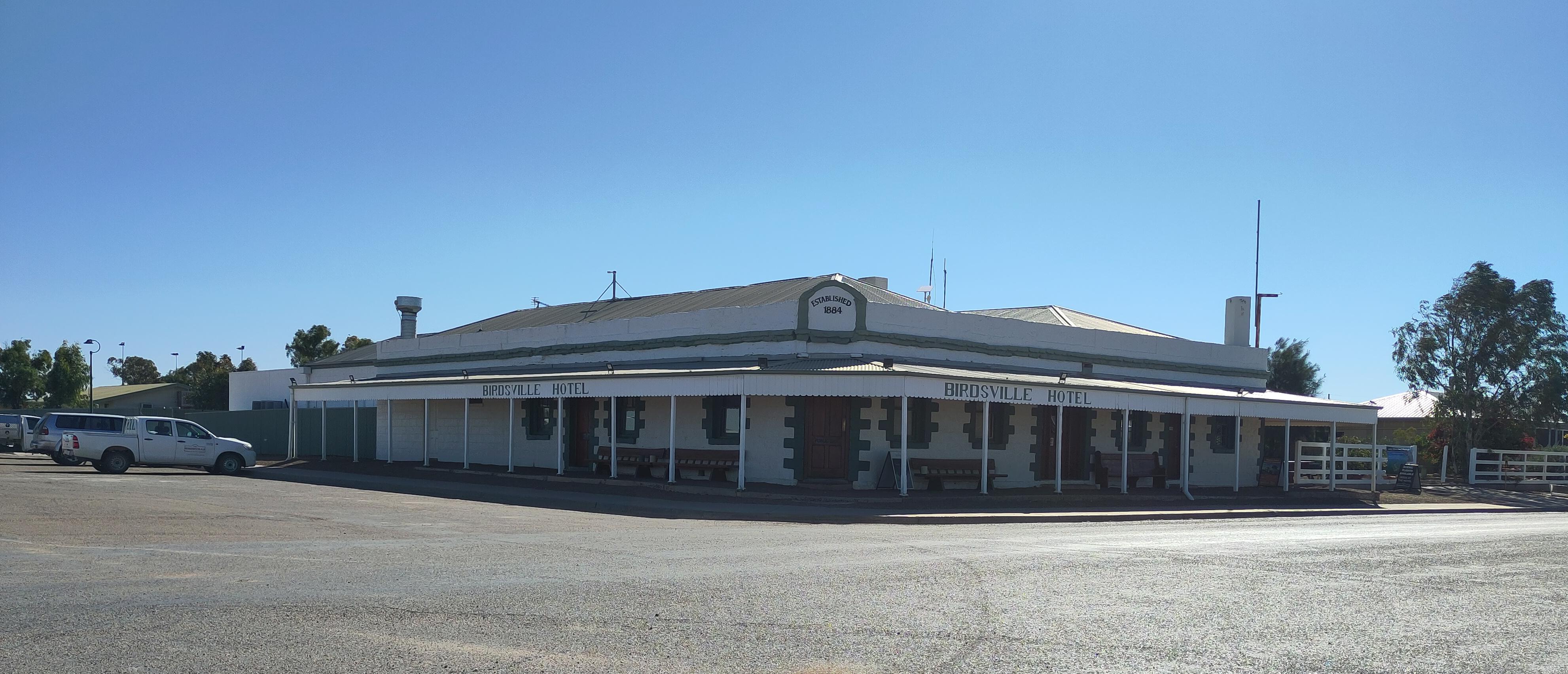
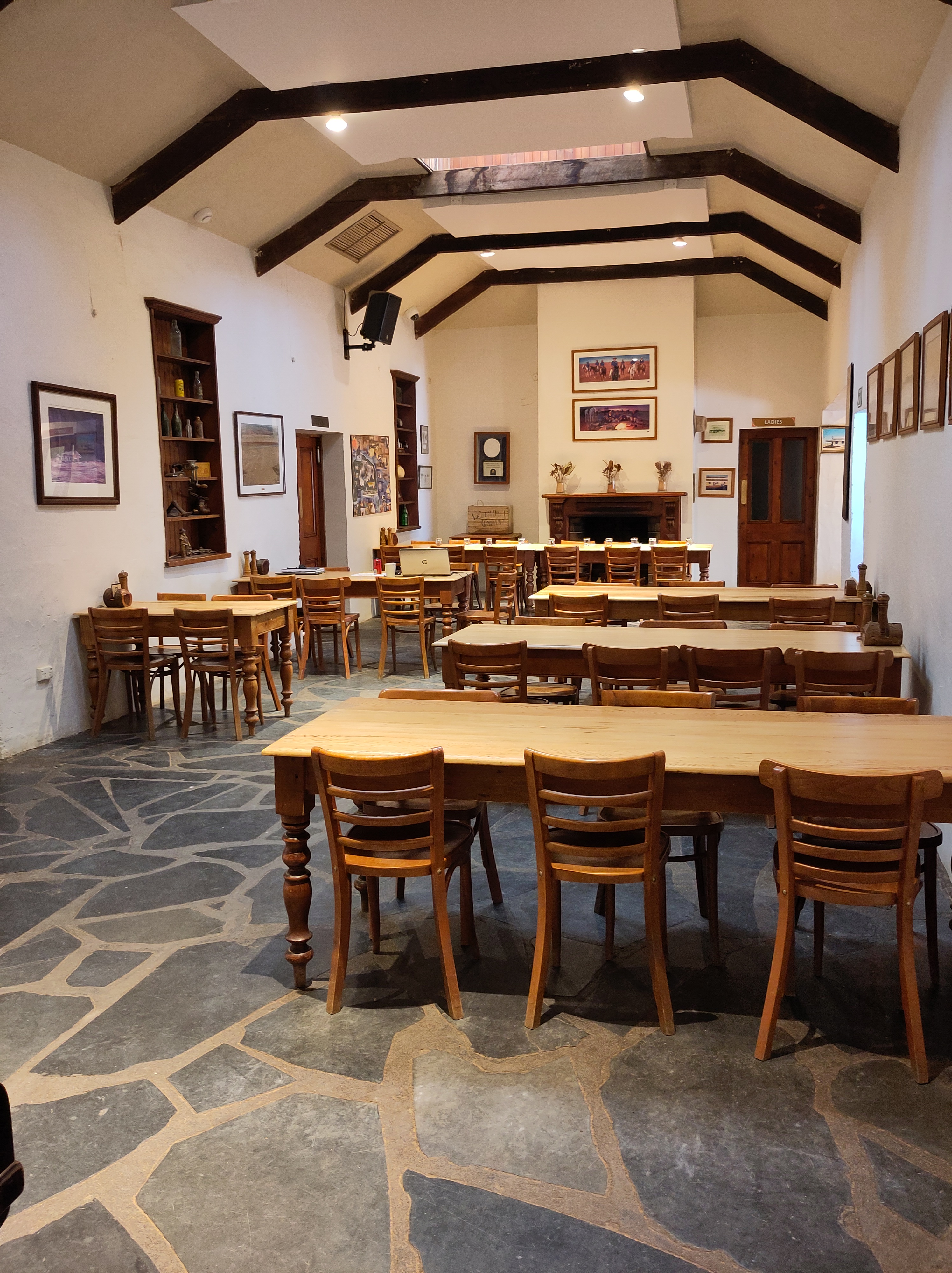
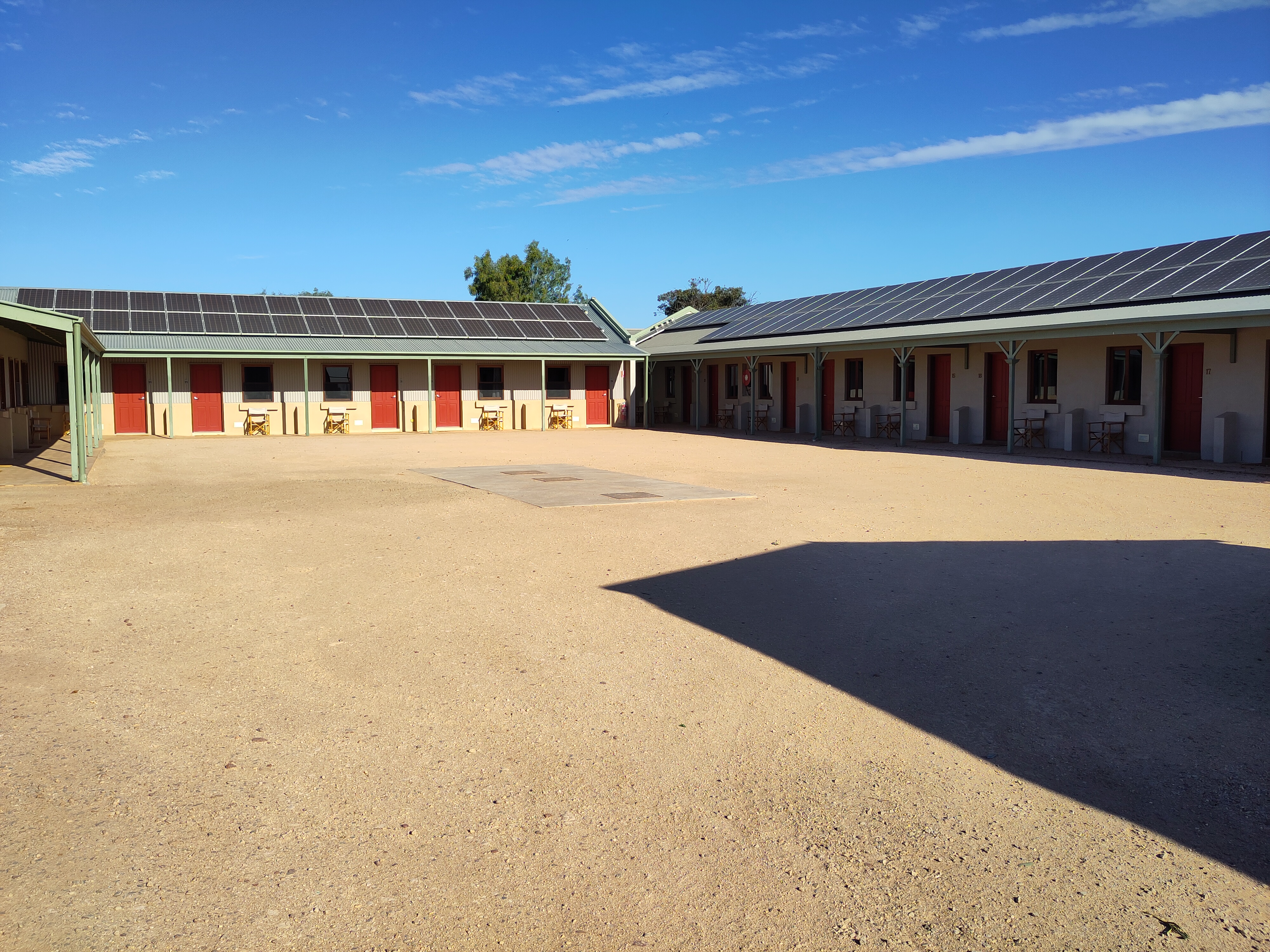
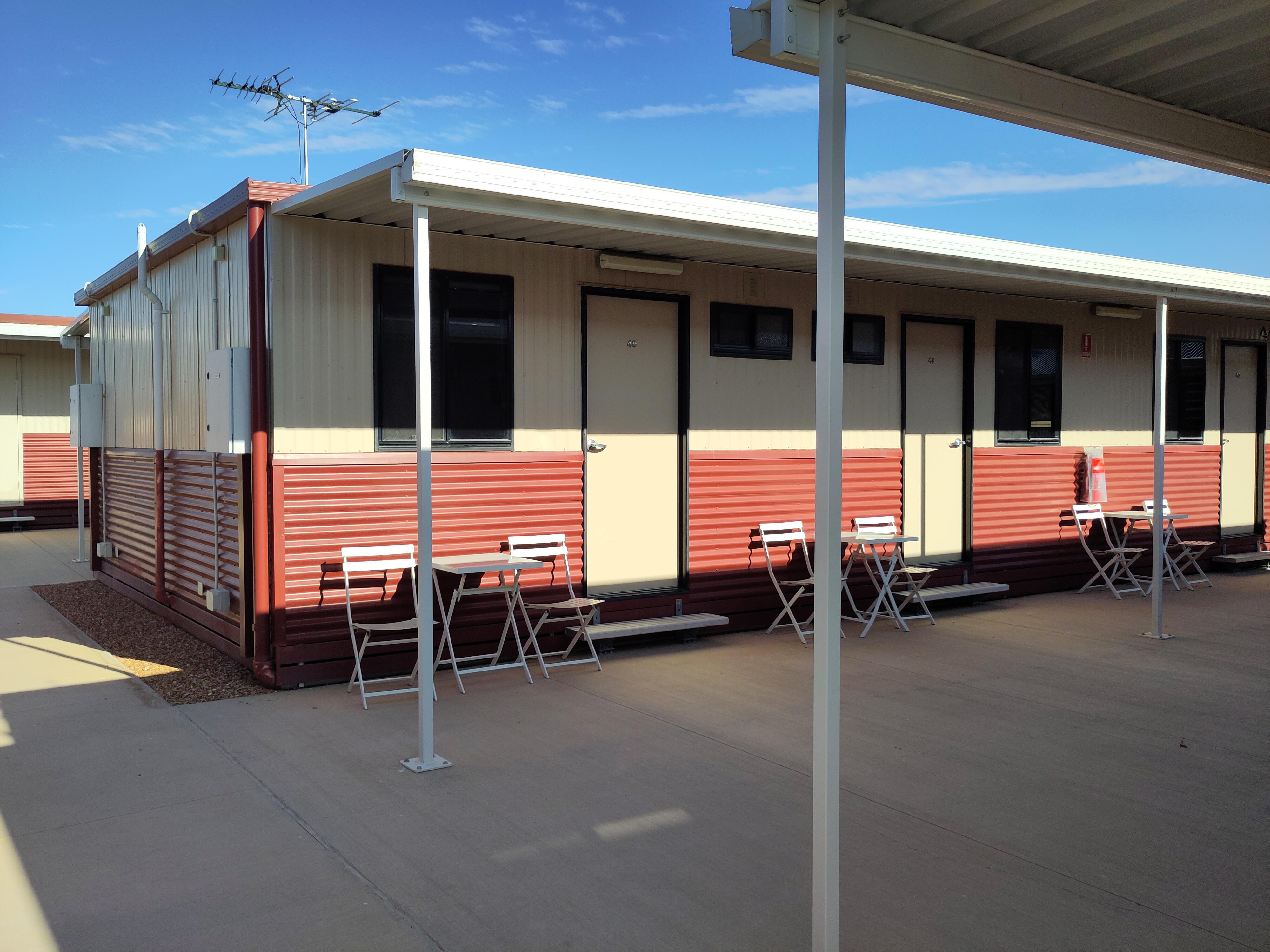
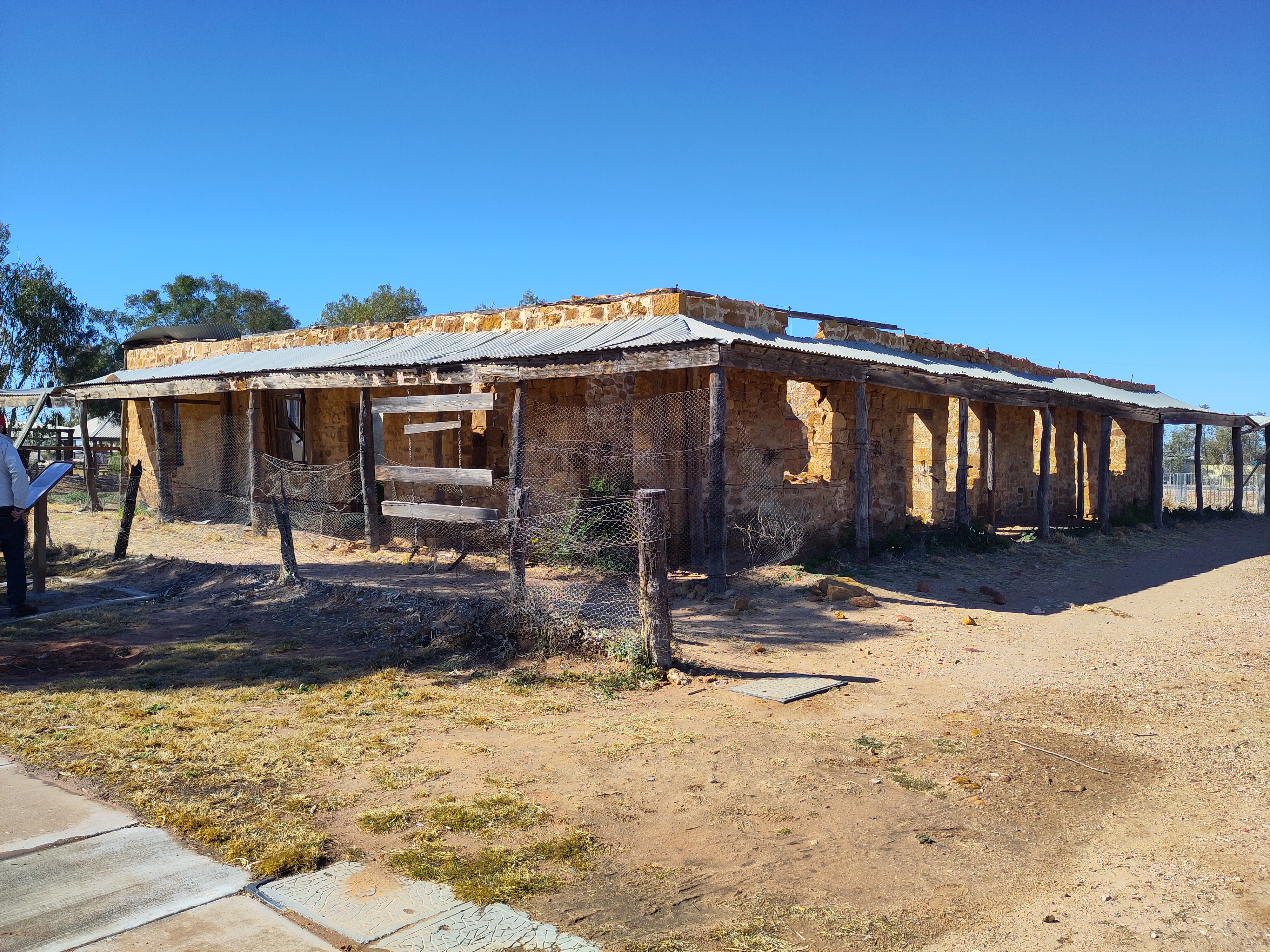
The Birdsville Hotel is the life of the town and a business hub. The motel extension at the back is in a fitting style but the lodge is very temporary. The Royal Hotel is a ruin which reminds me of James Cagney’s famous gangster line, “This town ain’t big enough for the two of us – one of us to go and it ain’t gonna be me!”
Power
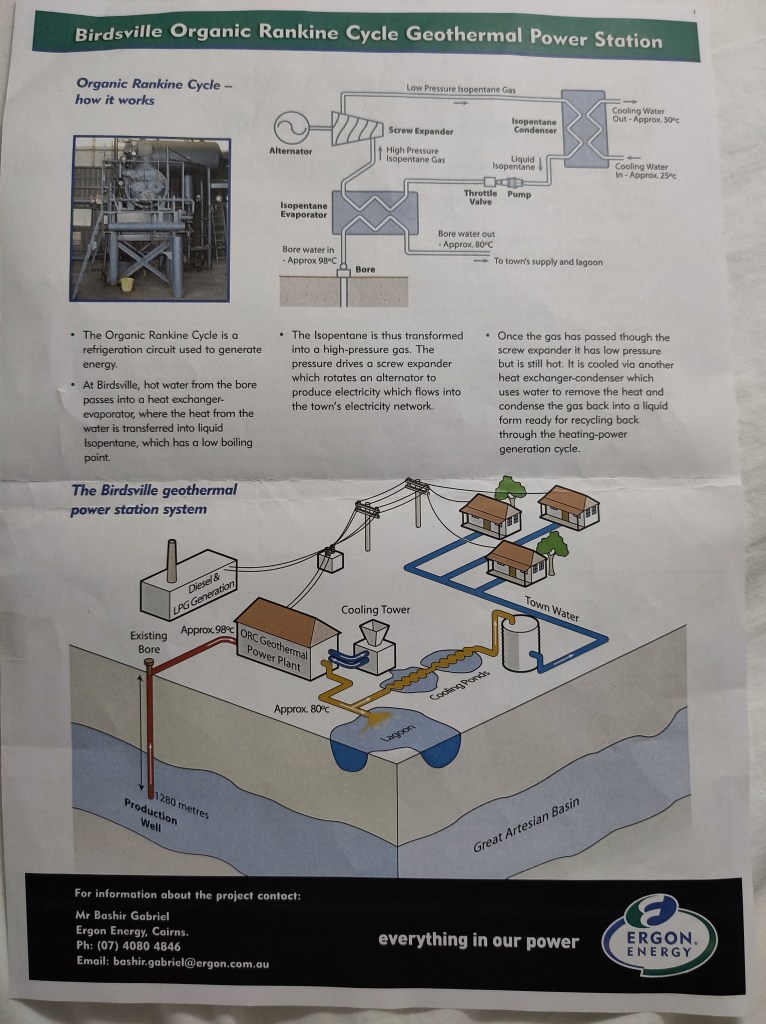
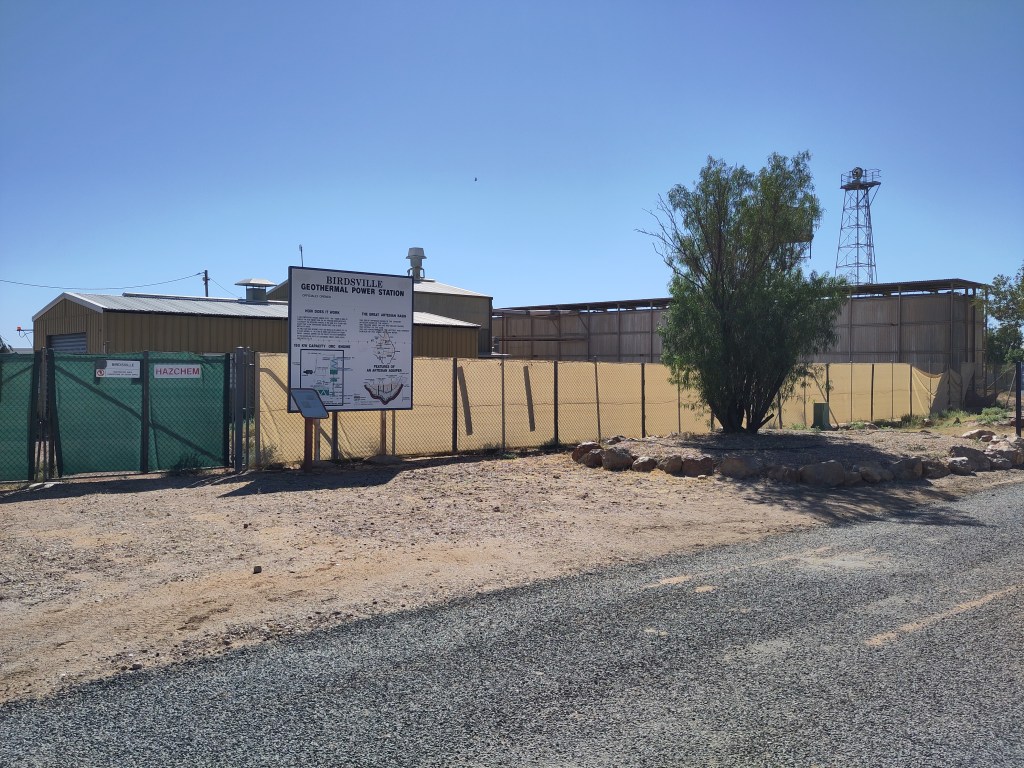
Birdsville is not connected to the national grid. It has an independent power source and a long story, which may be typical of remote communities. Today it relies on a combination of diesel and LPG generators for baseload power and solar PVs that are capped to maintain the integrity of the baseload source, because there are no batteries. For 16 years a geothermal station provided some of the town’s power. It went through several iterations providing power for 44 years. Half that time it was out of commission for technical upgrades and to meet environmental and safety standards. It finally ceased in 2009 and has not been revived. One of the upgrades was commissioned by the Capricornia Electricity Board (CAPELEC) in 1992. There was something far more visionary about Australia then. This was the era of Science Minister Barry Jones, a parliamentary inquiry into Australia’s ideal population carrying capacity and there was also talk of spelling reform. Oh for an Australian Renaissance.
The town of Innamincka (near Lake Eyre) spent $1M+ on a solar array system that needed a further $600K to rectify issues. The story is told in Birdsville as a warning against renewables and the culprit seems to be expediency, laziness and a lack of integrity. Apparently the diesel and gas generator sector doesn’t suffer similar challenges. One wonders if this has to do with the meddling of government subsidies and climate skepticism. Outback communities like this seem to me to be ideal places for small-scale Solar Thermal. Watch this space for a post on that.
Water
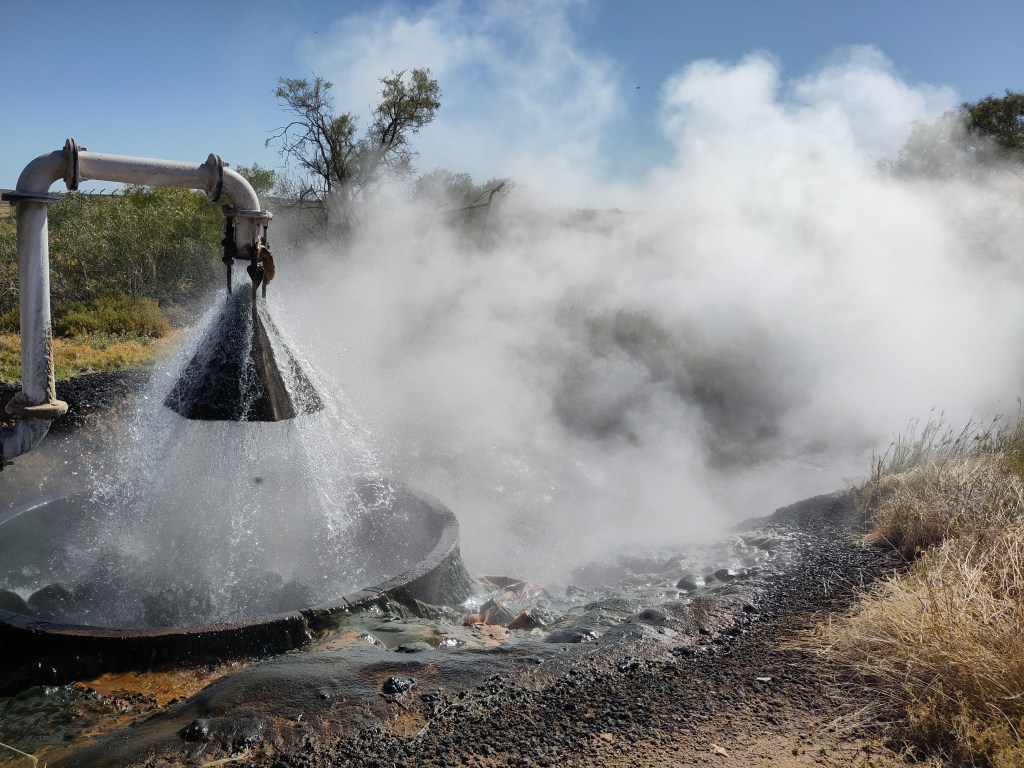
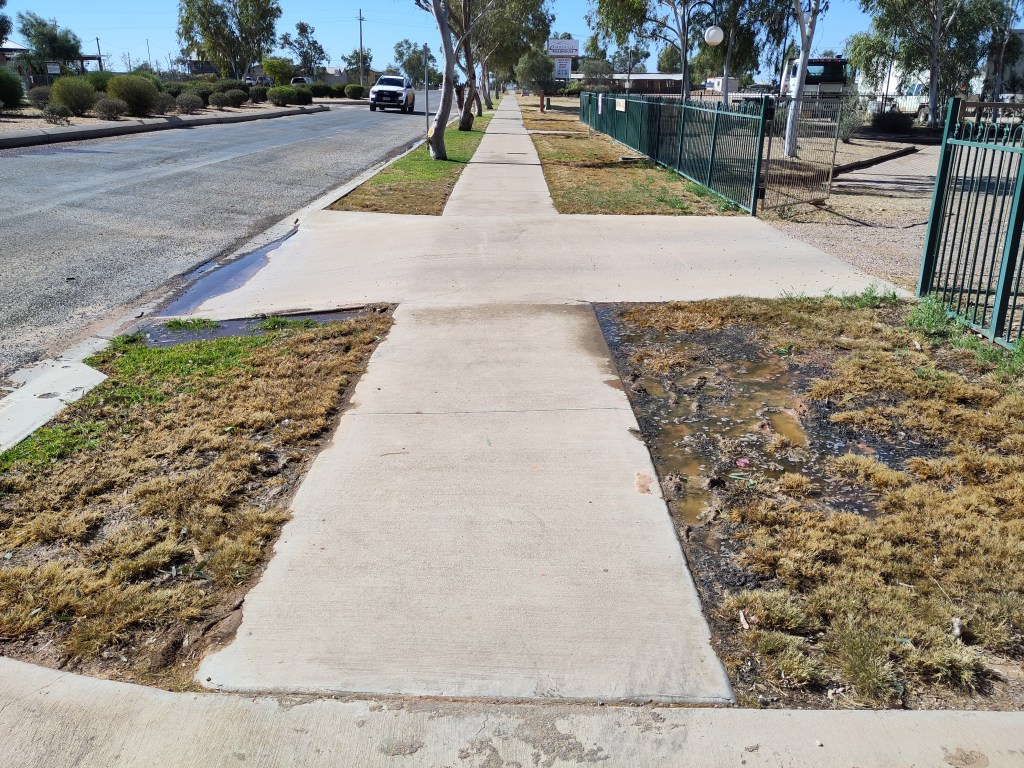
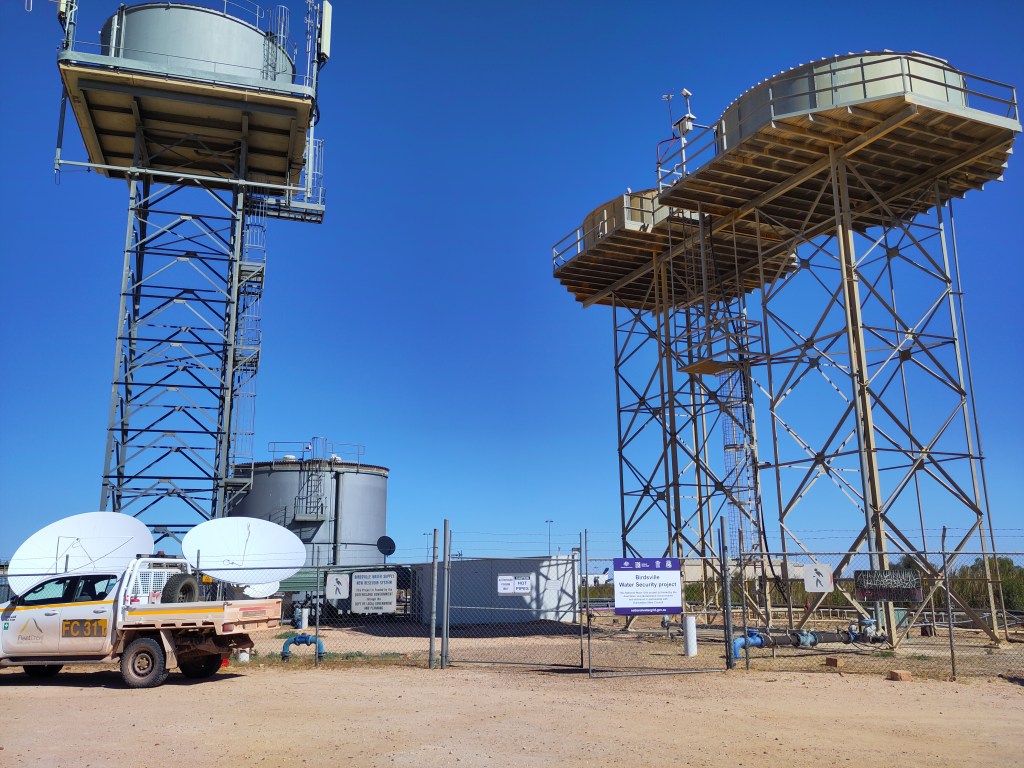
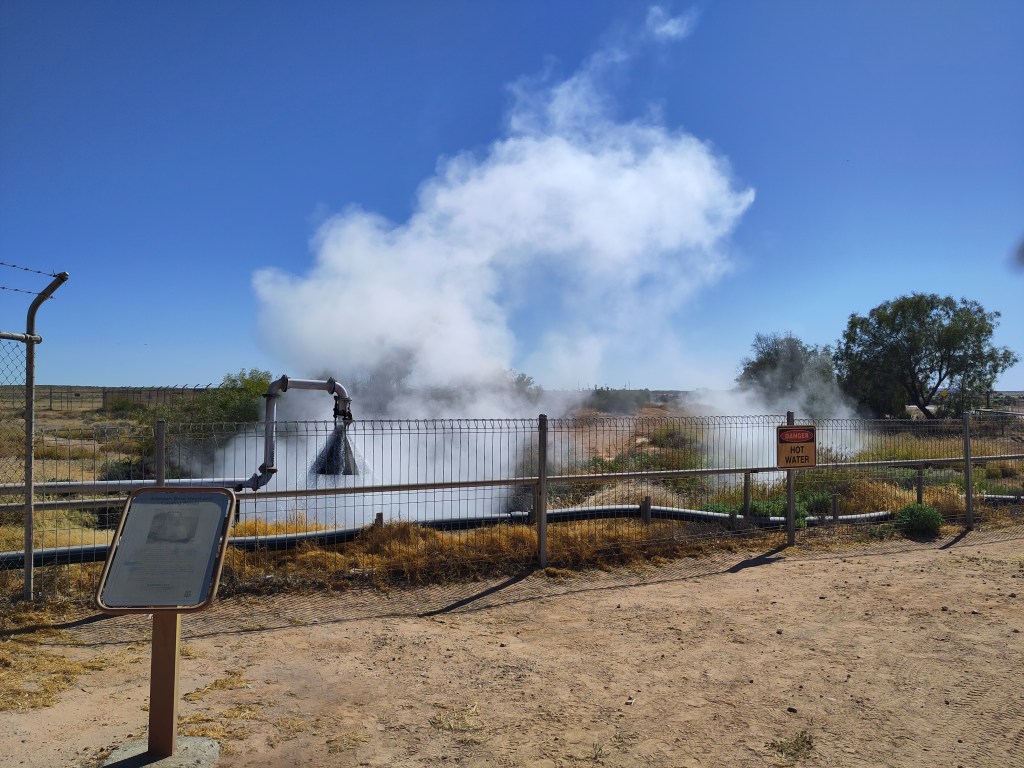
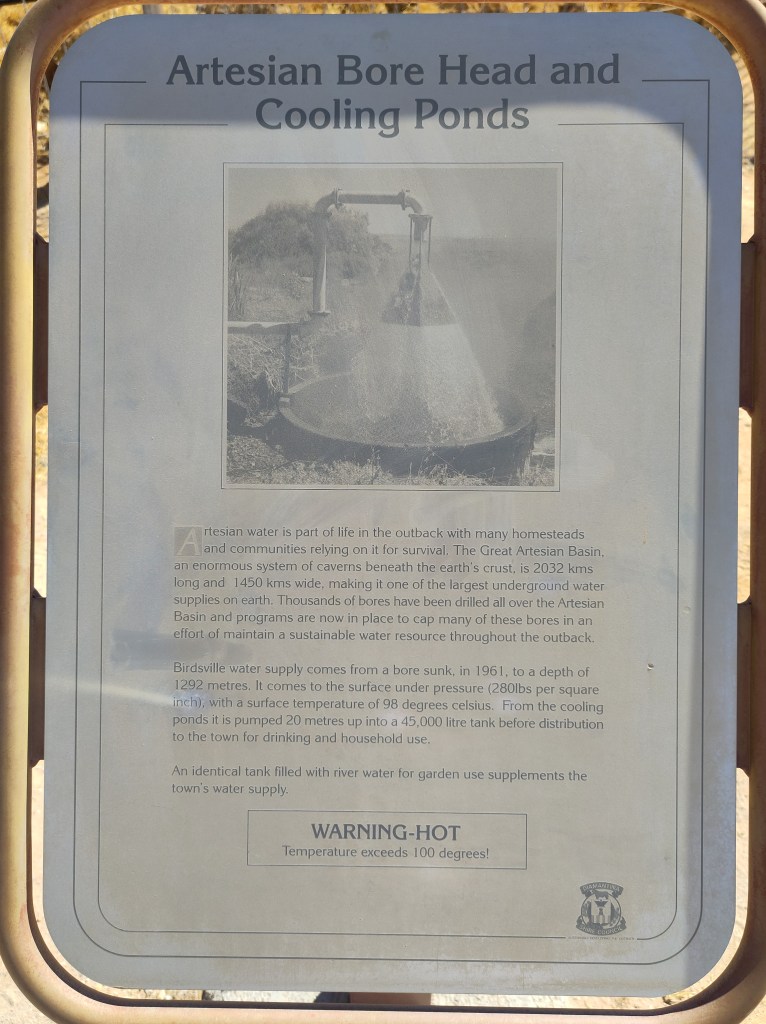
Town water comes up 1.3 kilometers from the Great Artesian Water Basin at 980 C. It’s great drinking water and it’s used to water the towns nature strips. However, some bores are being capped across the Basin to protect it from overuse. Such are the limits of our continent.
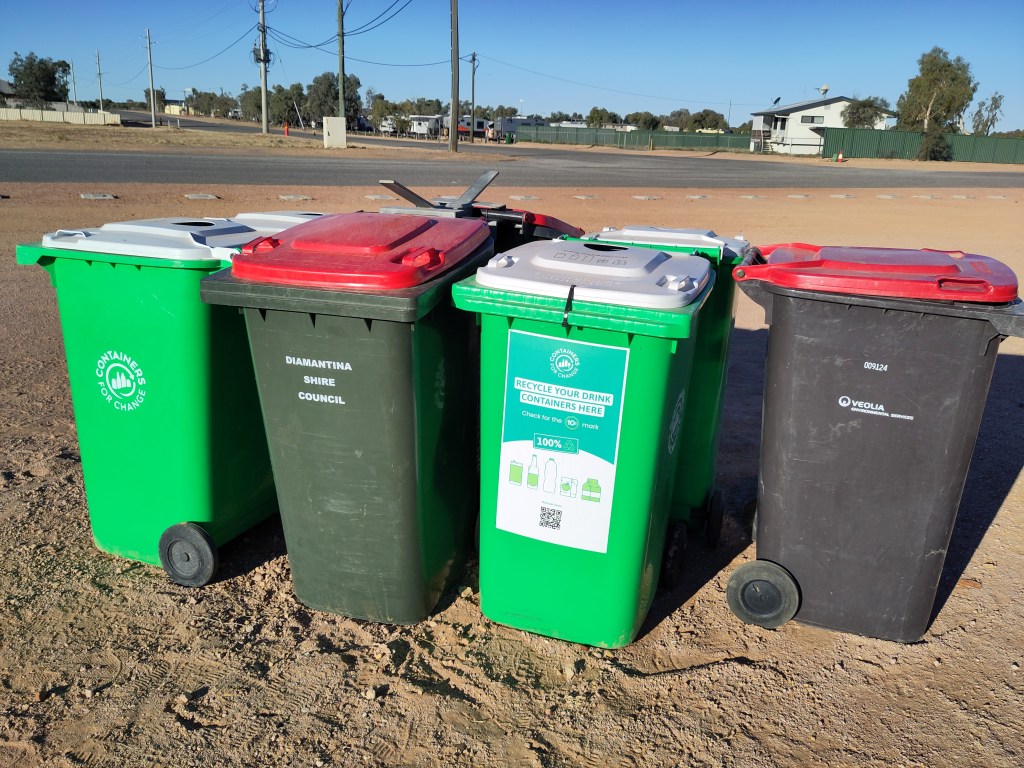
Waste and recycling. Dumping rubbish is the easy route out and unfortunately the vast space of ‘waste-land’ is seen as a logical end-point. Land-fill sites are filled, them another one dug. I’m told rubbish is separated at the tip, such as white goods, but to what end I do not know. The only recycling going on here is cash for containers. Some residents do their own composting, I’m told. Diamantina’s motto of ‘sustainably developing the outback’ appears to have more to do with developing the delivery of goods than utilizing them sustainably. In fact, delivery can include a ton of meat from Victoria for the hotel. As one of my fellow passengers remarked, ‘I can’t believe they bring in meat from so far when it’s produced right here.’ Our young female pilot replied, ‘Yeah but if there’s a spare ton of space, might as well fill it up.’ That’s called the Jevons Paradox – technical efficiency improvements inducing increased demand thereby reducing efficiency. Of course, reprocessing of some materials in a remote location is impractical, but there is little evidence of frugality here or circular economics, which is puzzlingly inefficient.
The Big Wet
Environment
Every 50 years or so a Big Wet enables a greenery that is ephemeral. The cracked clay is perennial.
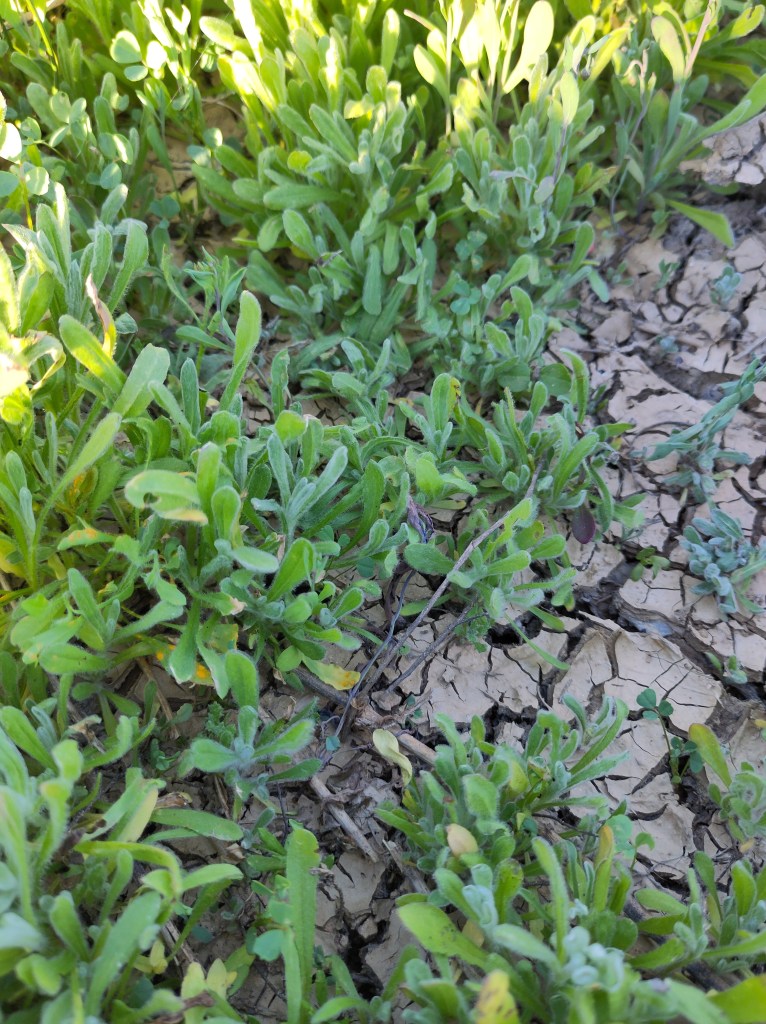
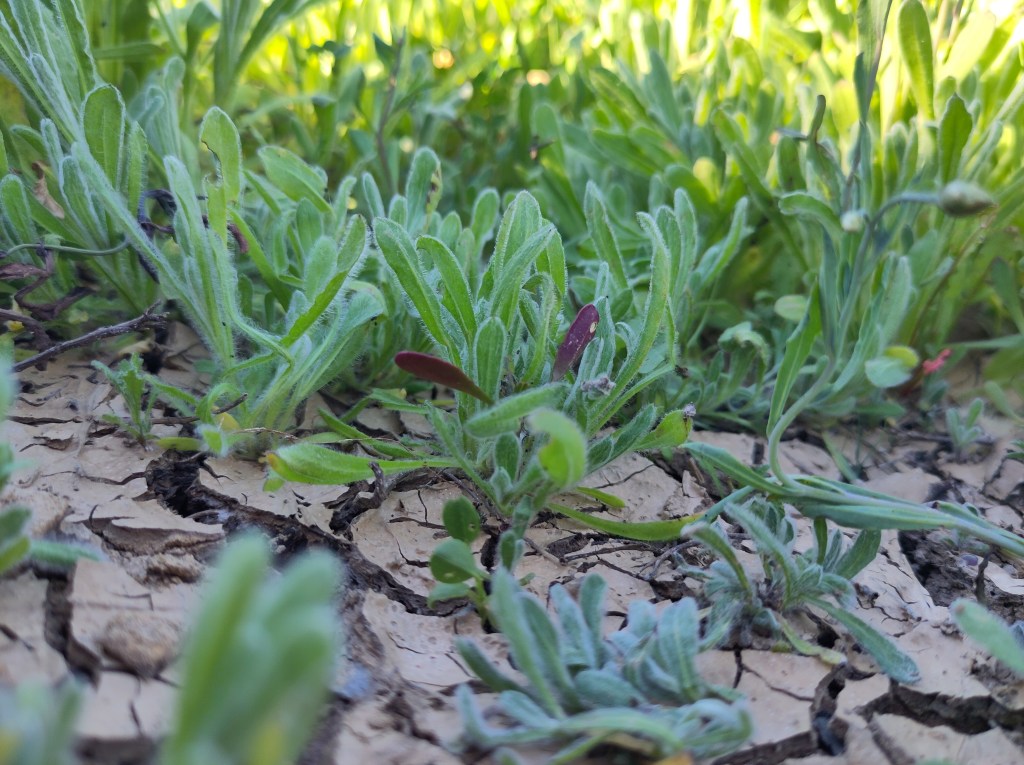
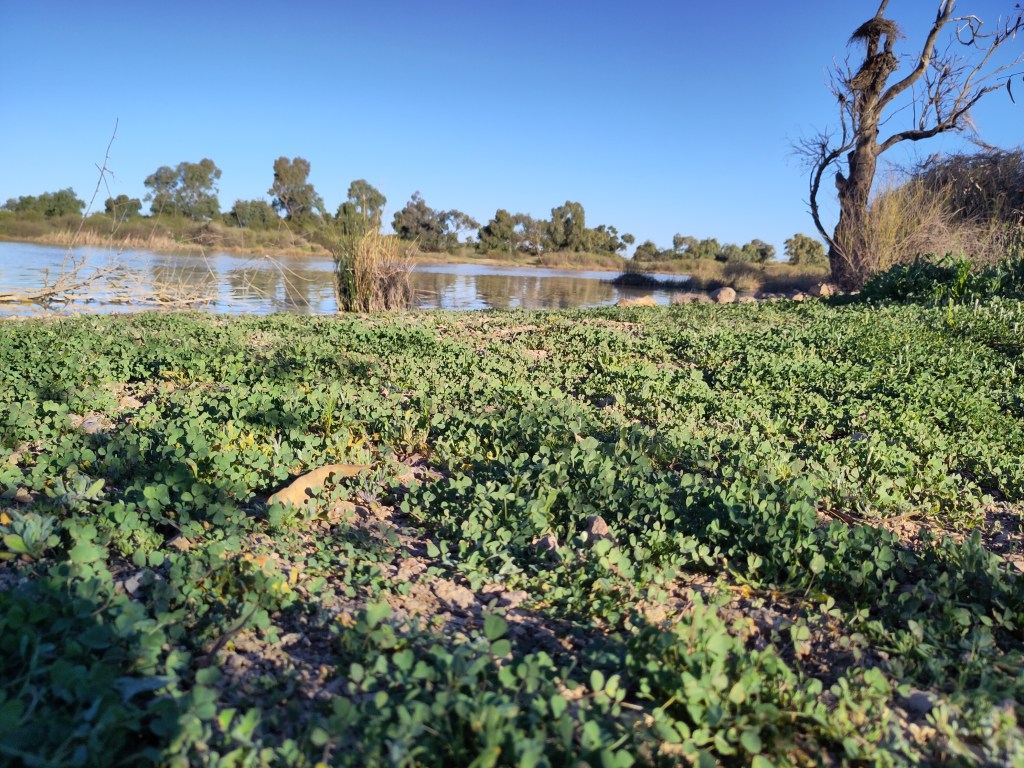
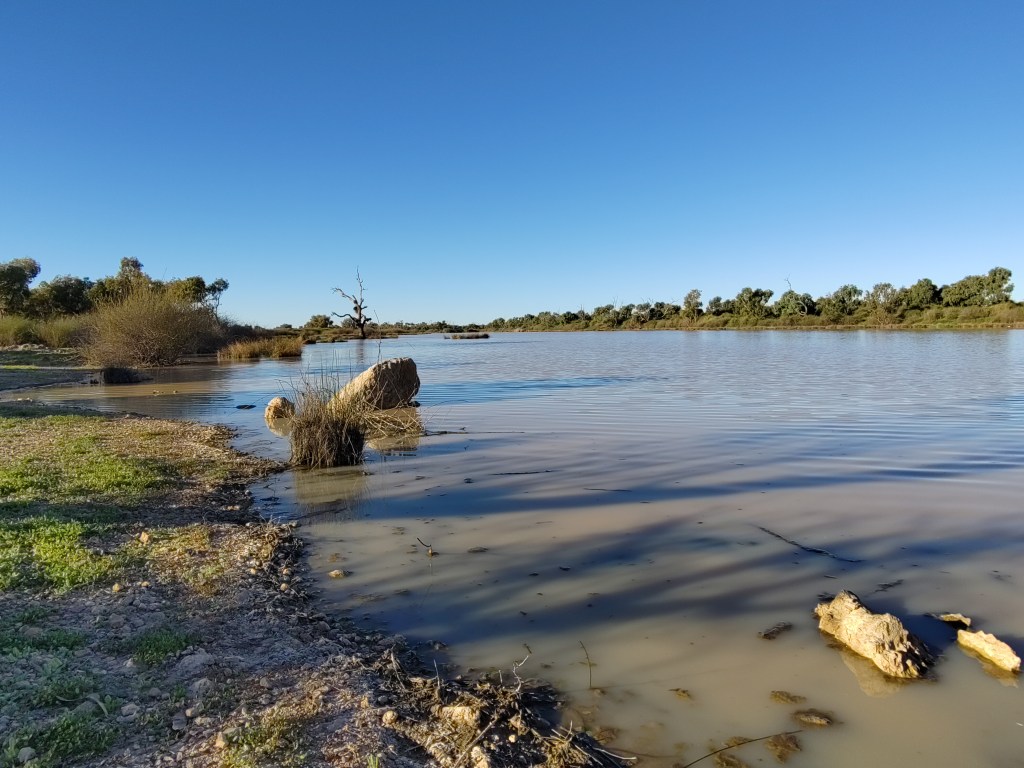
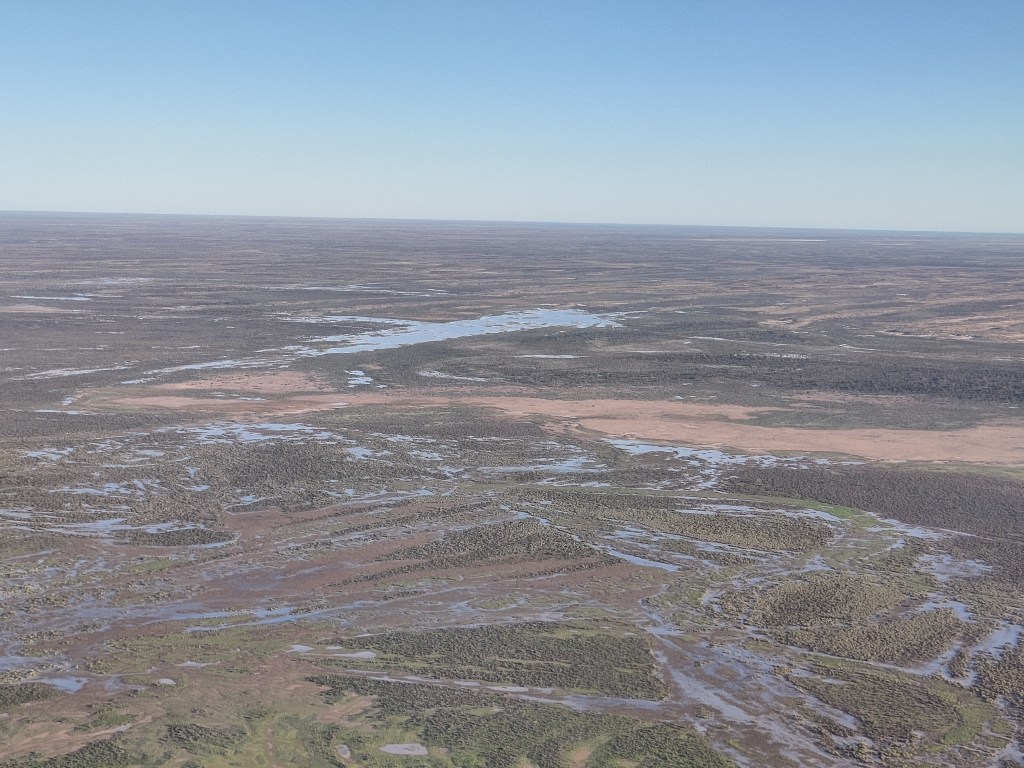
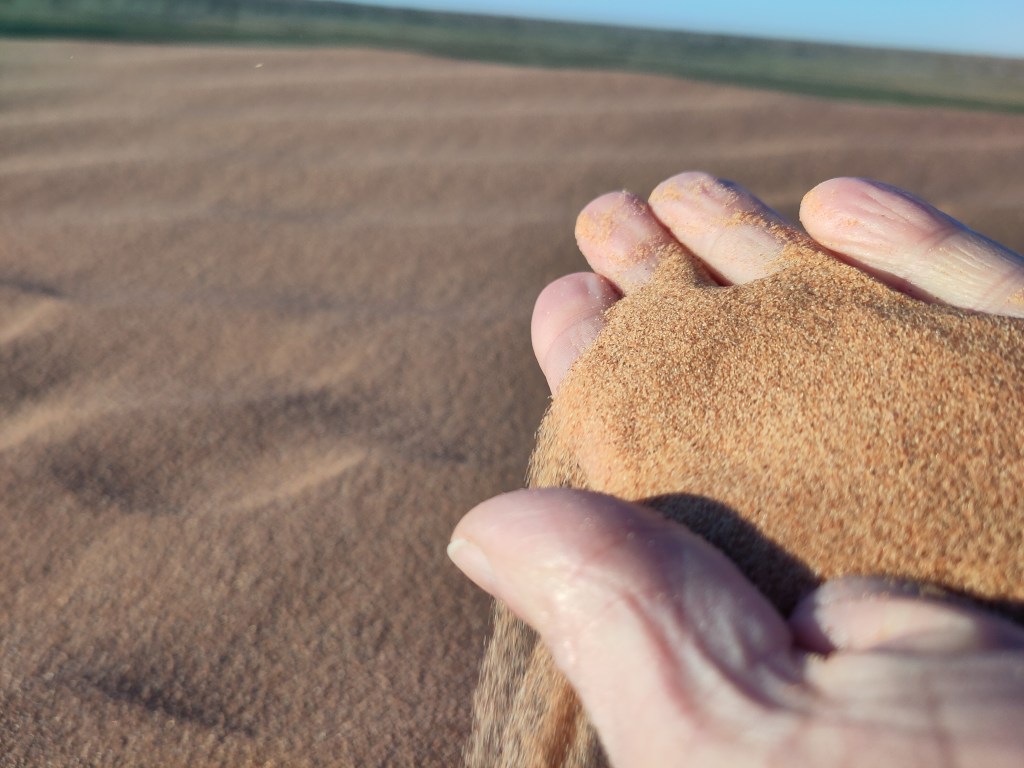
The soil is sand on clay, so the water sits for a long time in winter, unable to soak in until it evaporates off. Hence the lakes of water across the landscape.
Several weeks ago there were 3 days that dumped a whole year’s worth of rain. This came on top of the flood waters streaming through the area from the Easter downpour in central Queensland. The Queensland outback was drenched and Charleville residents were devastated. But the water slowly drained south west and made its usual pilgrimage to the great central Lake Eyre.
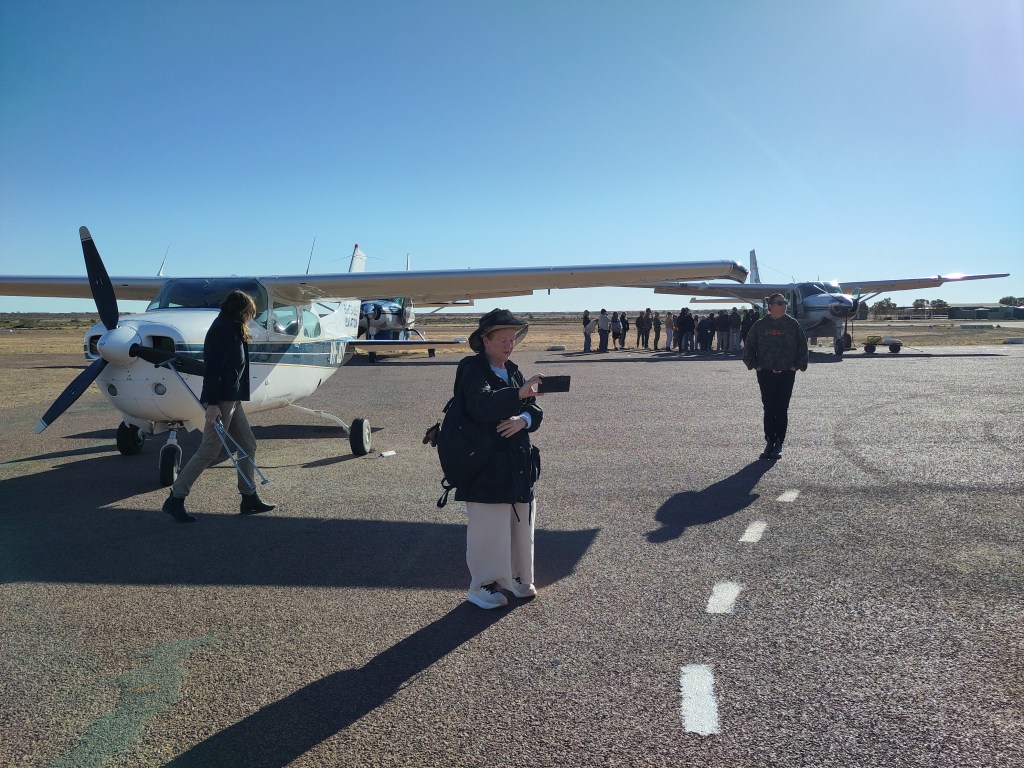
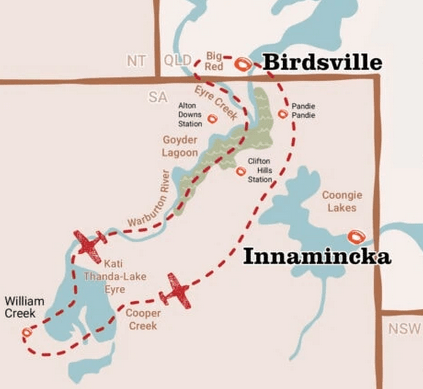
The Lake Eyre Basin comes to life, birds flock to it and the desert blooms into a mass of green and shallow watery lakes and ponds. Put your seat belt on – time for a scenic flight.
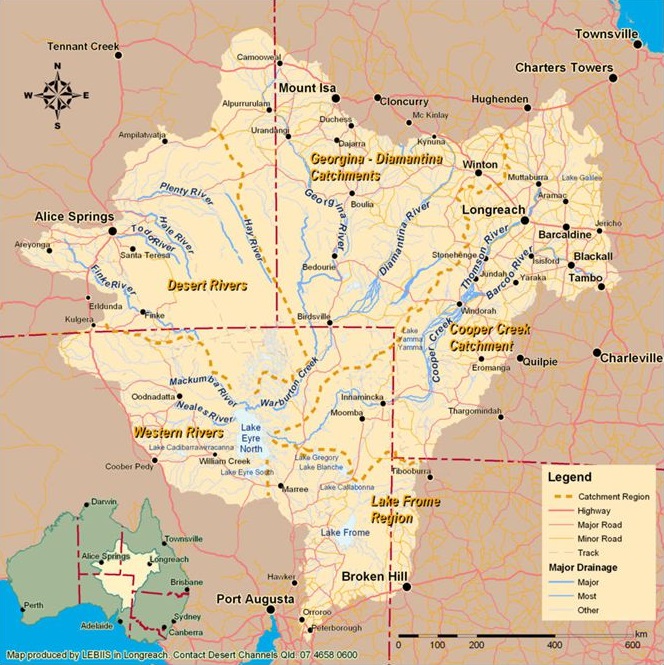
Lake Eyre Basin 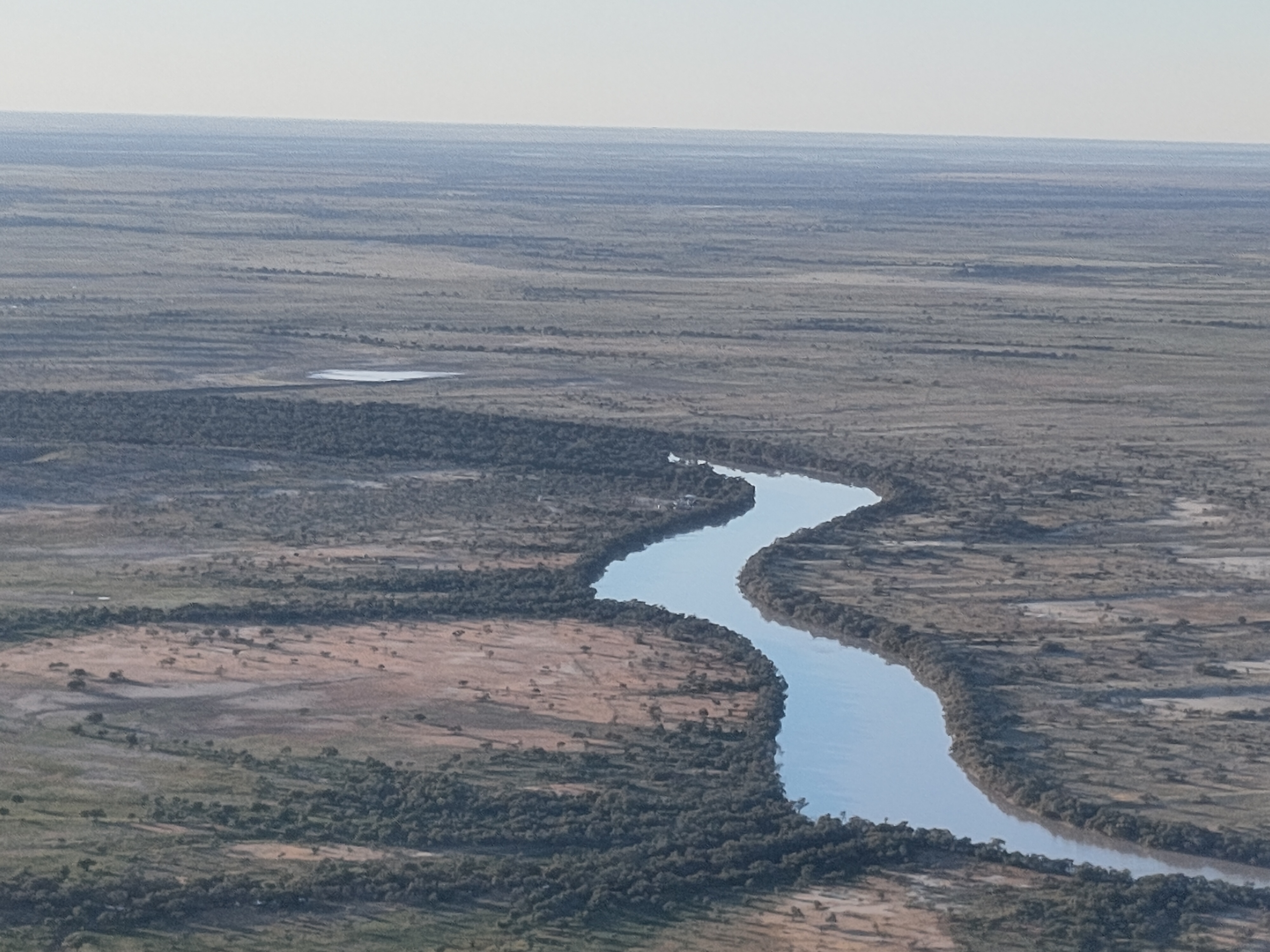
The Diamantina River at Alton Downs Station 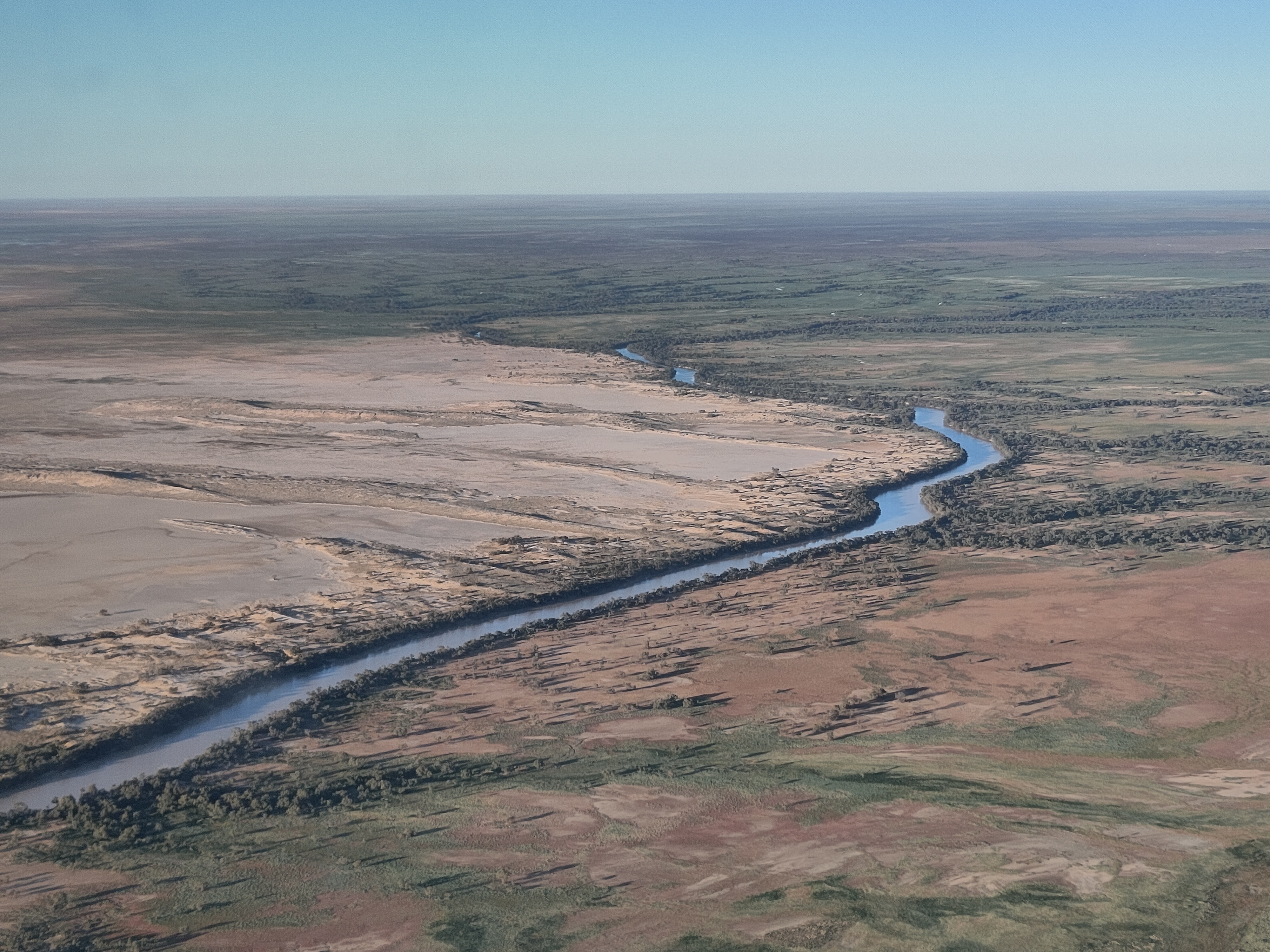
Diamantina breaking into Goyder Lagoon 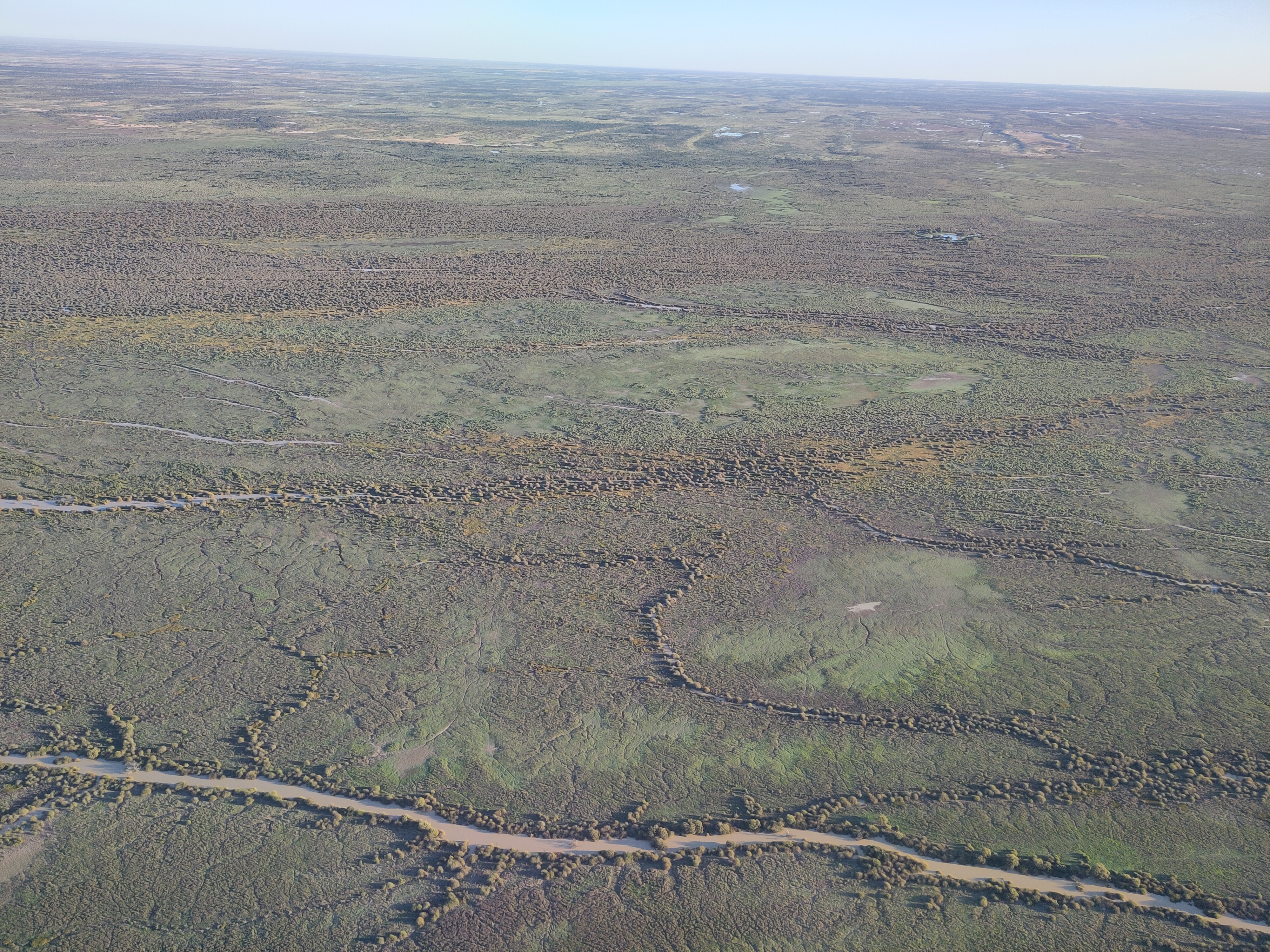
Goyder Lagoon Important Bird Area (IBA) 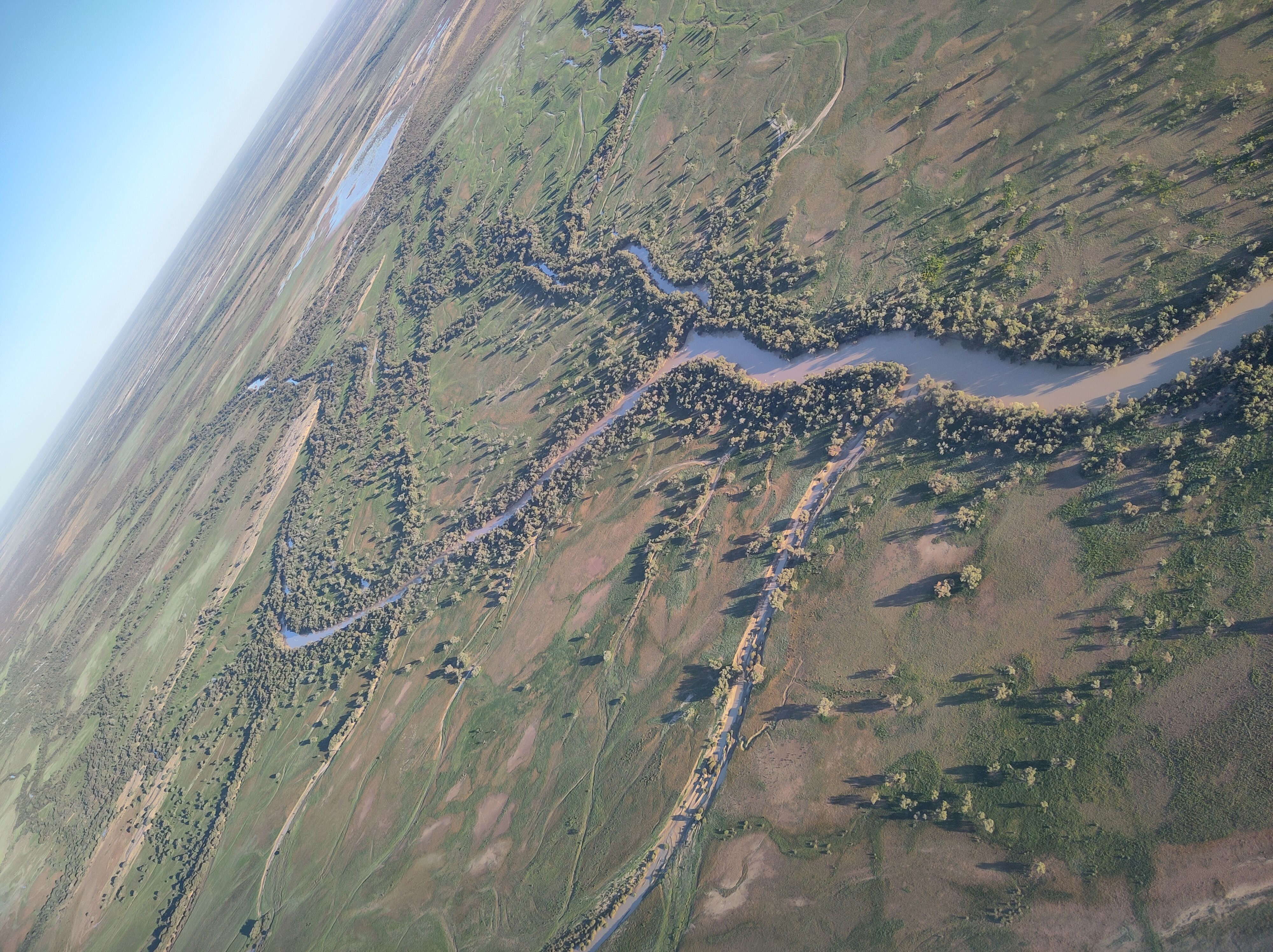
North end of Goyder Lagoon 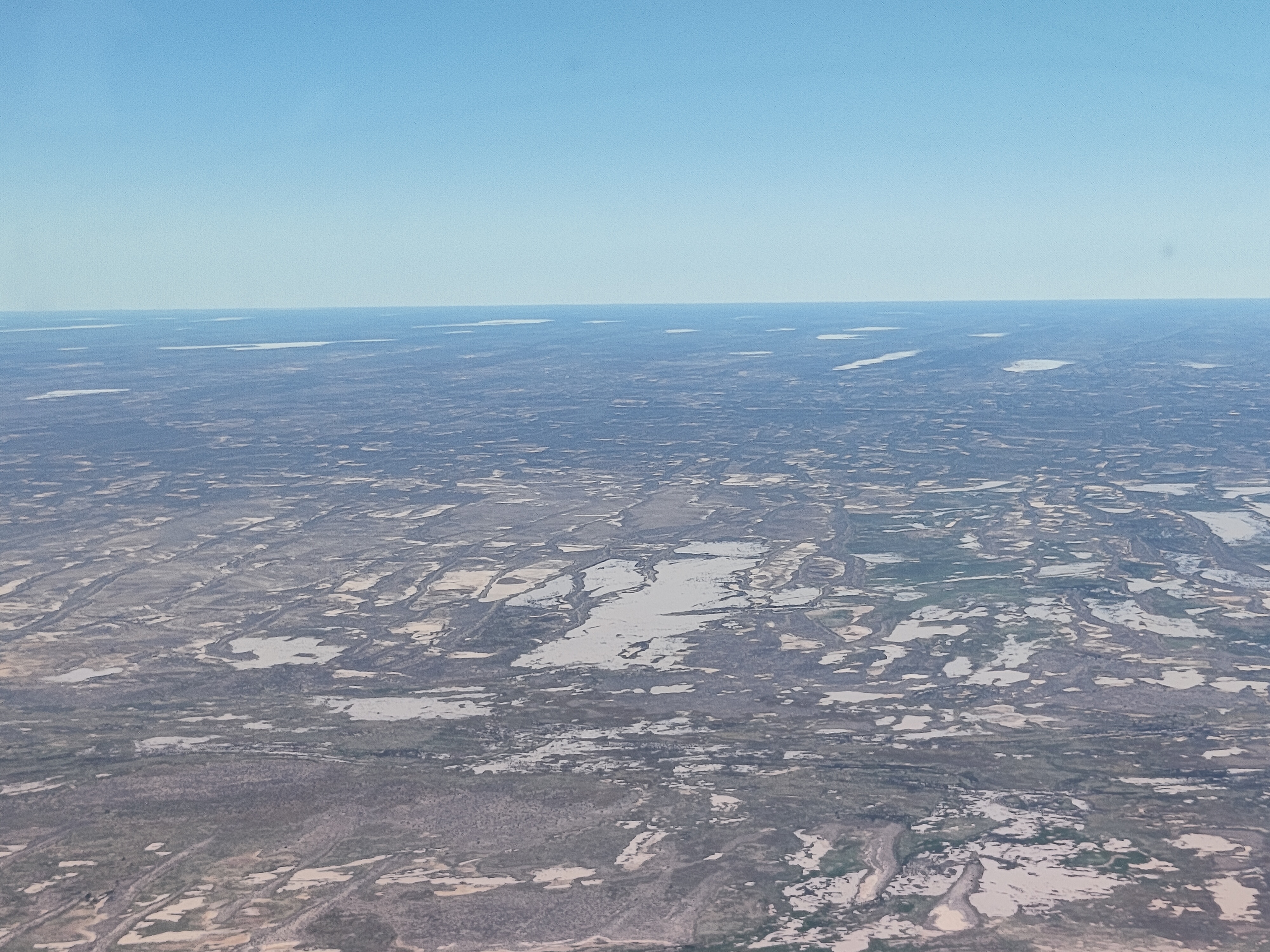
Looking West of Goyder Lagoon 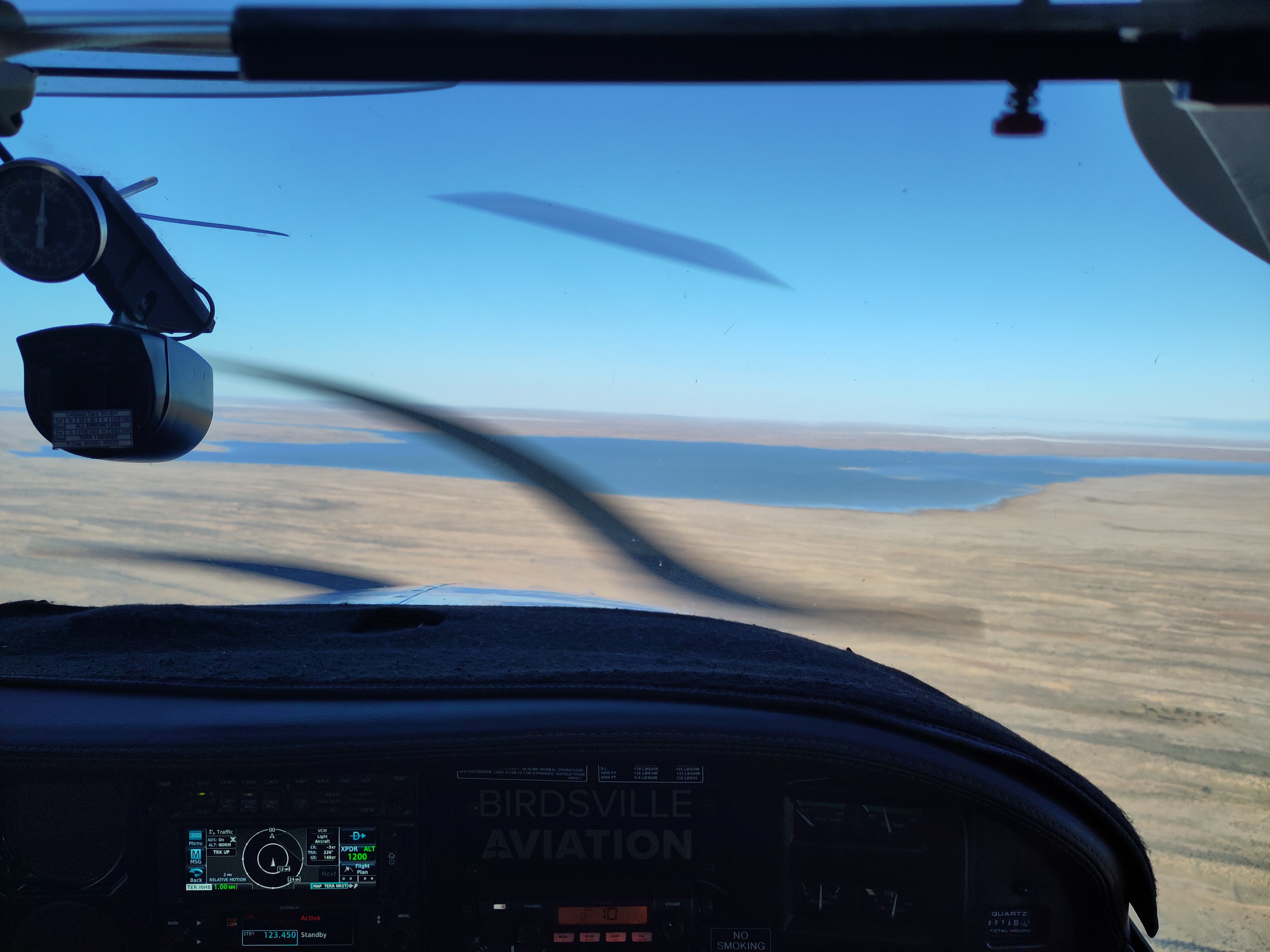
Lake Eyre North yonder 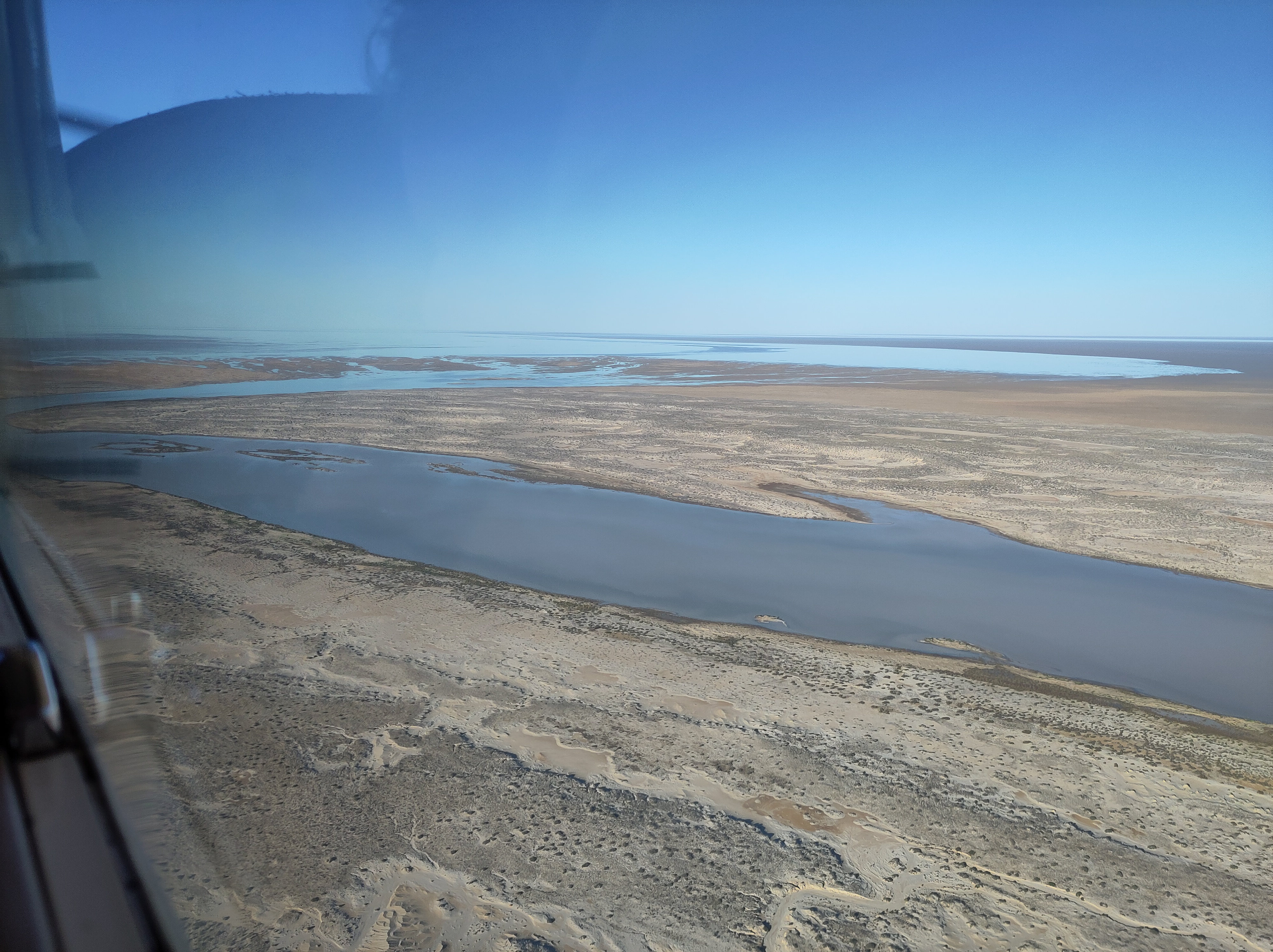
Warburton river going into the north of Lake Eyre North 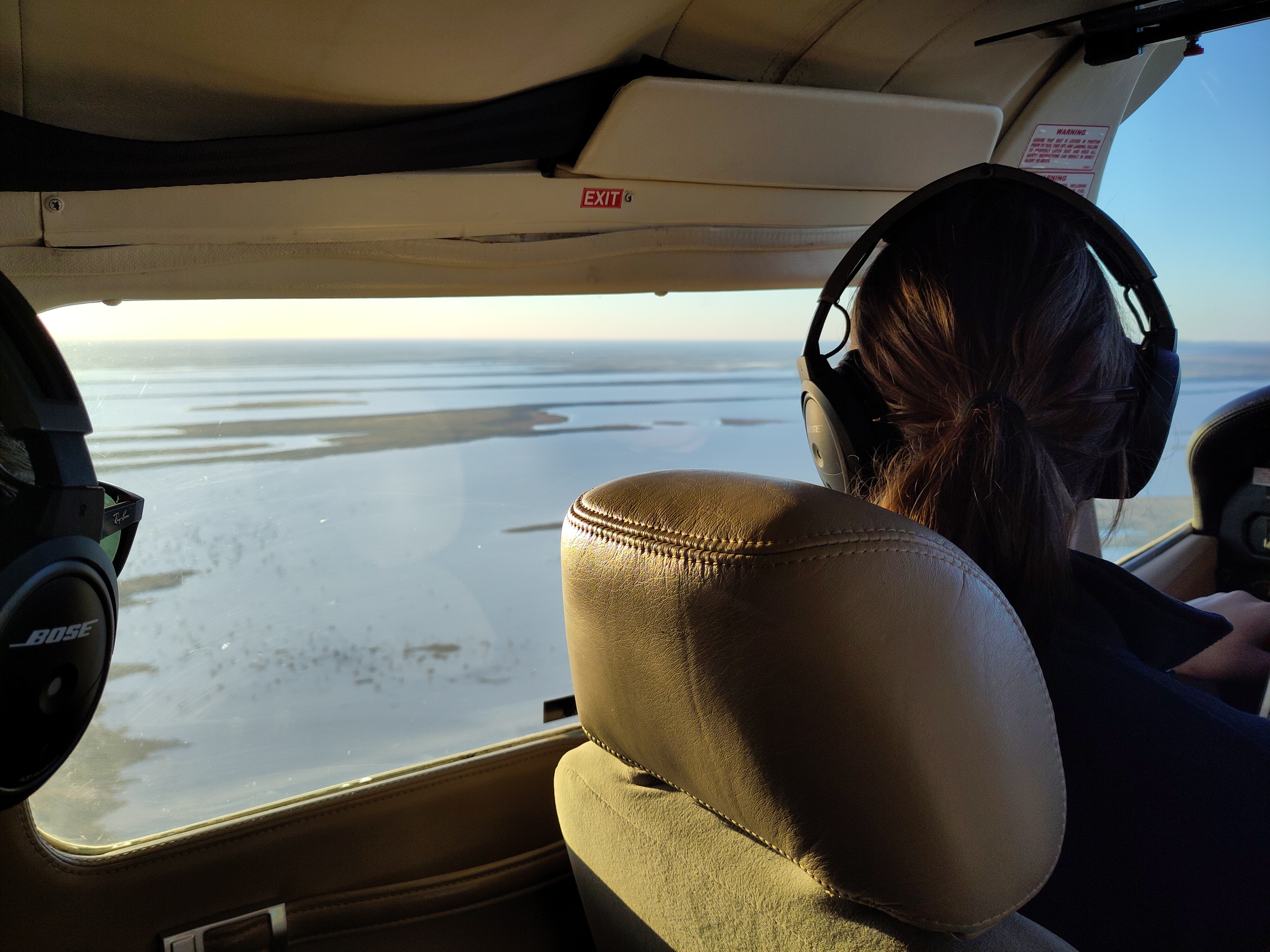
Lake Eyre North 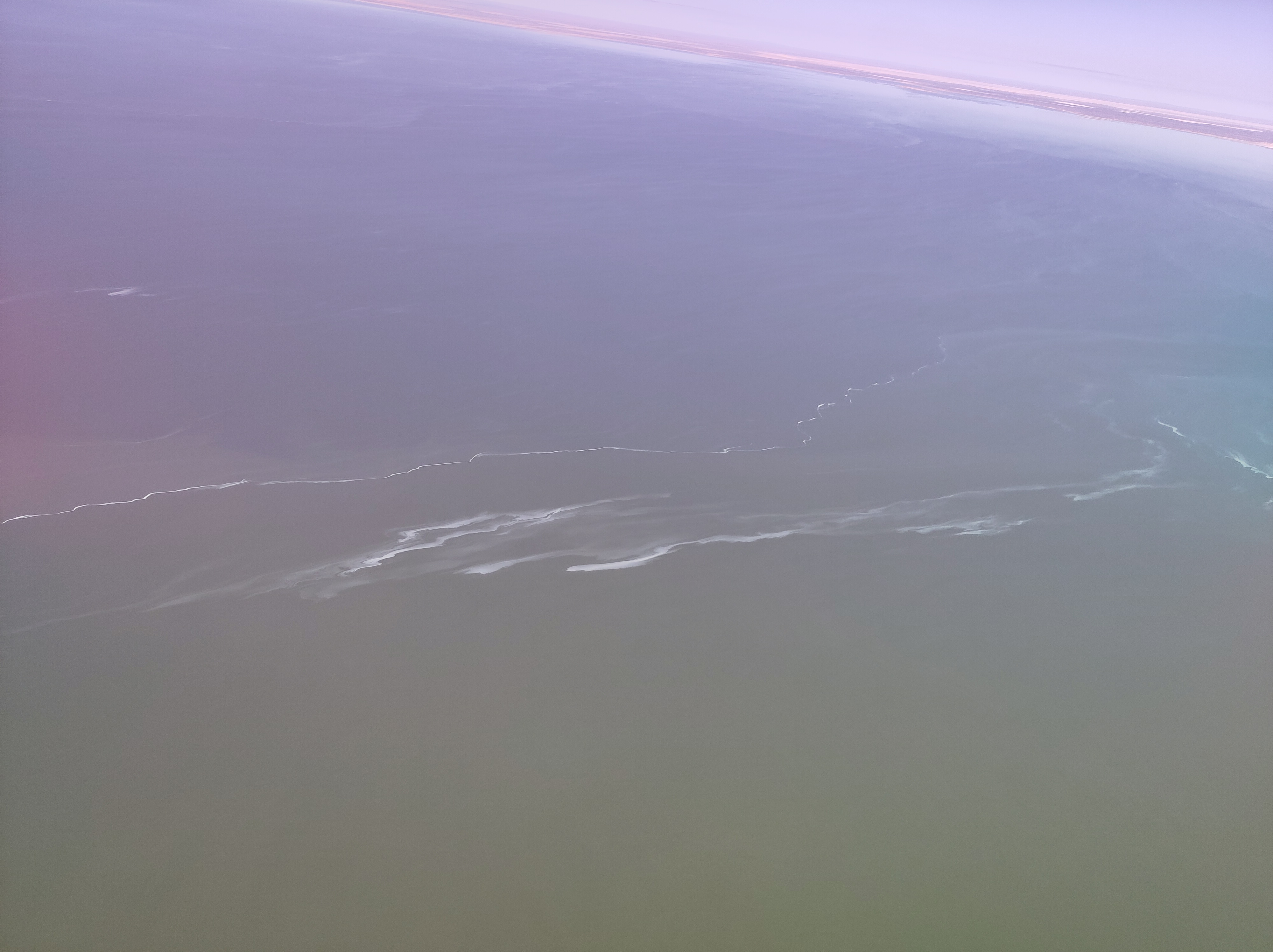
Salt streaks on Lake Eyre 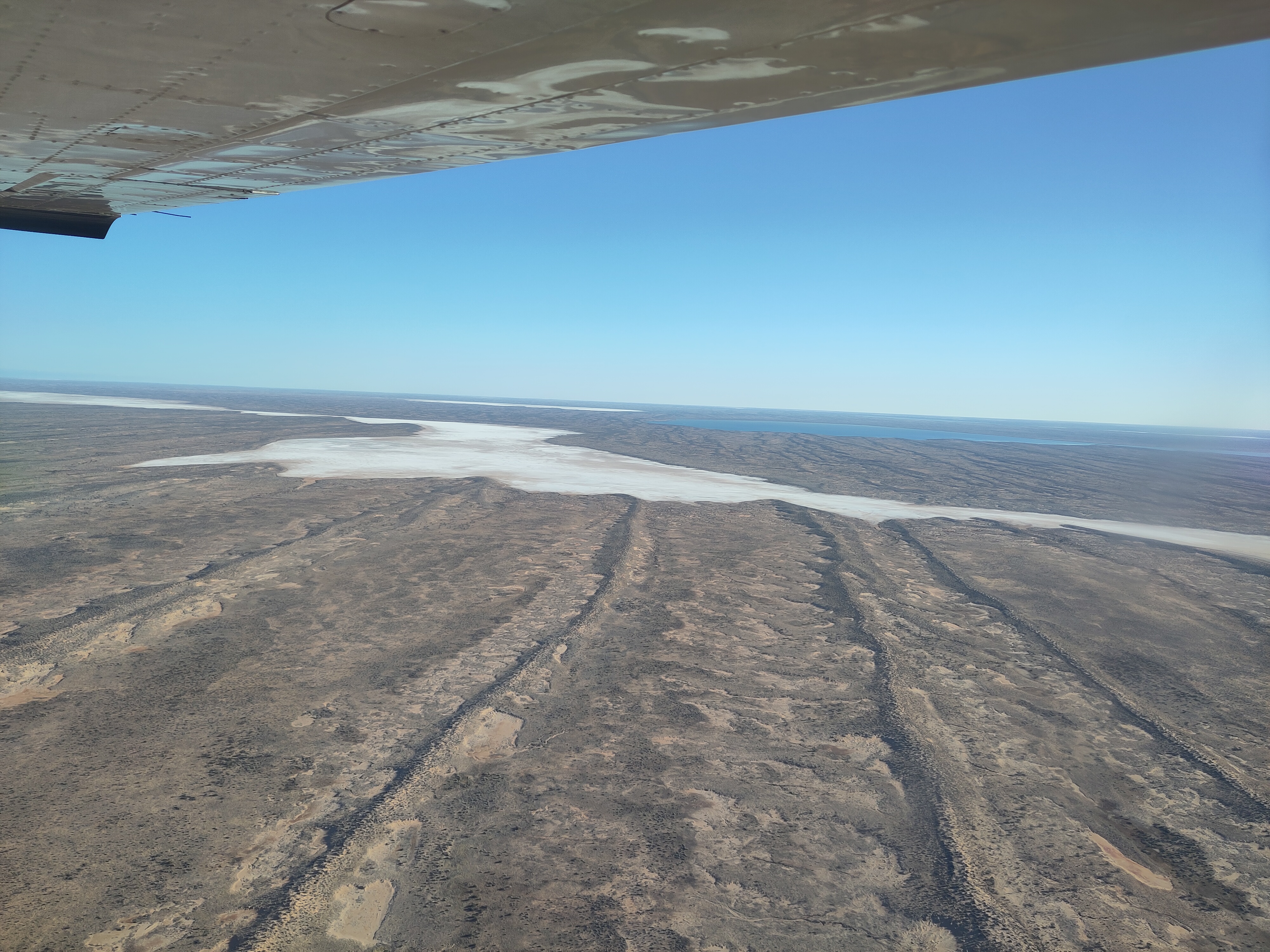
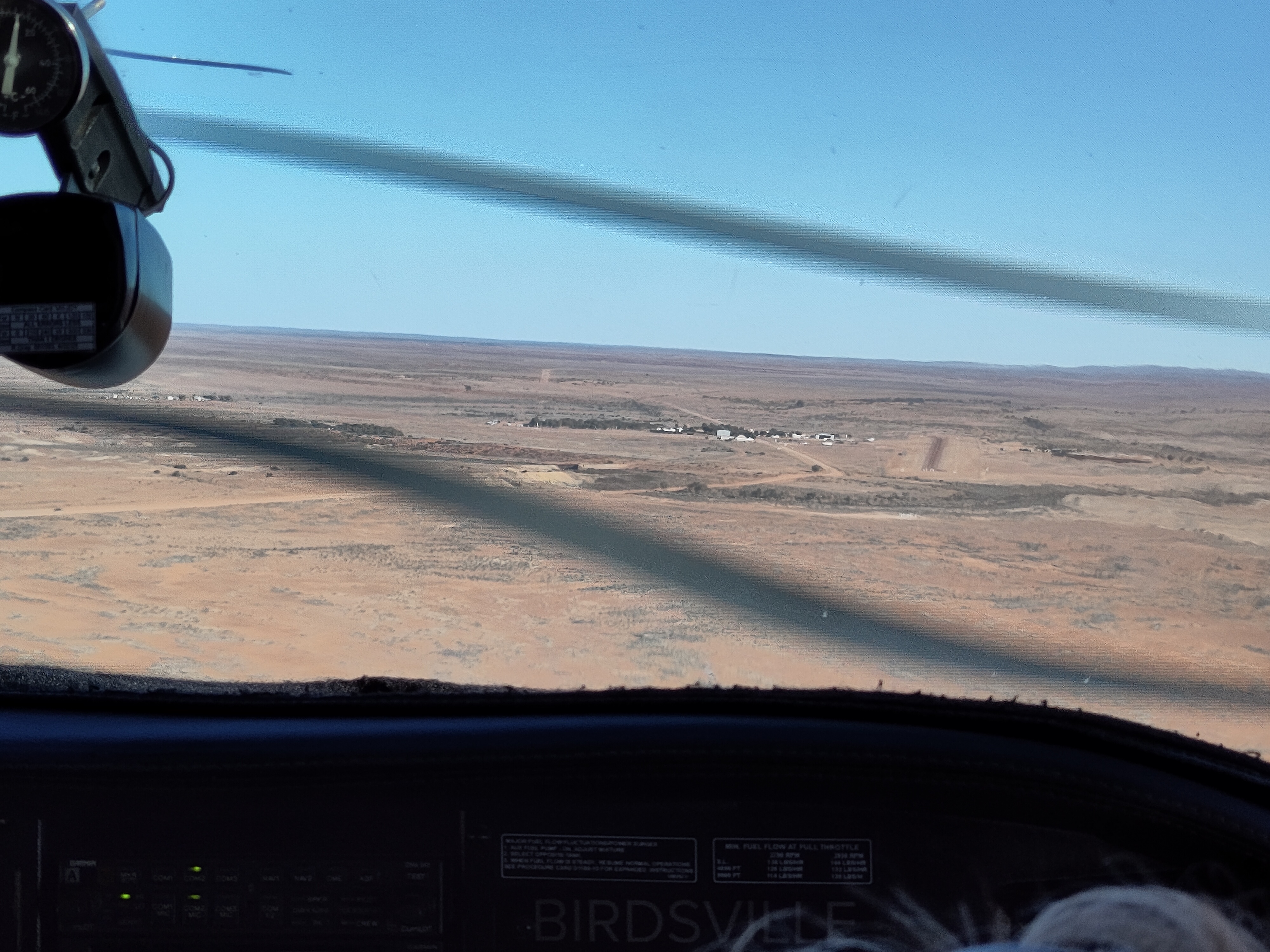
Landing at William Creek 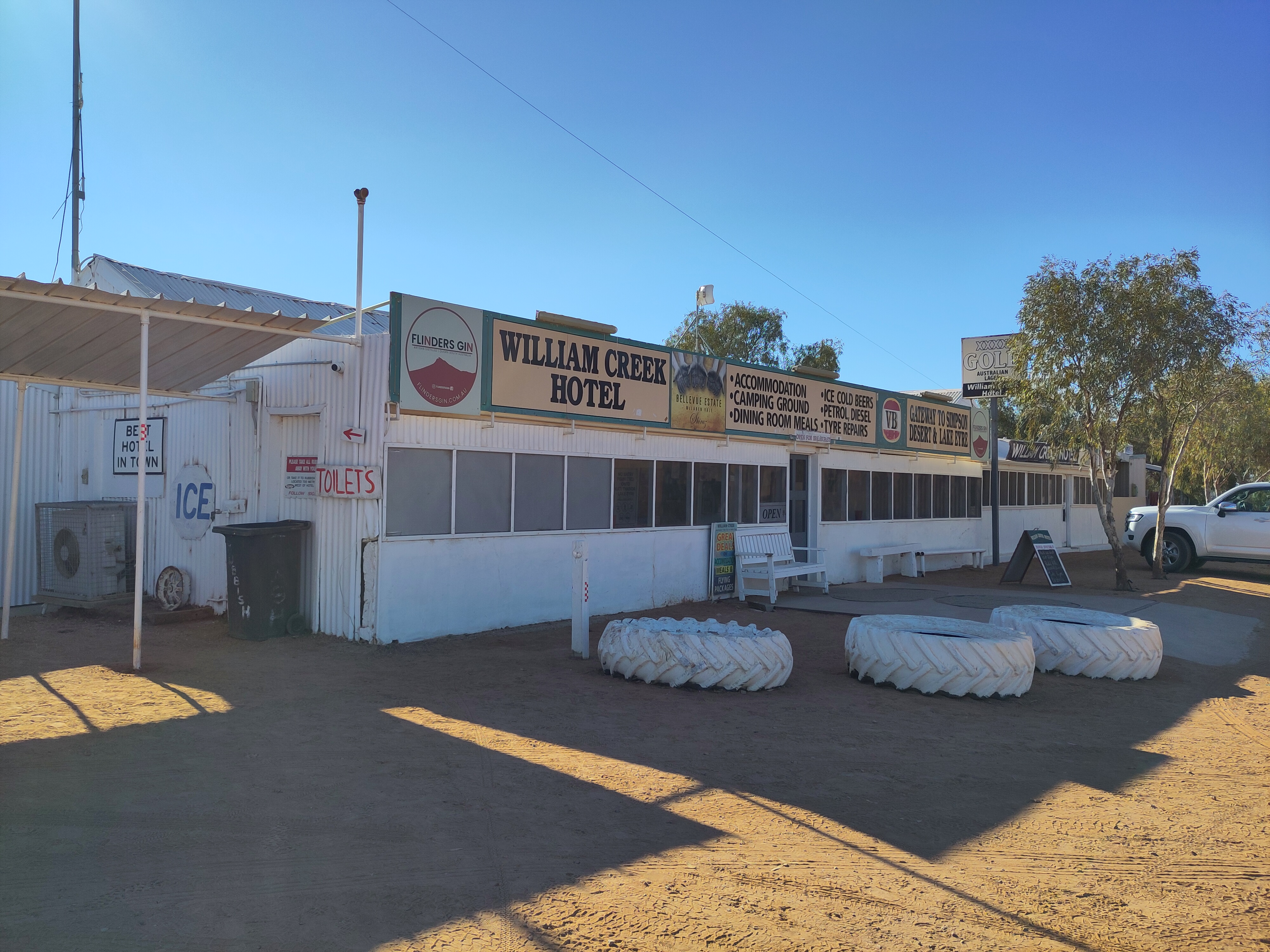
William Creek Hotel 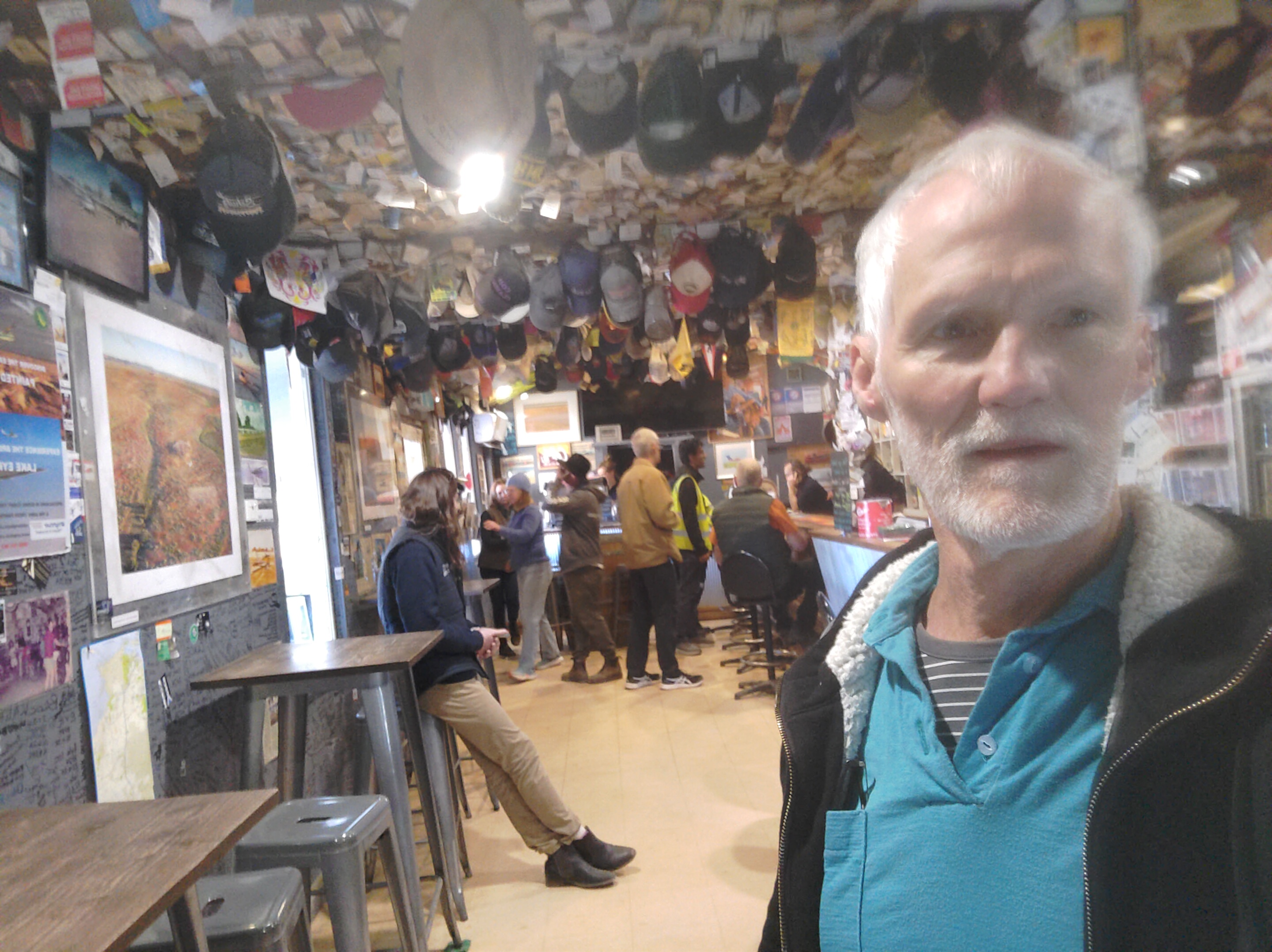
William Creek Hotel 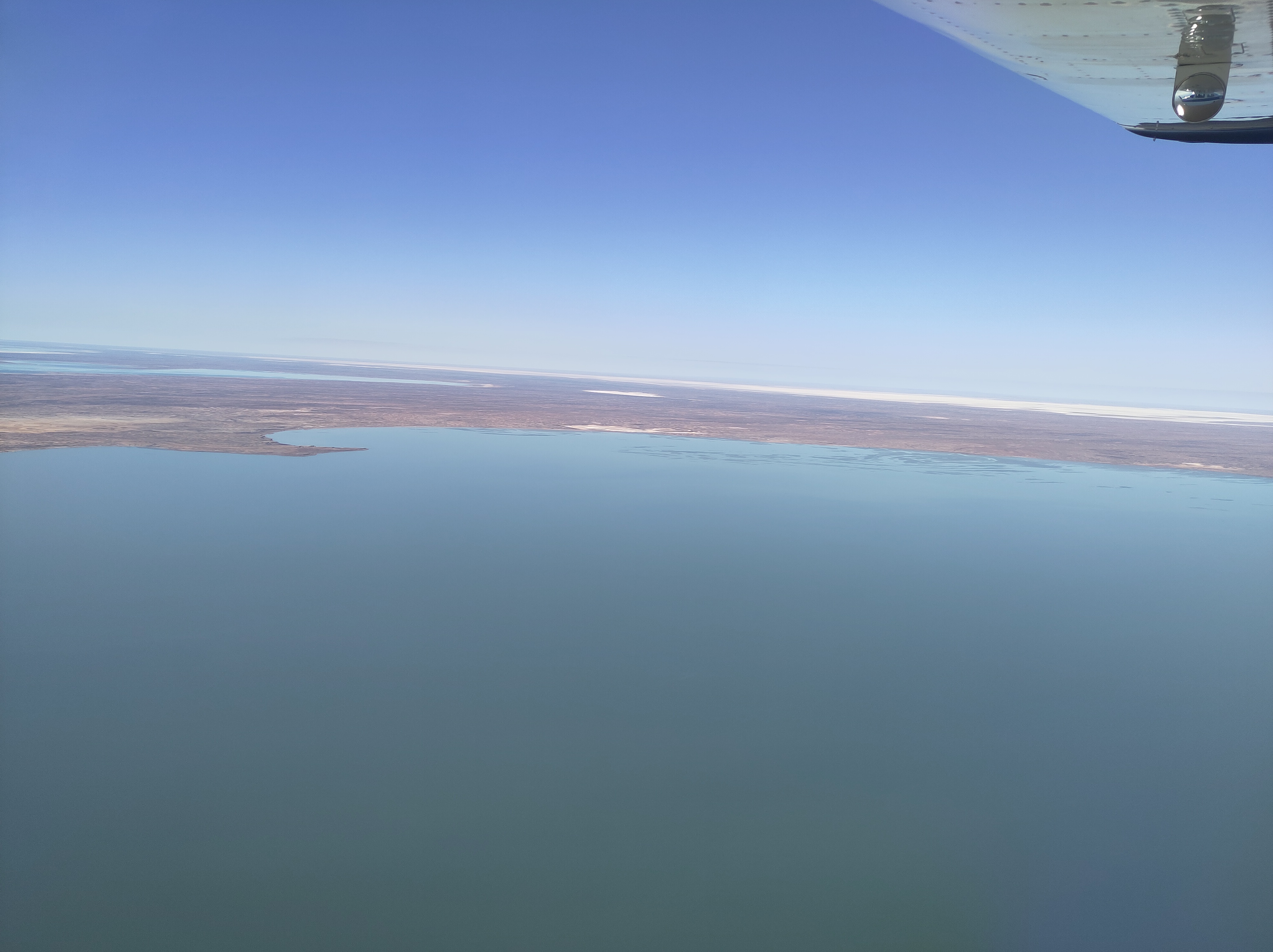
Belt Bay – the lowest point in Oz. 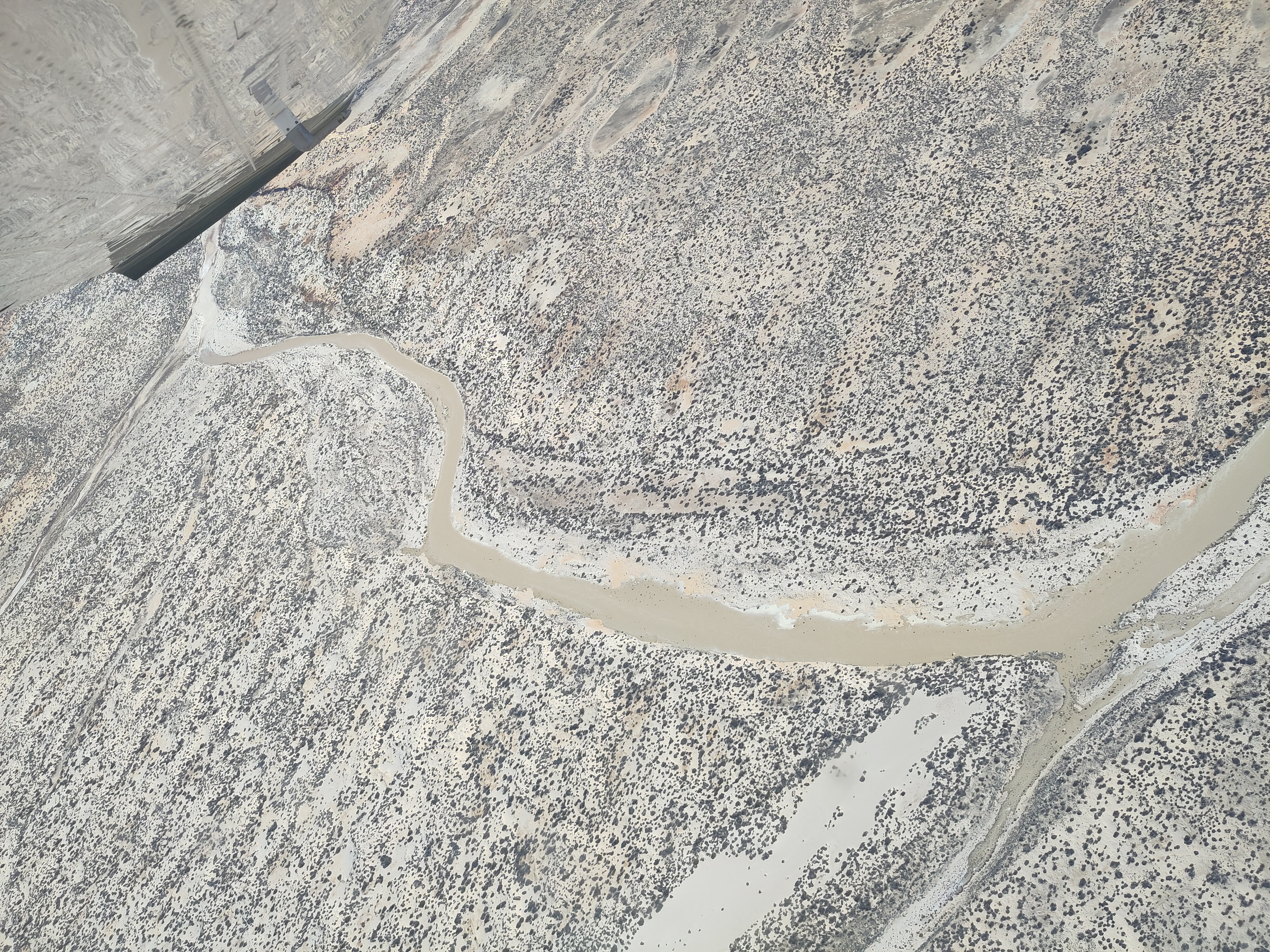
Cooper Creek headwaters 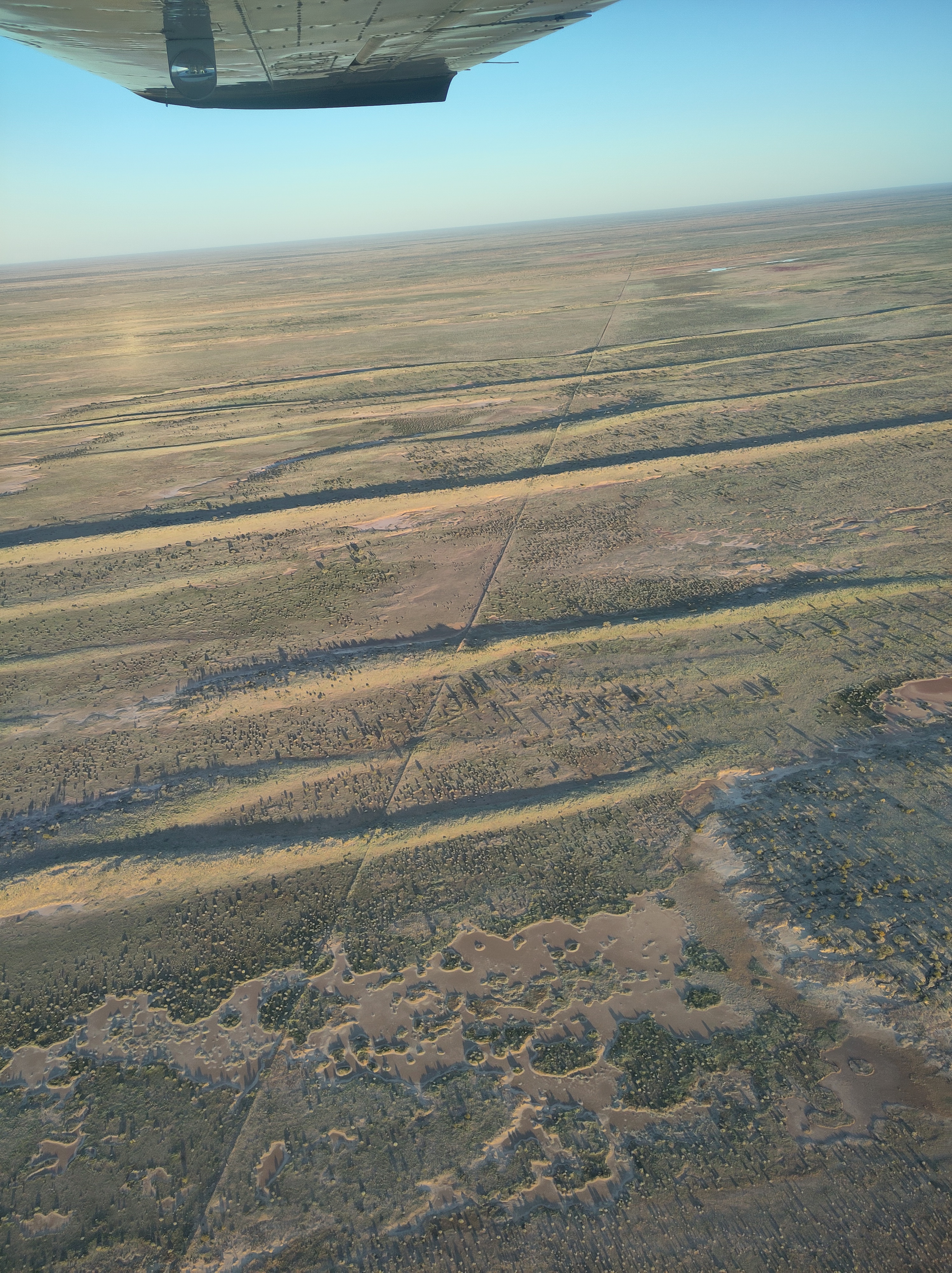
SA QLD border 
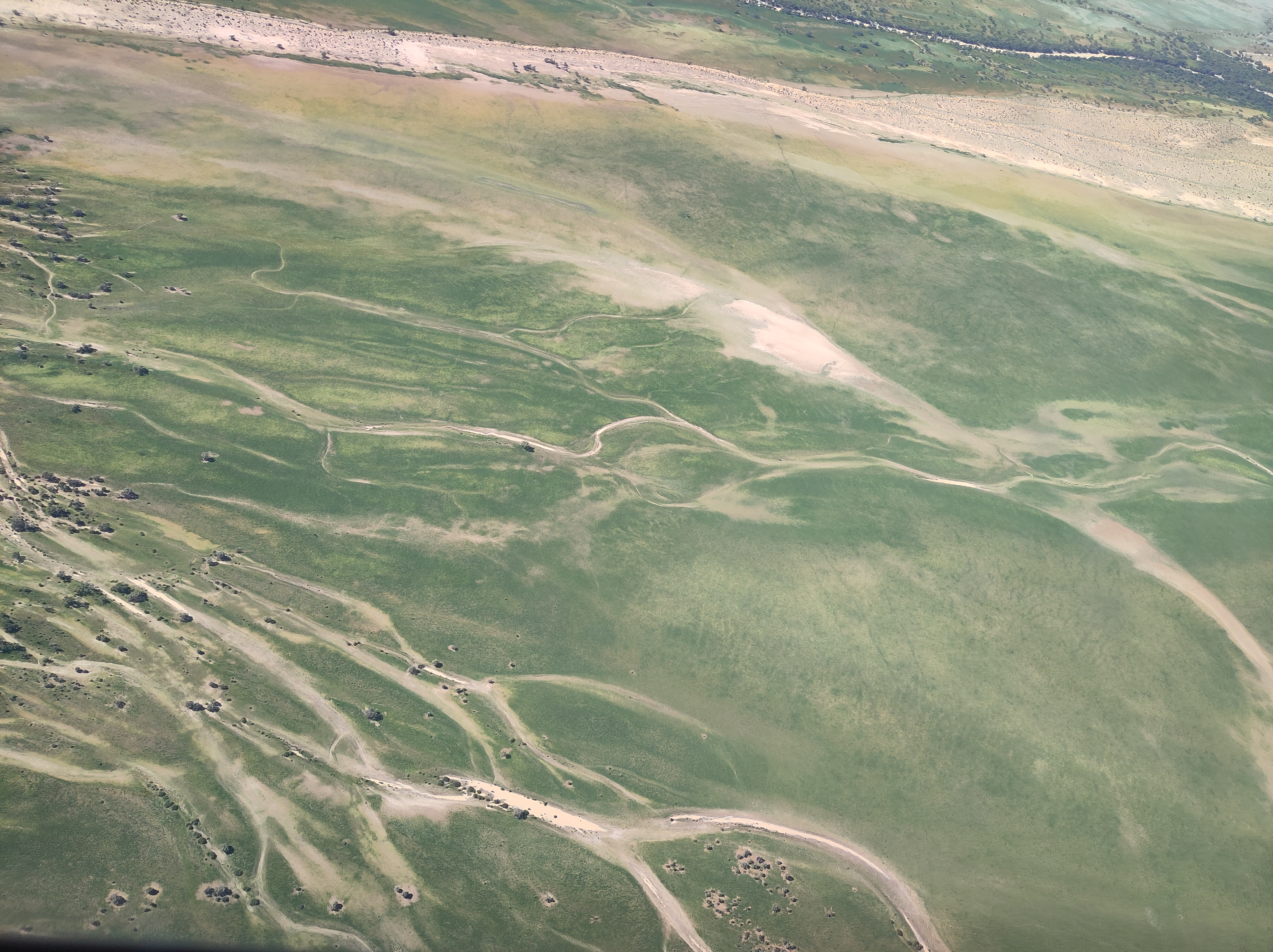
Green fields of Diamantina
Sustainably Developing the Outback
I learned a lot about Birdsville, but I didn’t get to meet many salt-of-the Earth locals. I reckon if I came in the middle of Summer I’d have a better chance, but being a big city wuss, I avoided that. There’s an awful lot more of Capricornia to see, so I’ll keep my options open in future. Suffice to say that so far, my impression of Birdsville is less about sustainability than about development and tourism. Cooper Pedy’s underground homes and Innamincka’s solar power station leaves me with some hope.


Leave a reply to Better Baseload – Equanimity Cancel reply